


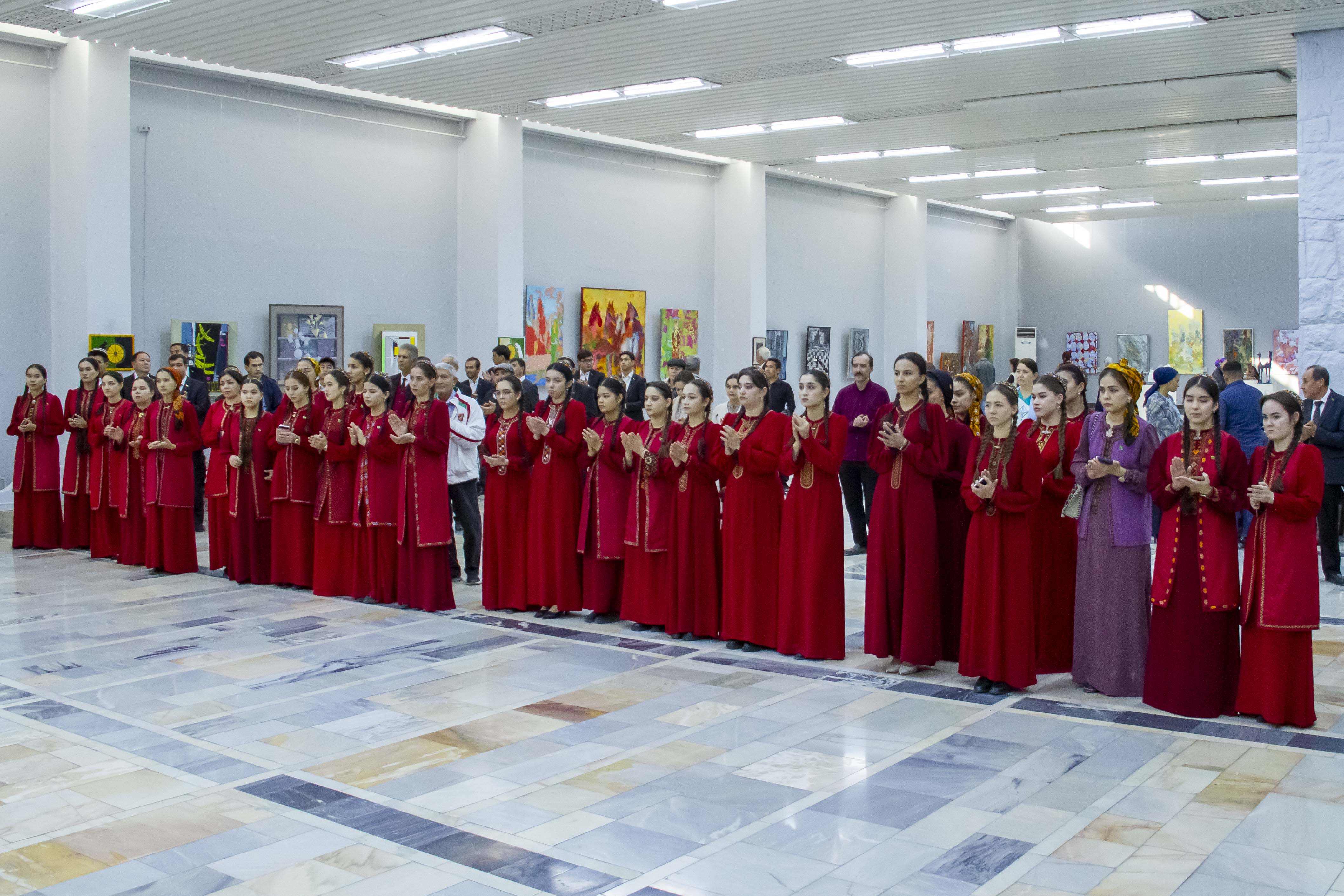
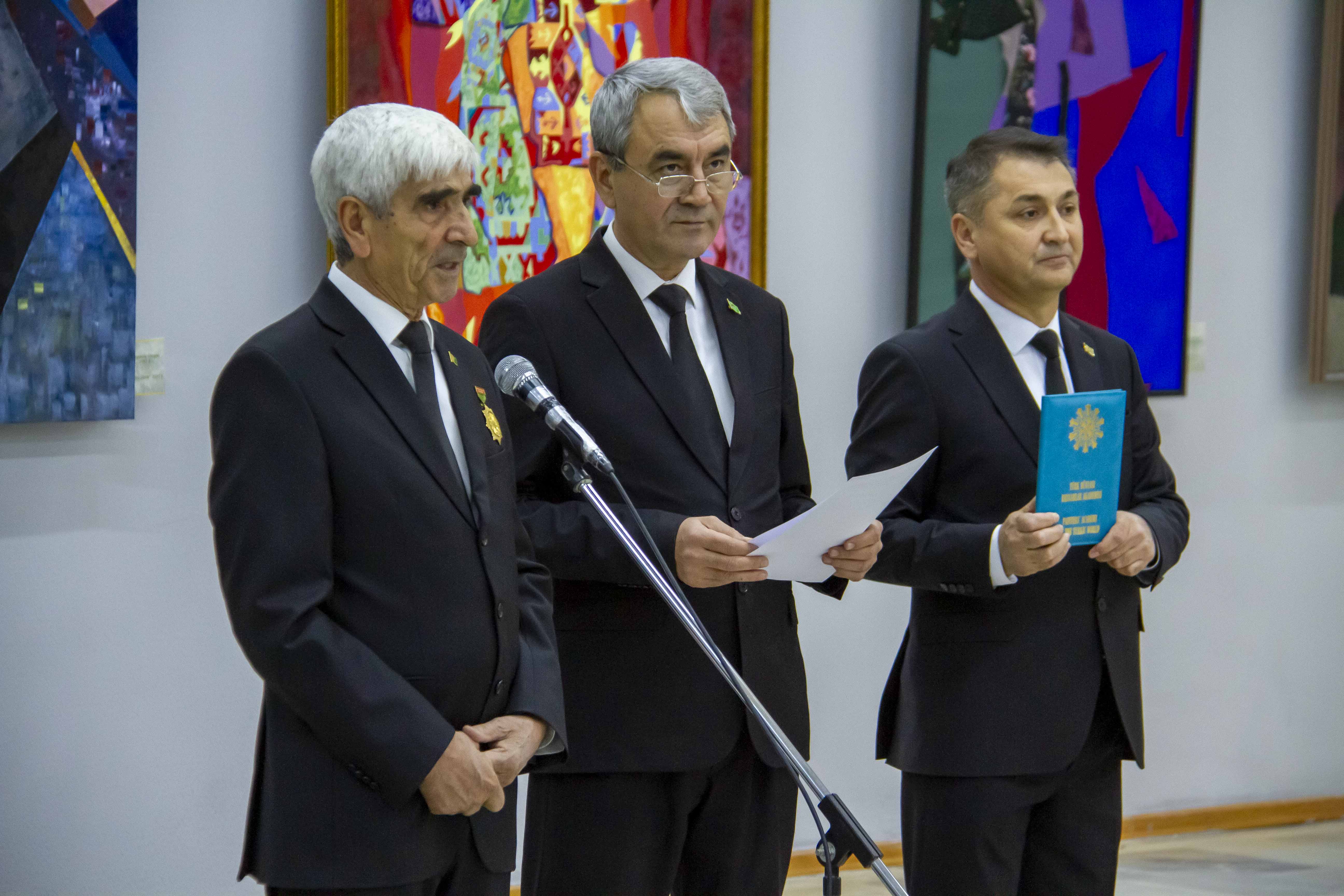
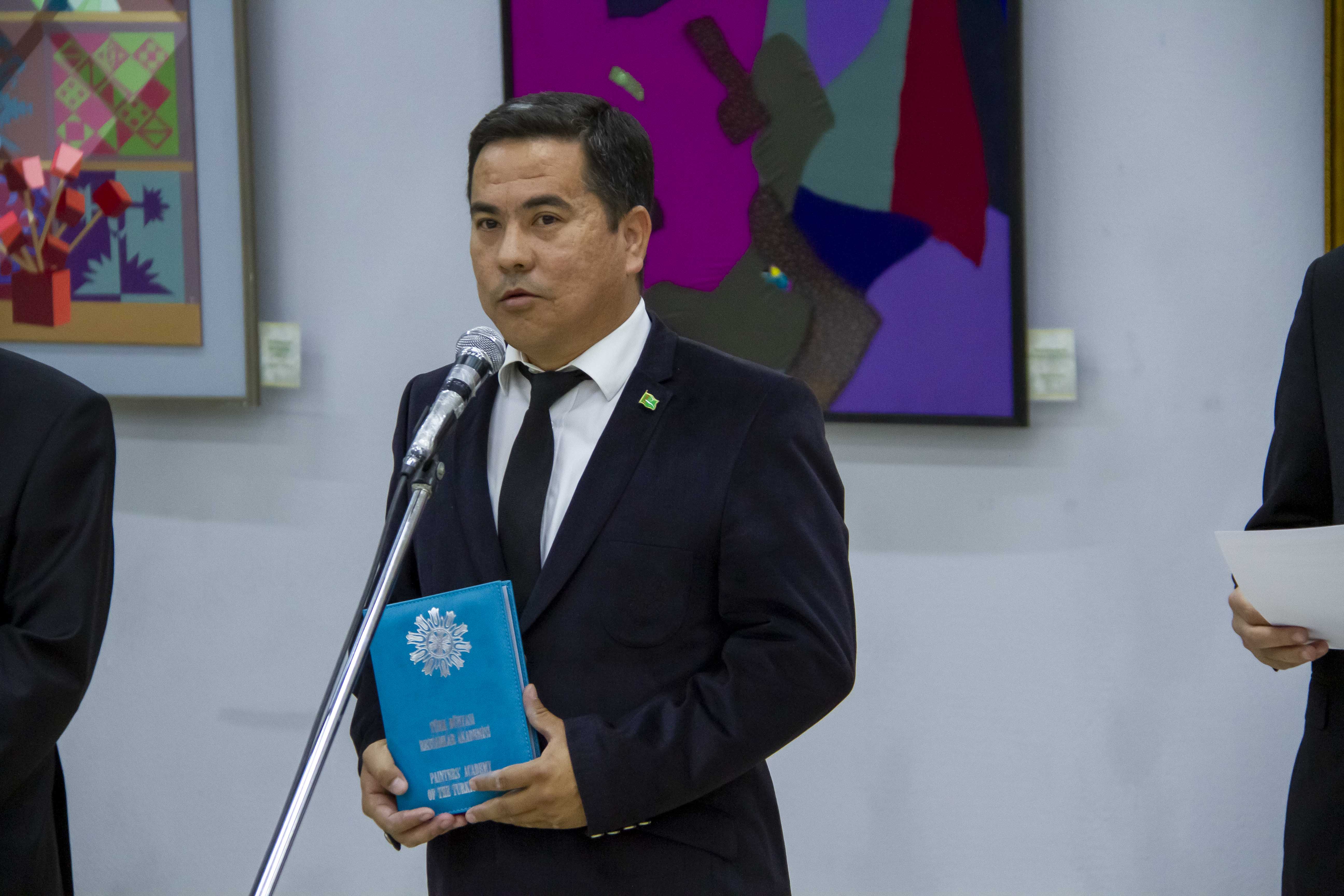
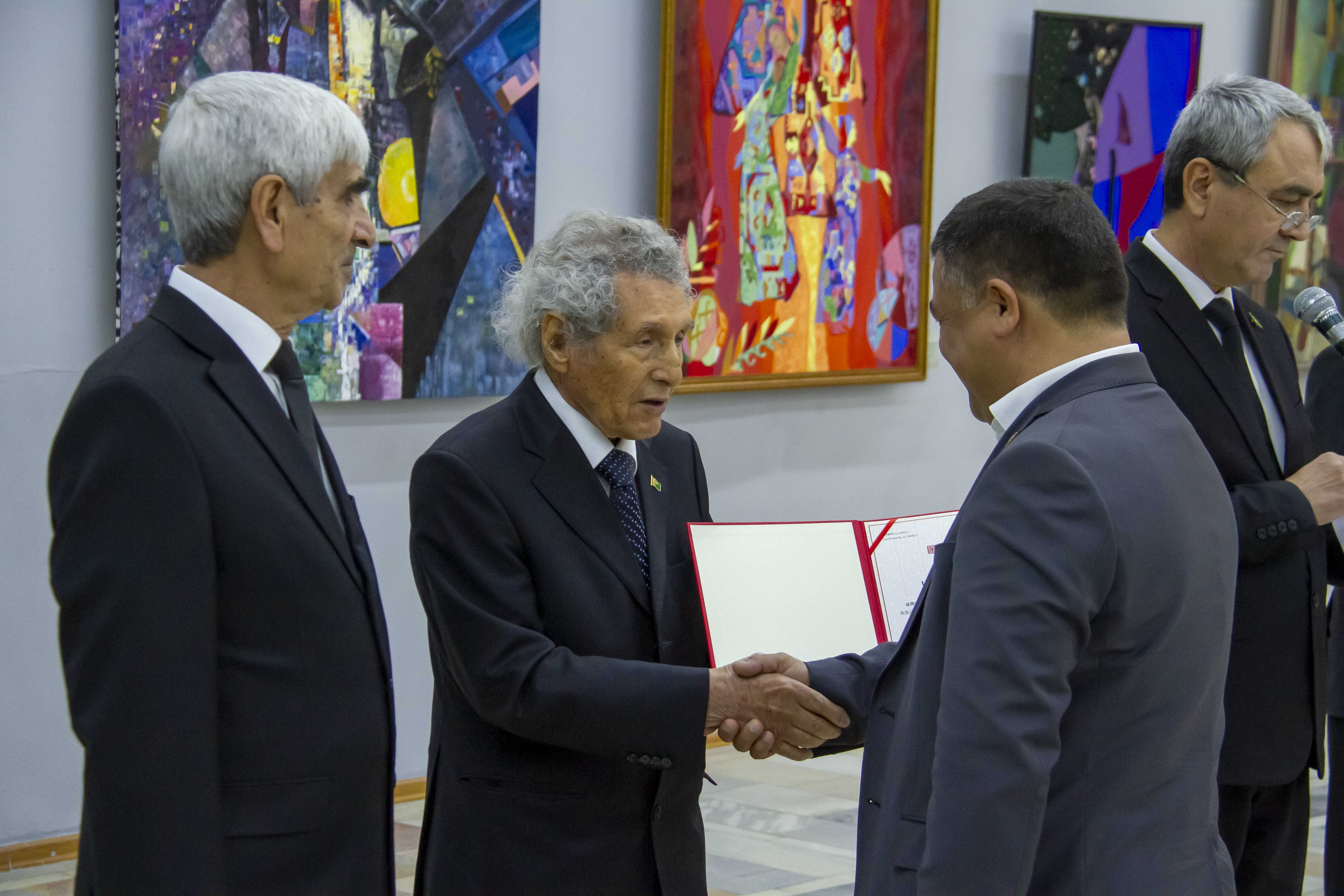
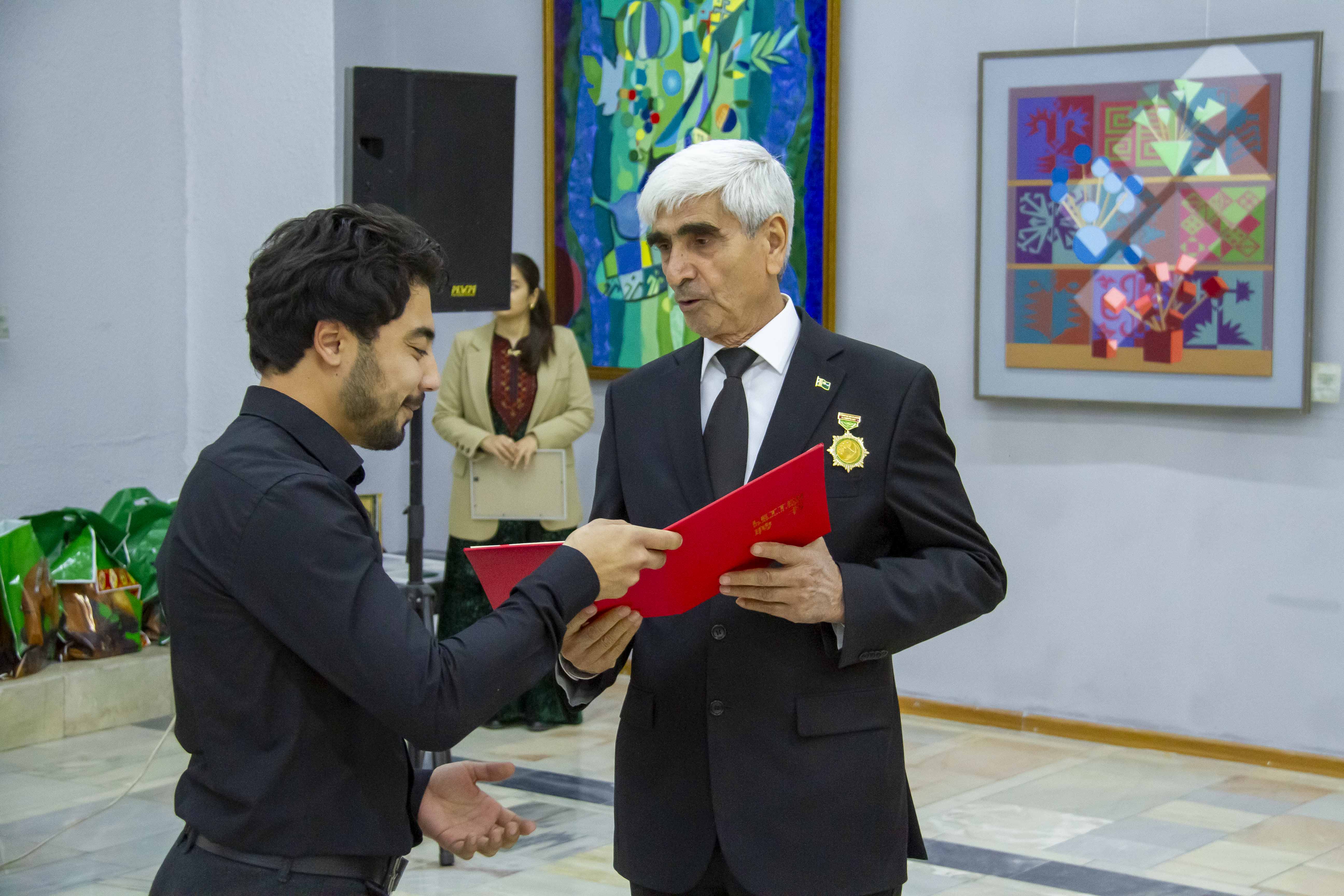
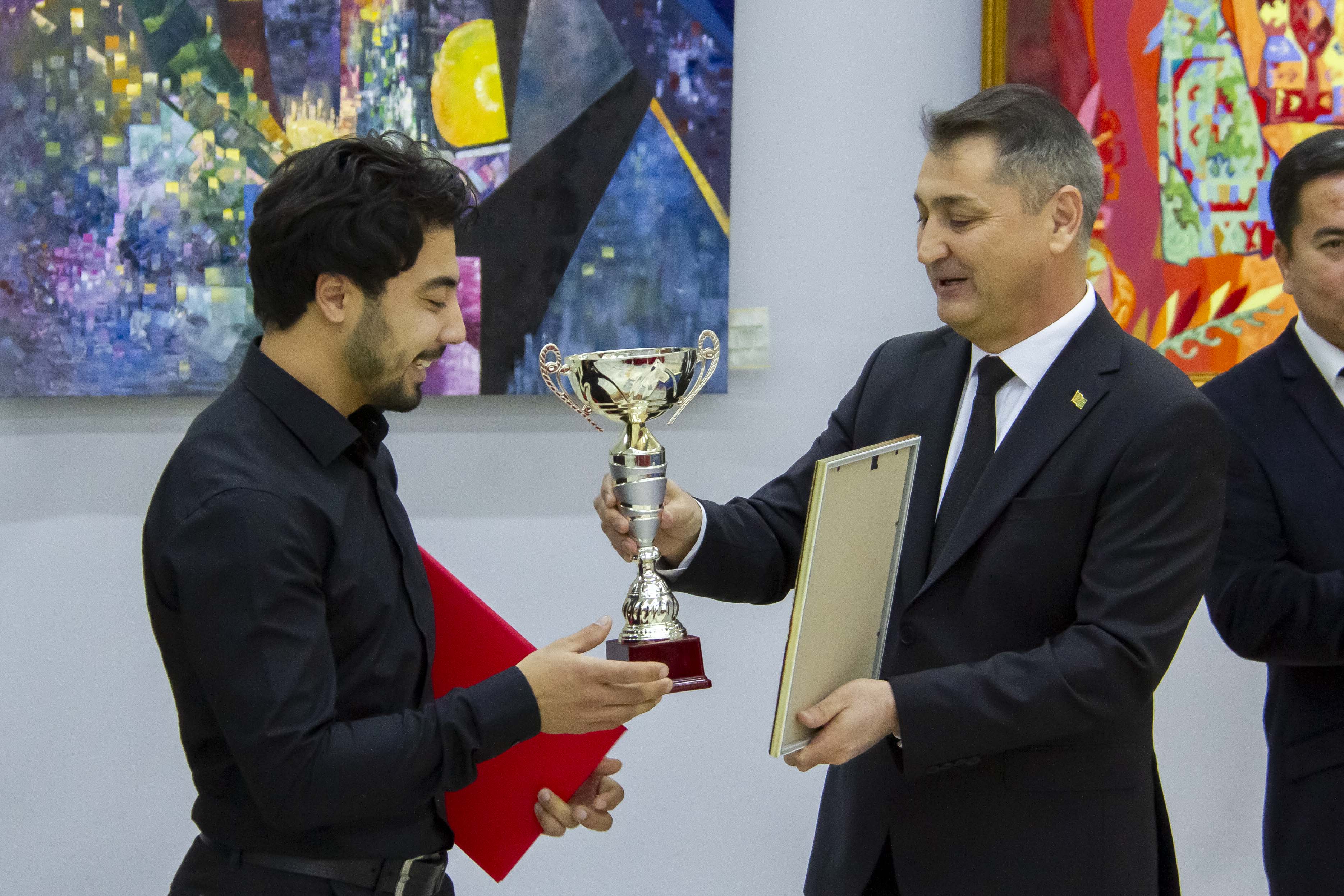
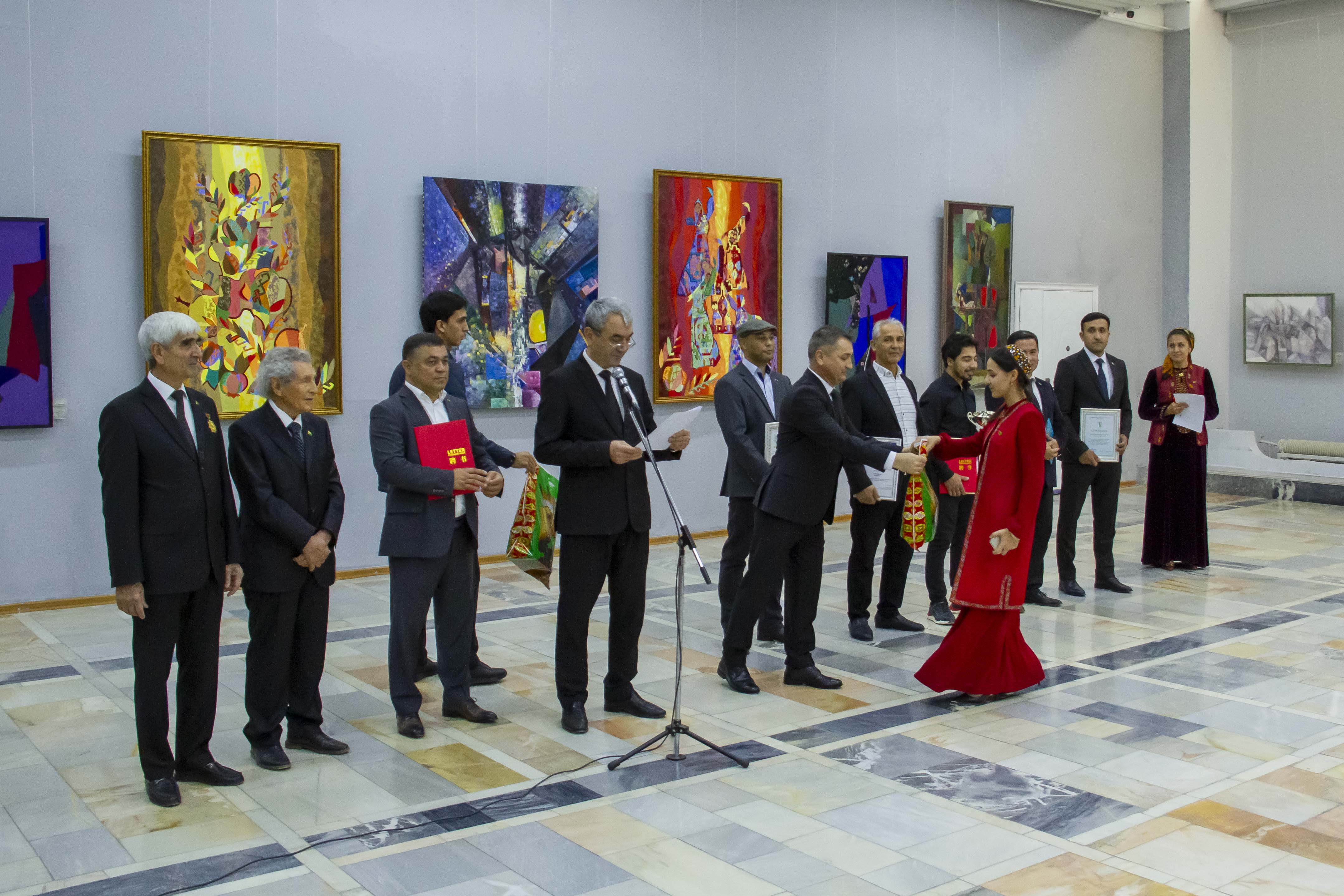

An exhibition of Turkmen artists titled “The World of Abstraction” has opened at the Fine Arts Exhibition Center of the Ministry of Culture of Turkmenistan. This style, based on the rejection of realistic depiction, emerged at the beginning of the last century.
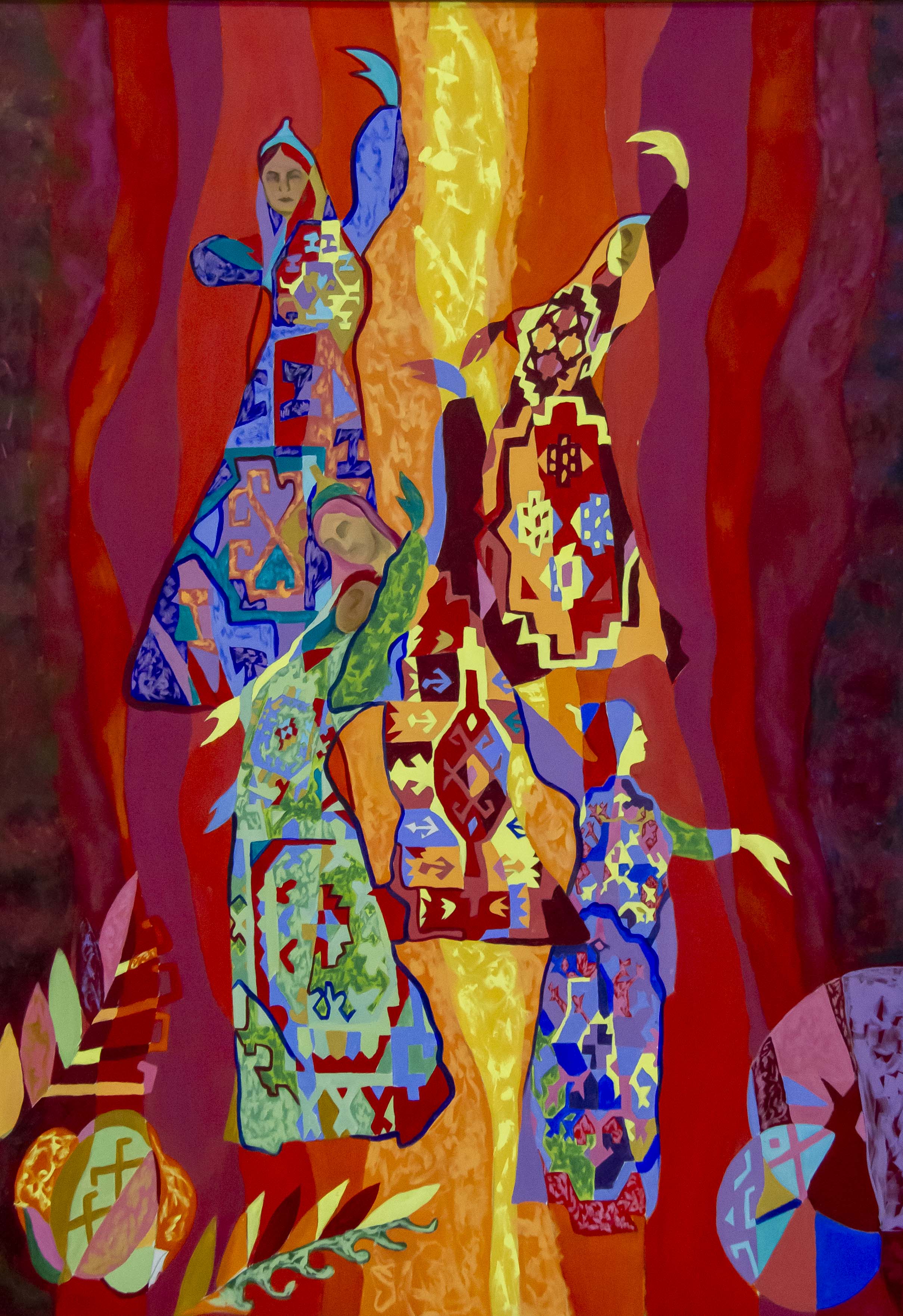
Its purpose is to express ideas and concepts through abstract elements rather than to replicate visible reality. And if, in earlier times, when socialist realism dominated, only a few artists in our country practiced abstraction, today it is arguably taking the lead. Moreover, there is no age limit for artists engaged in it. In other words, to paraphrase a well-known saying, one could say that abstraction is accessible to all ages.
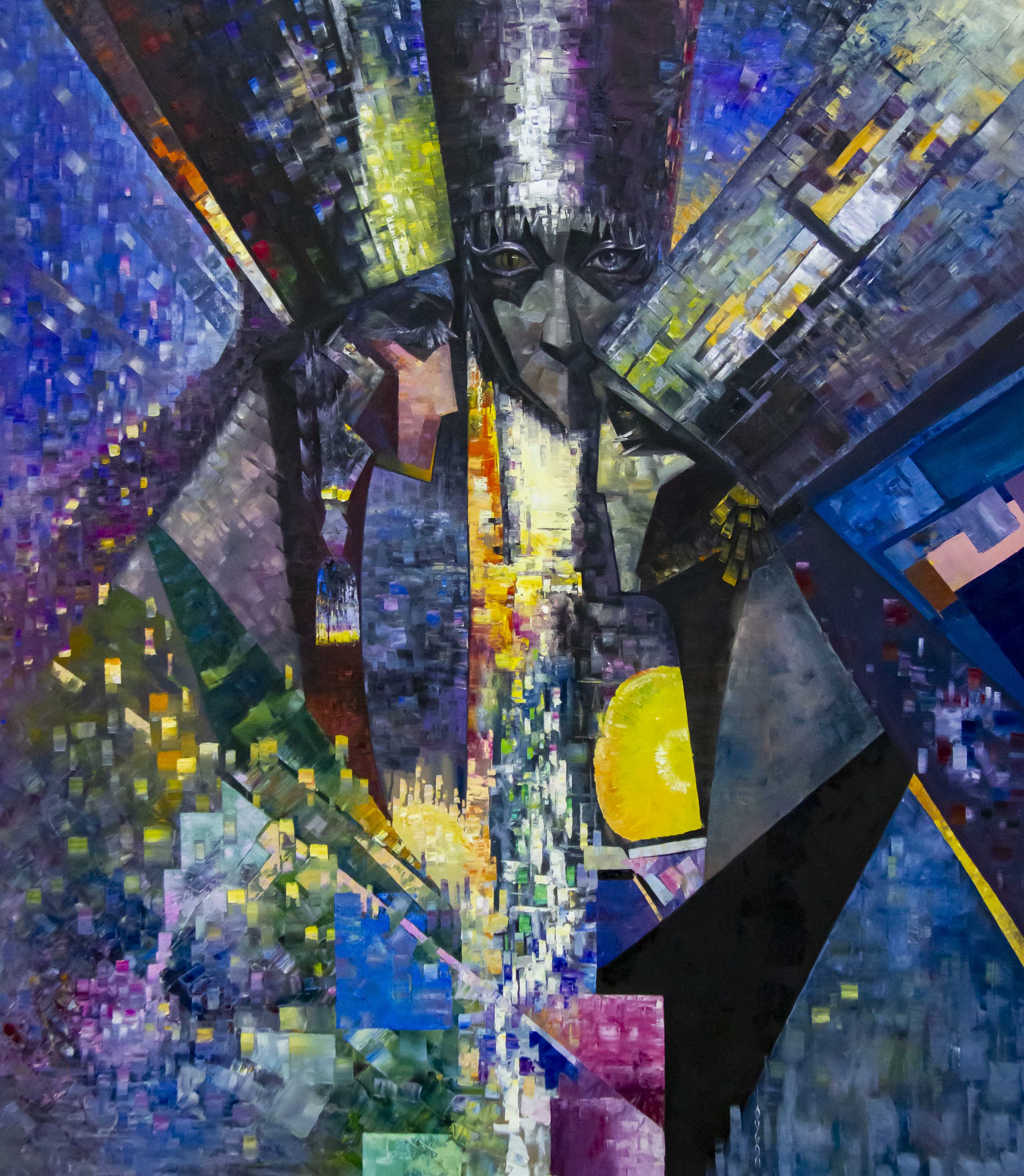
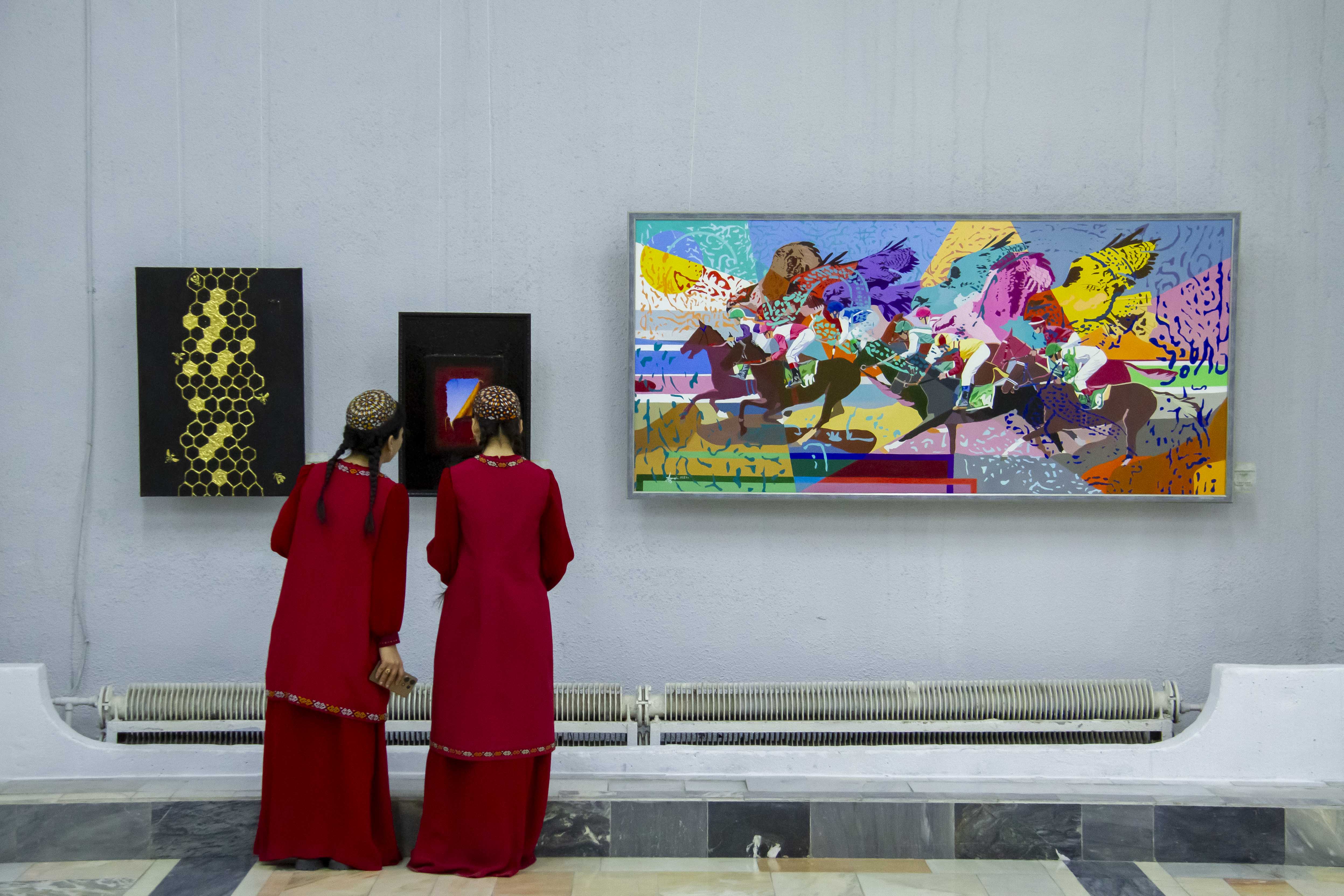
A total of 150 paintings and sculptural works were presented at the exhibition, occupying both floors of the exhibition center. One of the works attracting particular attention from viewers is Aygul Gurbanmyradova’s painting “Horses Like Birds.” Aygul depicted an emotional moment from a horse race. The speed and overwhelming desire to win transform the riders and their horses into birds. Furthermore, the birds’ wings match the colors of the jockeys’ outfits. Aygul’s painting captivates with its skillfully conveyed expression of the race and its bright palette of harmonizing colors.
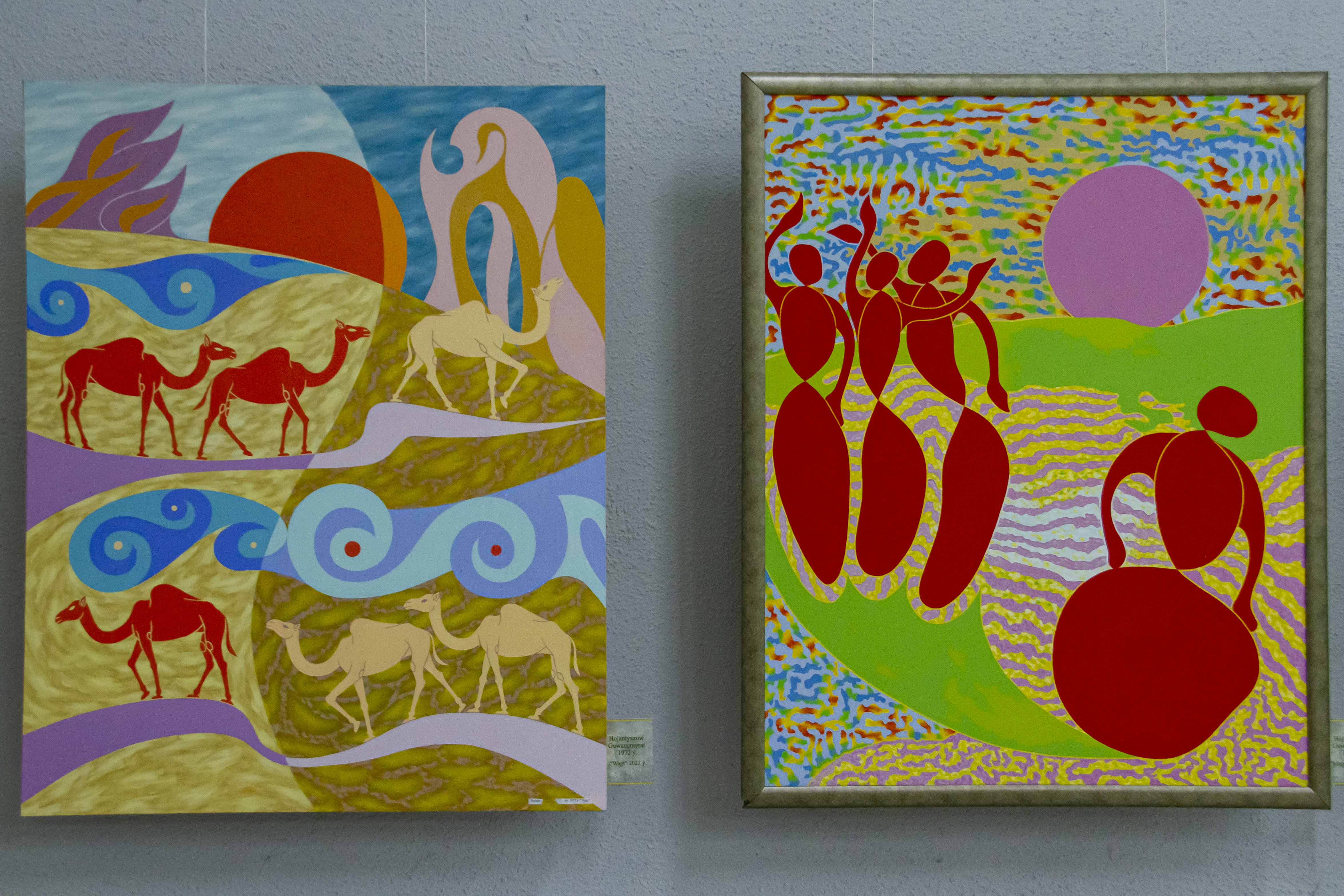
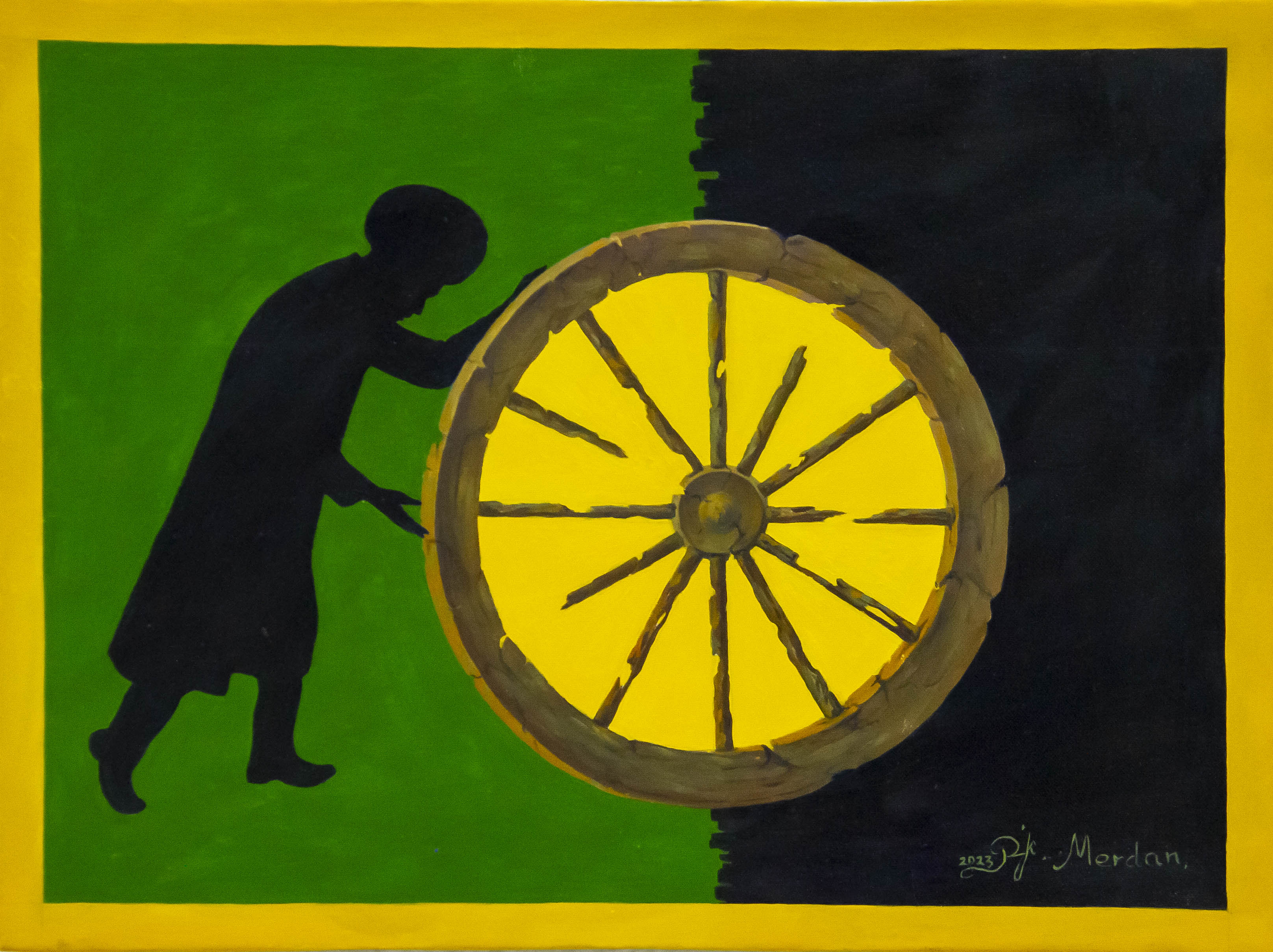
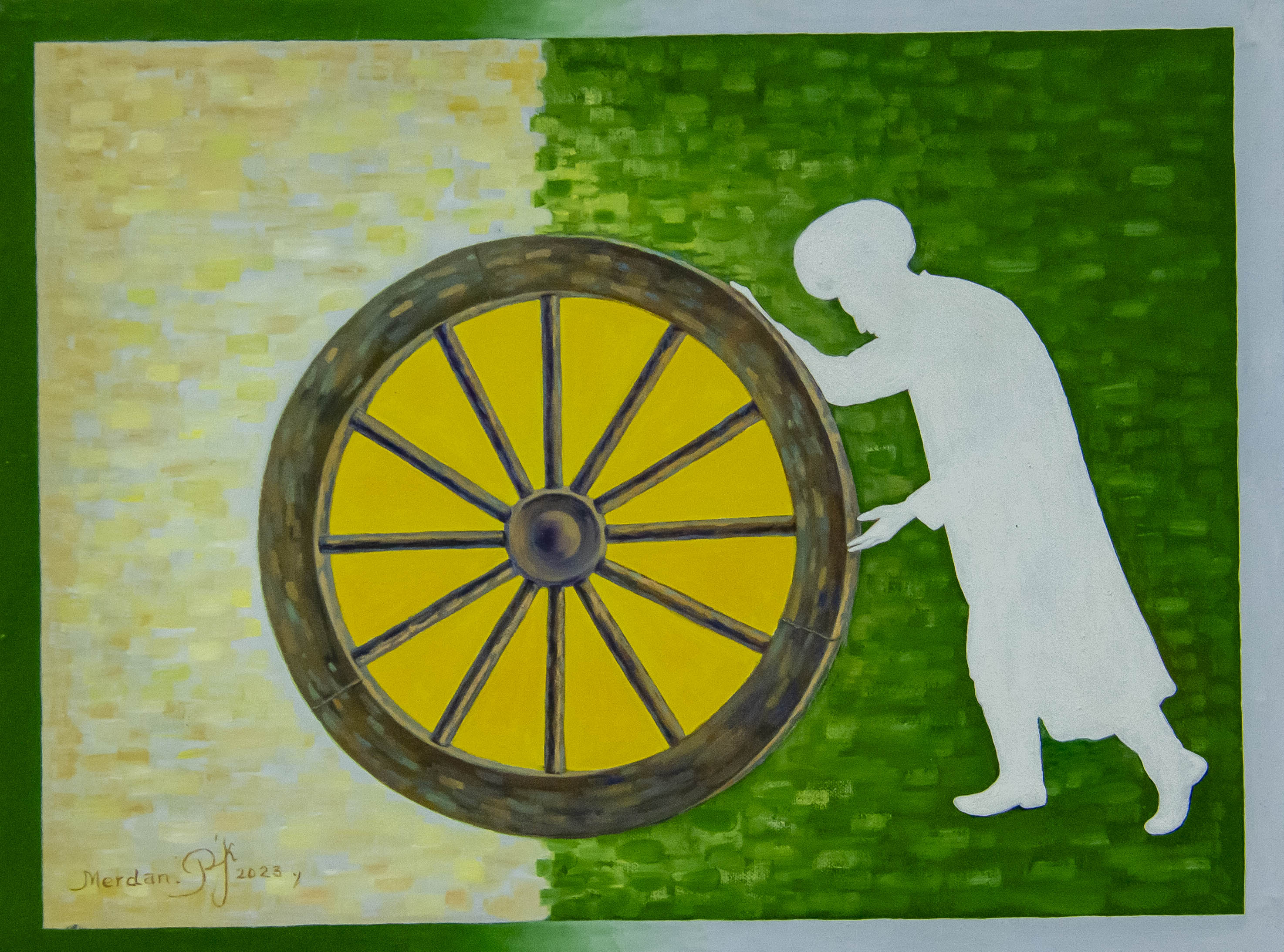
An original piece titled “Family” was presented by Guvanchmyrat Hojaniyazov. Against a vivid background, the artist depicted stylized figures of daughters and their mother. Their rounded shapes do not immediately reveal amusing human forms, and combined with the colorful backdrop, they evoke a joyful mood in the viewer. Two small-format works by Merdan Paytykov titled “Wheel of Fortune” also attracted public attention. One shows a bright sunny day, lush green grass, and a white appliqué of a yashuli spinning a wheel. The other shows night, the same yashuli but depicted in black, and the grass is not green but gray. The artist sought to remind us that everything in life changes, including happiness and misfortune.
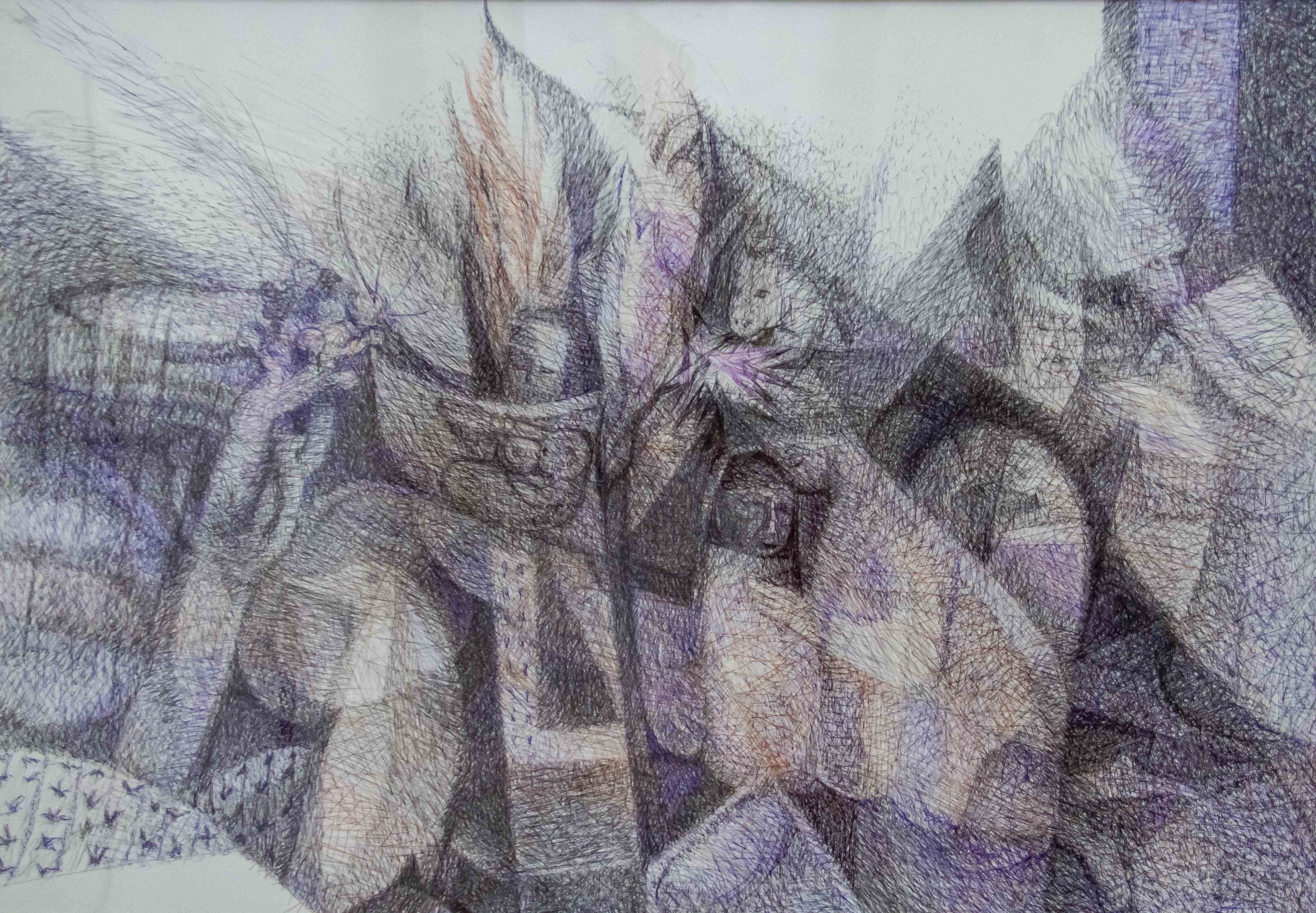
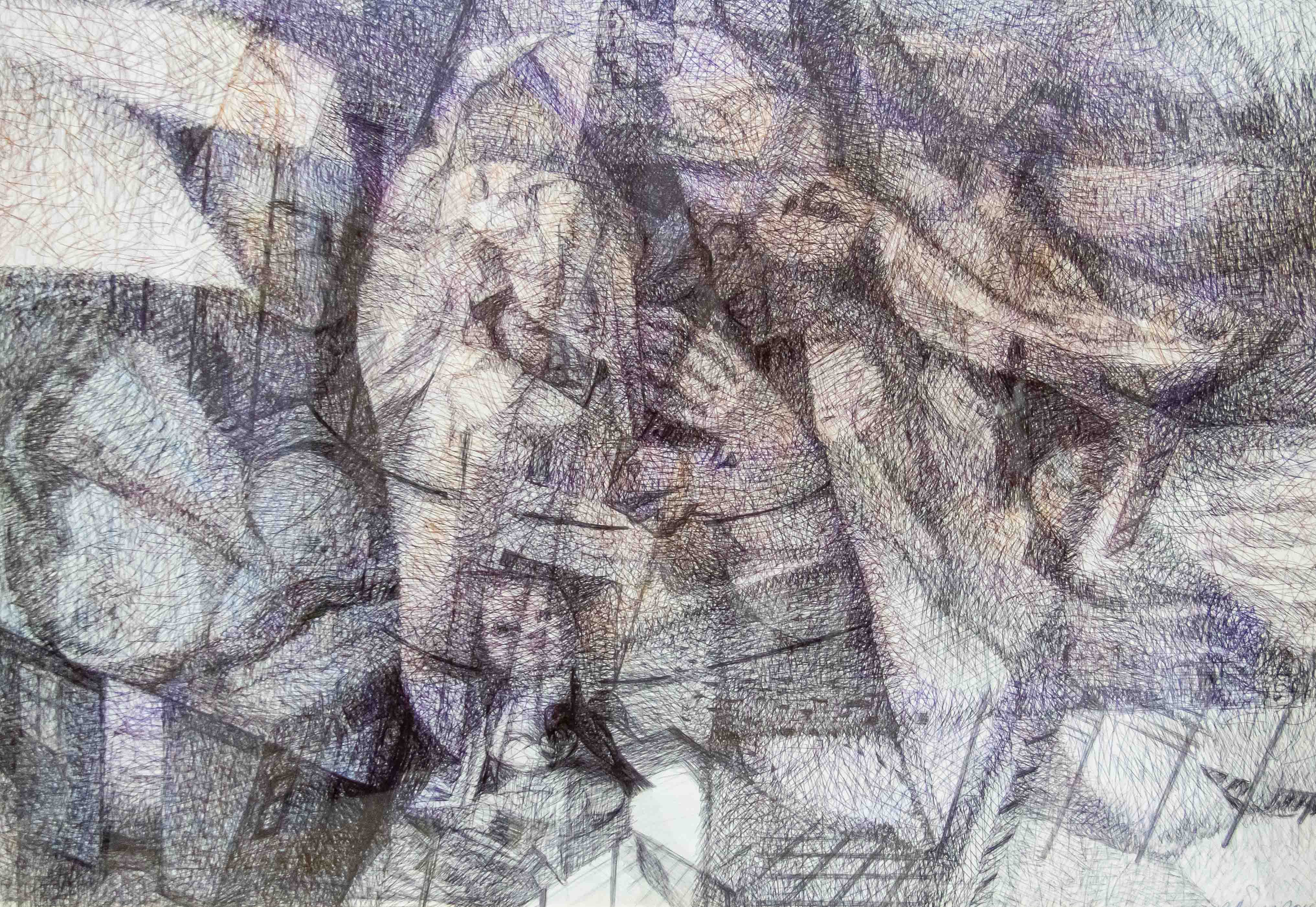
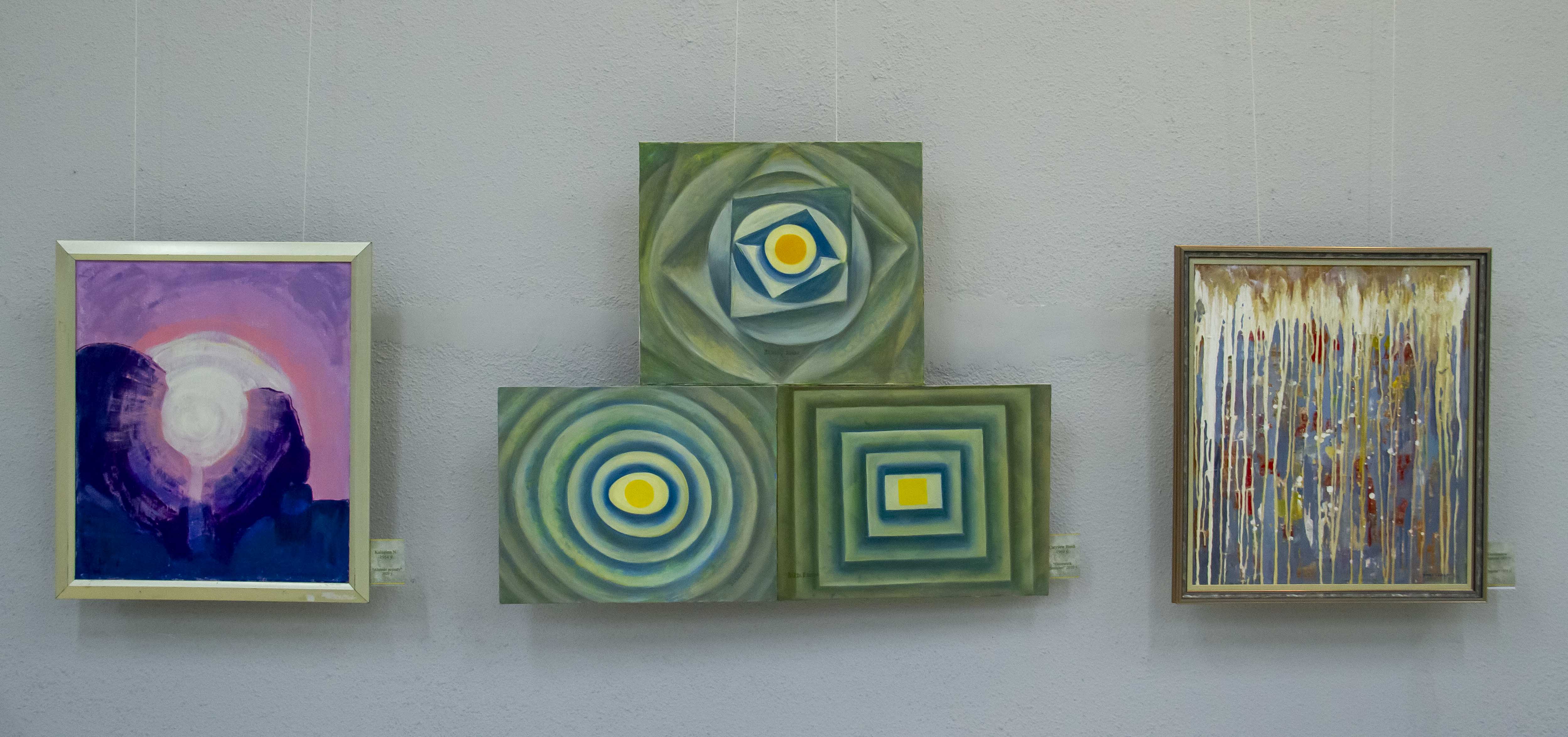
A compelling display of graphic works titled “Artists” was presented by Saparmammet Meredov. From time to time, it gathered visitors around it who eagerly tried to recognize familiar artists in the images. Charymyrat Yazmyradov depicted murky streams of rain noisily flowing from a roof in his painting “Hope.” The author likely wished to convey that the rain will pass and the sun will shine again—one simply needs to wait a little.
A series of paintings titled “Ashgabat Landscape” in the abstract style was presented by Natalia Kalugina. The protagonists of her landscapes are flowers from lawns and flower beds. They grow freely, without the constraints of bouquet arrangement, yet appear beautiful in their natural disorder thanks to the harmonious combination of colors. The emphasis was placed on color rather than form, as dictated by the principles of abstraction.
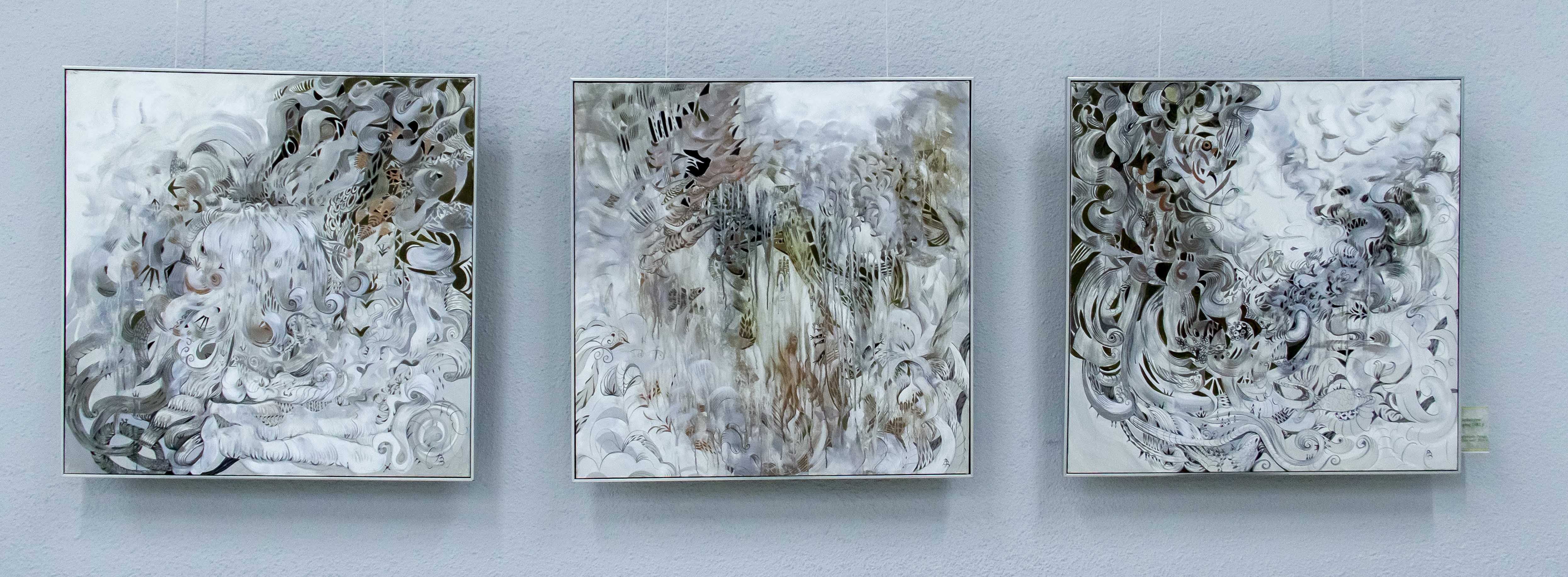
A triptych by Begench Berkeliev was created in full accordance with the canonical principles of abstraction. It was inspired by the works of Magtymguly and represented through images of clouds and billowing smoke. The monochromatic nature of the triptych enhances the abstract thinking of the author. Similar to Berkeliev’s work is a quadriptych by Oraz Agabayev titled “Melodies of Shazada.” His paintings are rendered in pinkish-gray tones.
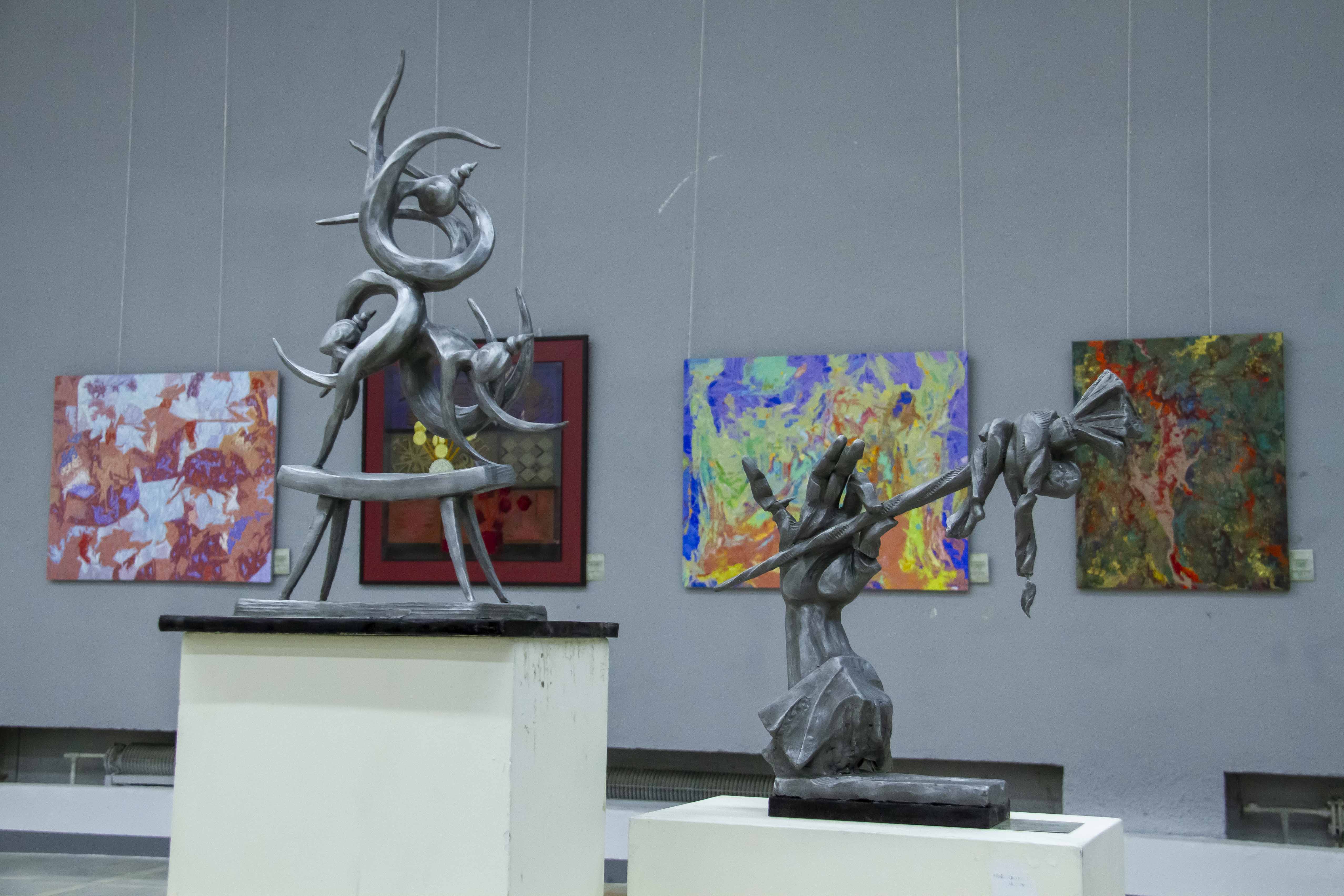
“I graduated from the Fedorov Printing Institute in Moscow,” the artist told a group of visitors surrounding him at the exhibition. “Even during my studies, I demonstrated imaginative associative vision, and it was well received by those around me. In 2011, I was delegated to represent Turkmenistan’s contemporary art at the exhibition ‘Man and Years’ in Moscow. Upon seeing my paintings, one of the visitors approached me and asked whether I knew a certain person, and he mentioned a name. ‘But that is my teacher!’ I exclaimed. I was thrilled to realize that my artistic style still bore the imprint of my teacher.” The sculptors were impressive this time as well. Particular attention was drawn to Maksat Hojainov’s sculpture “The Agonies of Creativity.” Maksat depicted a paintbrush in the form of a sword, with the twisting figure of an artist upon it. It was surprising to see such a work from Hojainov after his recent solo exhibition, where he demonstrated that clay is entirely obedient to his hands.
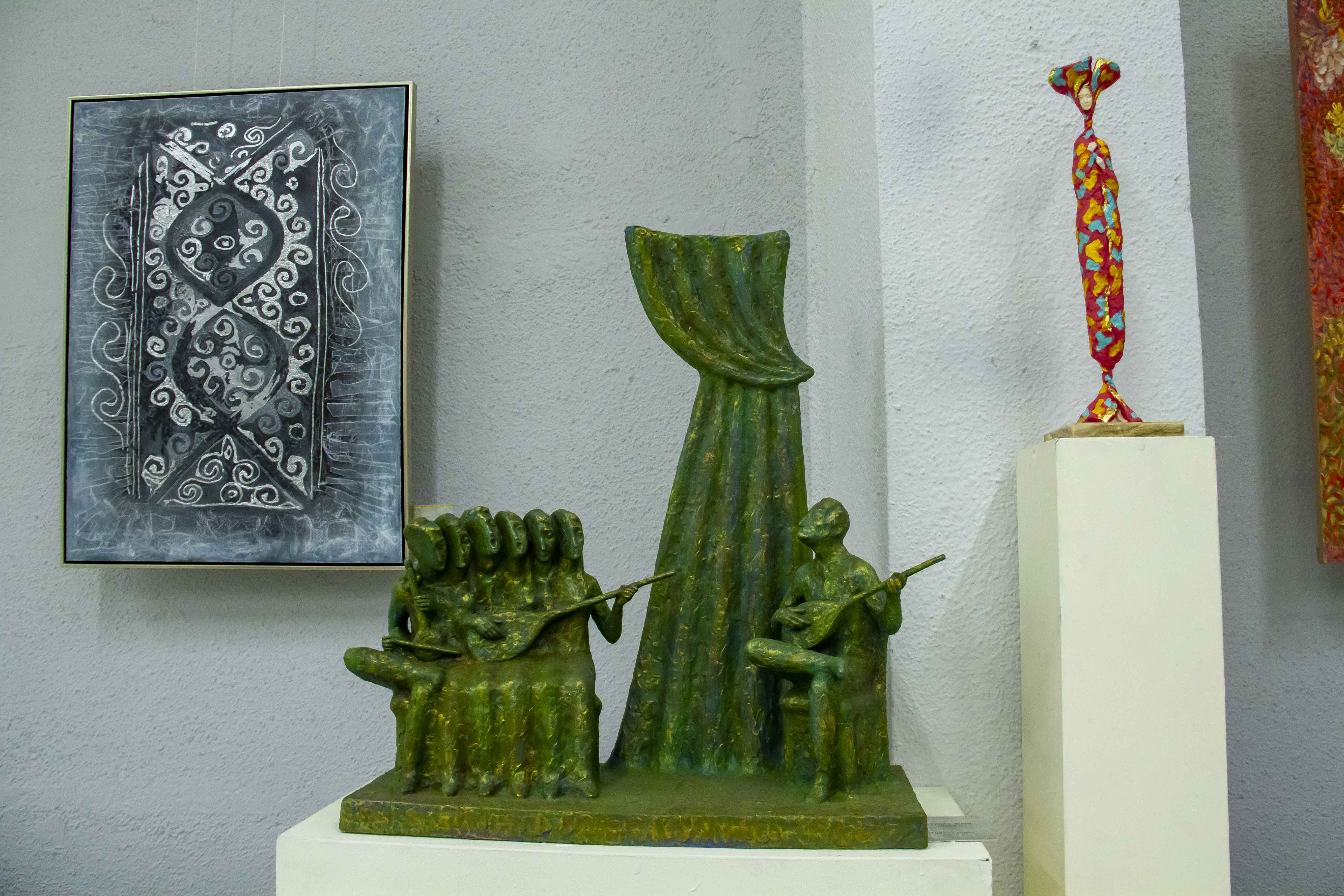
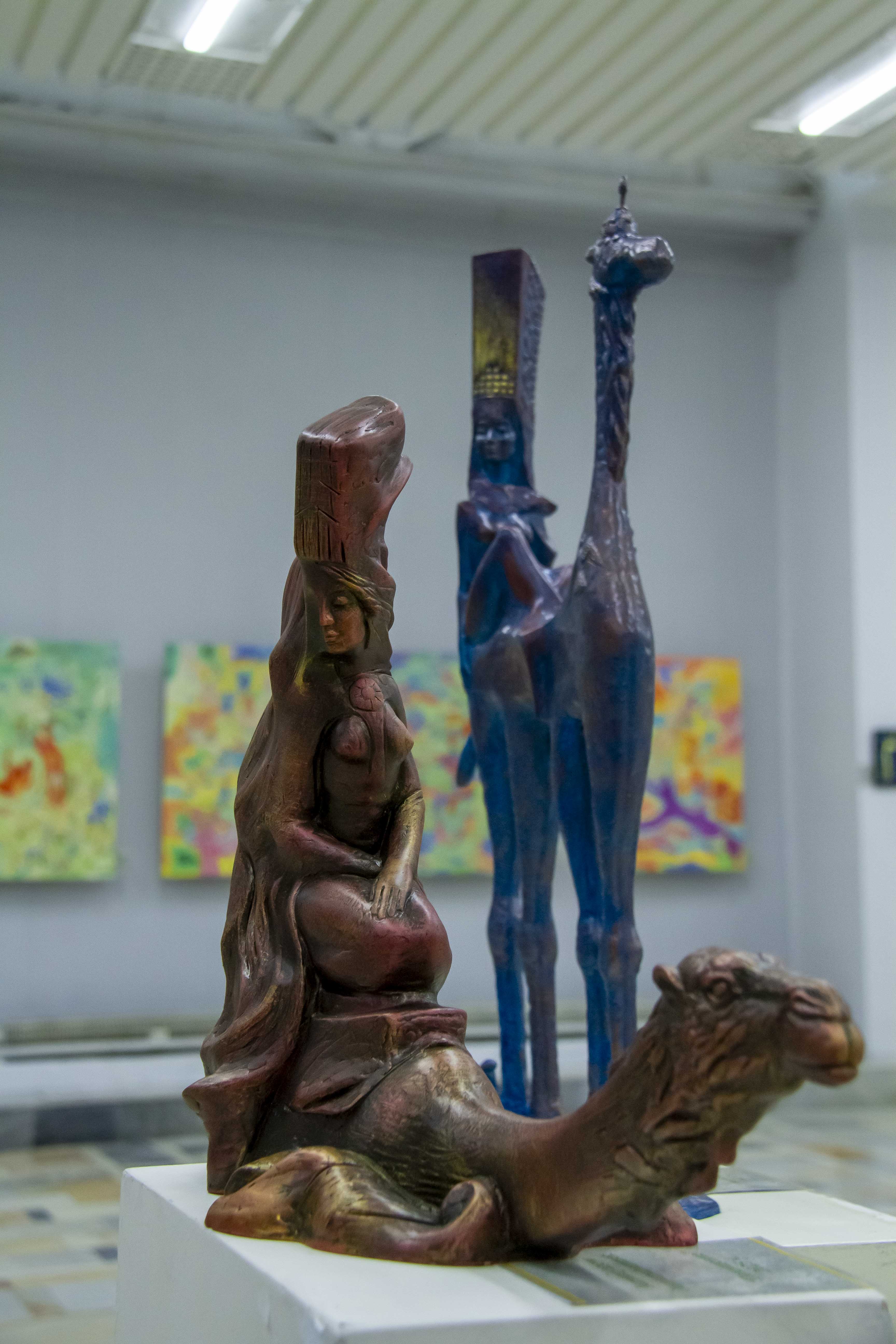
Jumamukhammet Jumaniyazov’s sculpture “Grandeur” made a strong impression. A sultan proudly sits atop a camel, whose expression is no less proud and haughty than that of its master. An intriguing piece titled “Aspiration” was exhibited by Abdymukhammet Oramadov. He polished the stone’s surface so skillfully that it truly lives up to the name of the work. Sculptor Vepa Reyimov presented a piece depicting musicians performing on stage with their mentor. Vepa titled the sculpture “Students — The Continuation of the Teacher.”
The exhibition attracted interest not only among visitors, but also among the artists themselves, who explored their colleagues’ works and shared their impressions.