


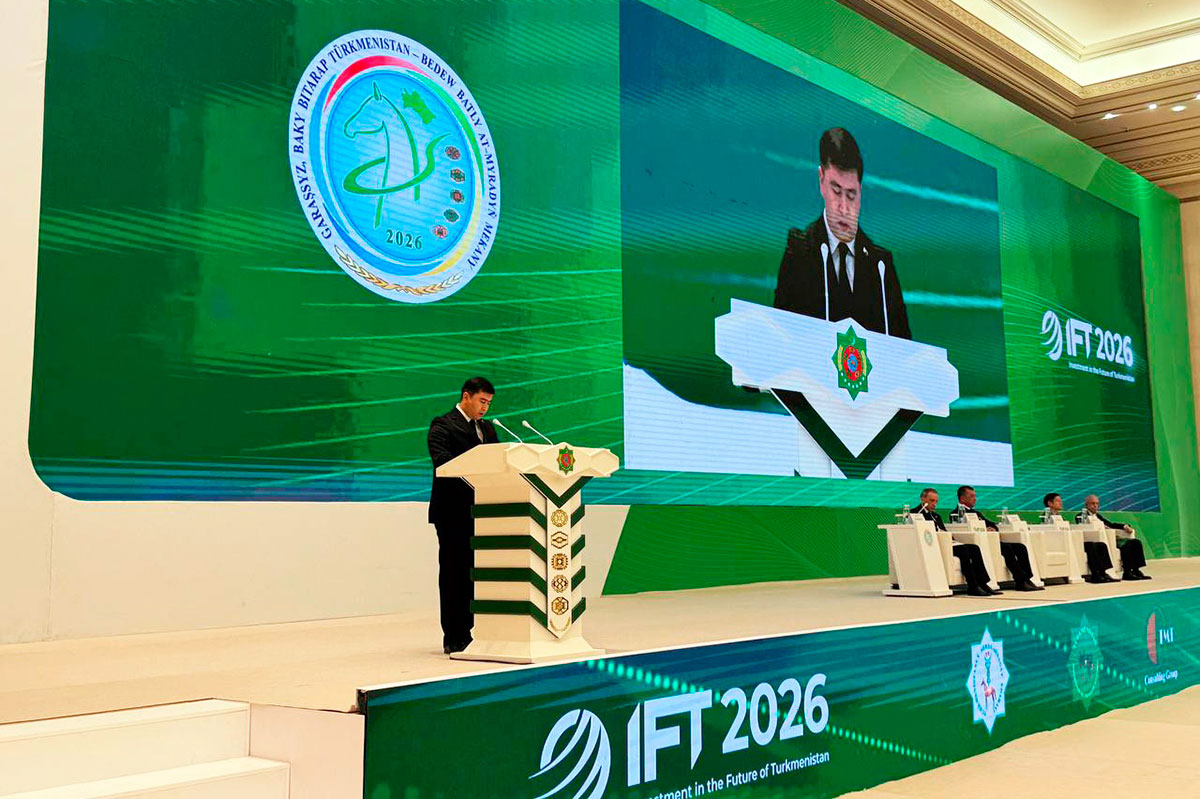
On March 18 in Ashgabat, on the sidelines of the International Forum “Investing in the Future of Turkmenistan” (IFT 2026), Deputy Minister of Finance and Economy Perkhat Yagshyev presented an analysis of the current state of the country’s economy and its strategic plans for integration into the global trade system.
The Deputy Minister’s speech confirmed that Turkmenistan’s economy continues to maintain strong growth momentum with minimal risks. Key macroeconomic indicators for the past year demonstrate the stability of the financial system.
“One of the central directions of Turkmenistan’s investment policy is attracting foreign direct investment. However, it is not enough to simply attract capital—the quality of these investments is crucial. We focus on modern technologies, the creation of new industries, the development of human capital, as well as projects that ensure environmental and economic sustainability,” said P. Yagshyev.
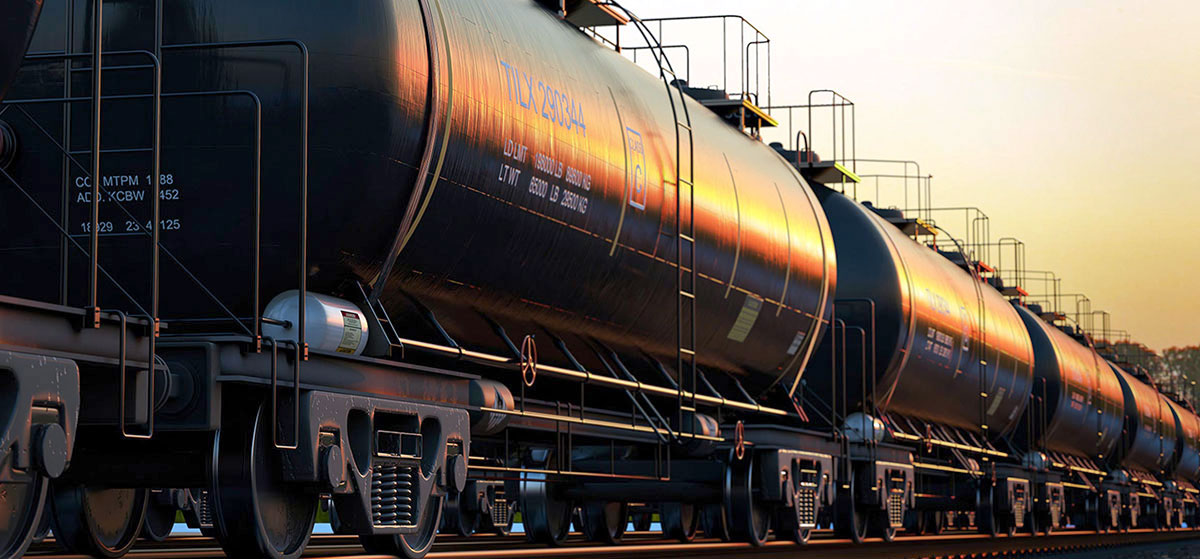
Particular attention in the report was given to transforming the country into a key transport hub between Europe and Asia. In this regard, thanks to its geographical location, Turkmenistan is actively developing international transport corridors.
“Today, Turkmenistan is not just a national market—it is a transport hub between Europe and Asia. The country is actively developing East–West and North–South corridors, participating in international logistics projects and strengthening its role in transit. The development of logistics opens new horizons for investors not only in the transport sector but also in related industries such as energy, industry, and the agro-industrial sector,” emphasized P. Yagshyev.
Another key vector of foreign policy, according to the speaker, is accession to the World Trade Organization (WTO). As noted, Turkmenistan is consistently working toward joining the WTO by adapting its national legislation and trade policy to international standards.