


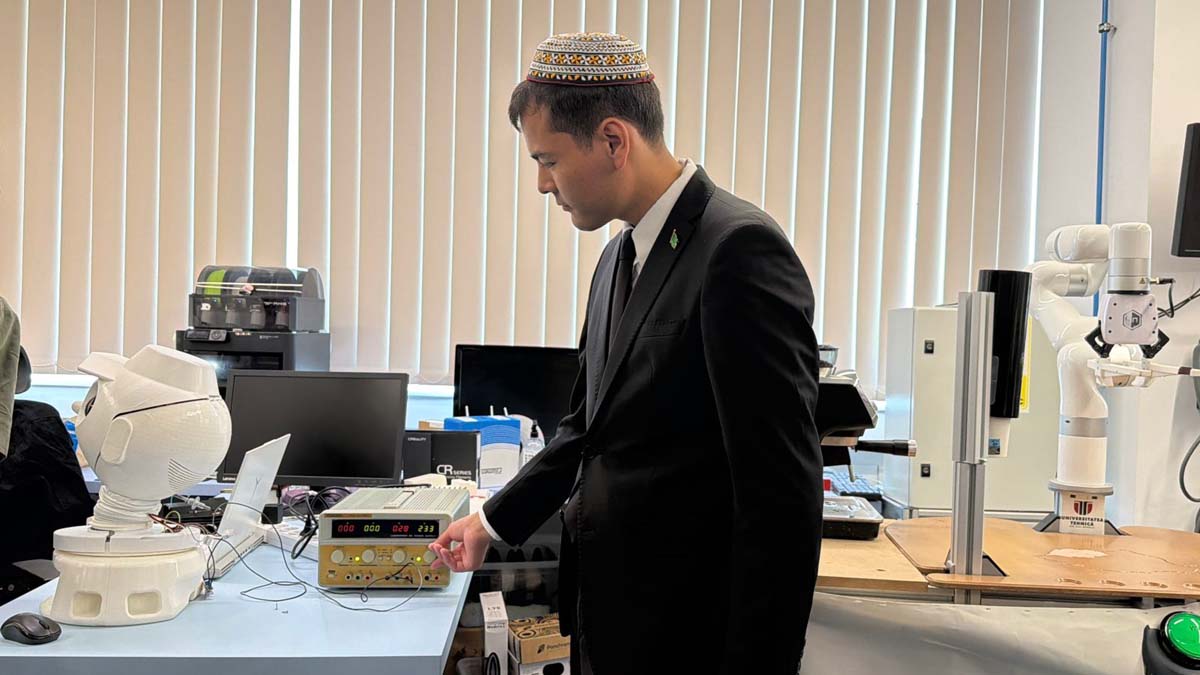
In an era of comprehensive digitalization of global economies, a key factor in the successful development of any country is the training of highly qualified IT specialists capable of innovative thinking and working with cutting-edge technological solutions.
Turkmenistan, which is actively implementing its Digital Economy Development Concept, places a high priority on modernizing higher education and expanding the scope of international academic exchange.
A significant contribution to the implementation of this strategy is being made through the long-term partnership between the Institute of Telecommunications and Informatics of Turkmenistan (ITIT) and the Technical University of Cluj-Napoca (TUCN). Within the framework of this cooperation, a summer industrial internship program for Turkmen students is being held from June 21 to July 13 at a leading engineering university in friendly Romania.
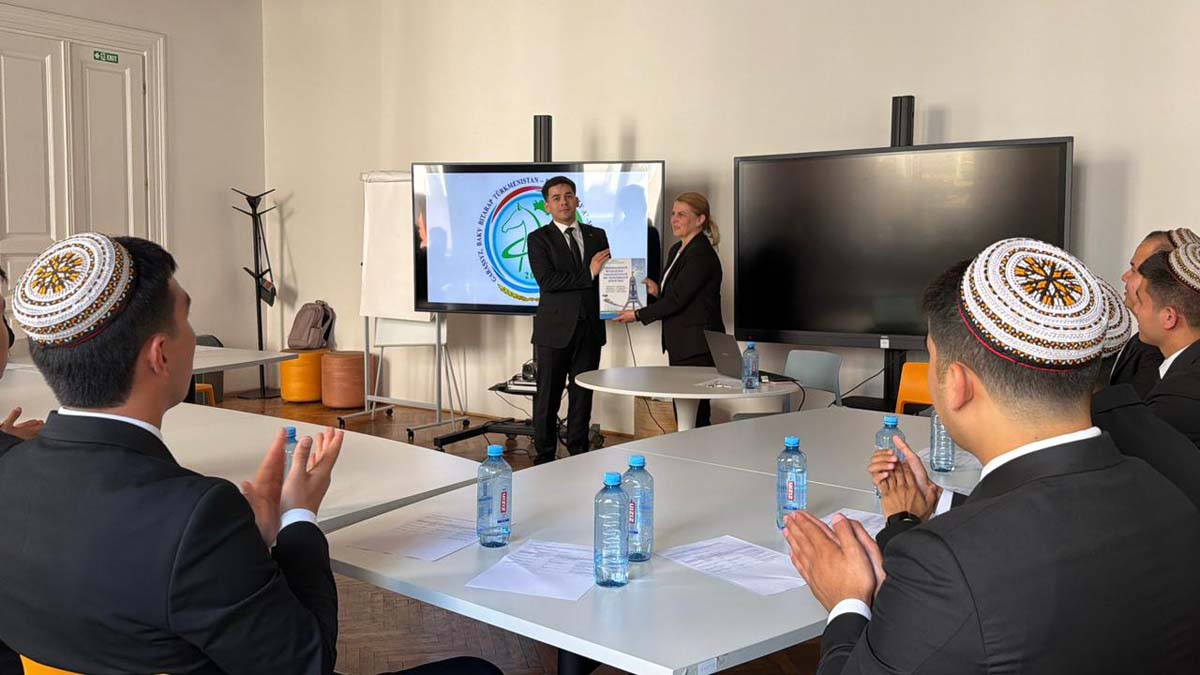
This collaboration is based on an inter-university agreement that has established a strong foundation for productive academic interaction between the two higher education institutions.
The practical focus of the summer internship is to shift emphasis away from traditional lecture-based instruction toward intensive project-oriented work within the real-world IT industry. The internship for Turkmen students in Cluj-Napoca, recognized as the “Silicon Valley” of Eastern Europe, has become a traditional and effective platform for the professional and personal development of future telecommunications engineers, software developers, and systems analysts.
The annual summer internship program lasts three weeks and is distinguished by its intensive academic and industrial workload. Delegations consist of top senior-year students selected through a rigorous process based on academic performance, foreign-language proficiency, and the existence of their own software projects, as well as experienced ITIT faculty members and supervisors.
A key aspect of the internship’s organization is the intensity of its 21-day cycle, which includes theoretical modules, laboratory research, and corporate sessions. The first half of each day is devoted to scientific and theoretical work in university laboratories, while the second half focuses on solving practical tasks at industrial facilities. Each student is assigned both an academic supervisor from the Romanian university and a technical mentor from a host international company. This individualized approach allows students not merely to observe work processes but to become fully integrated into international project teams, gaining firsthand experience in managing modern IT infrastructure.
The Technical University of Cluj-Napoca possesses one of the most advanced research facilities in the region. Turkmen students have access to specialized centers equipped with state-of-the-art server, networking, and robotics equipment. During the internship, particular attention is devoted to the following advanced fields:
Artificial Intelligence and Machine Learning (AI/ML): Studying algorithms for processing large data sets; designing neural networks, and implementing smart technologies in urban and industrial infrastructure;
Industrial Automation and Robotics: Programming programmable logic controllers (PLCs), modeling automated production lines, and developing industrial process control systems;
Cloud Computing and Cybersecurity: Configuring distributed network architectures, protecting information and communication channels, and administering modern enterprise-level operating systems.
Web-Based Platform Development: Designing and optimizing complex web interfaces for data analysis and monitoring technological indicators in real time.
Students actively learn to work with intelligent data-processing devices, conduct comprehensive diagnostics of telecommunications systems, and test software for vulnerabilities.
A unique feature of the internship is students’ direct access to the production facilities of global technology giants that maintain offices and manufacturing operations in Romania. Young trainees from Ashgabat undertake practical training at such conglomerates as:
Bosch (Branches in Zalău and Jucu): here, students study automated quality management systems and the implementation of the Internet of Things (IoT) in the production of industrial components and microelectronics;
Emerson: at this company, Turkmen trainees gain experience with advanced automation technologies and become familiar with software solutions for optimizing large telecommunications enterprises;
Tenaris: this international leader provides ITIT students with the opportunity to study IT architectures used in managing complex industrial processes.
During their practical work, students solve real-world cases: optimizing corporate software code, improving algorithms for collecting data from sensors, and developing interface prototypes for various applications. All of this helps bridge the gap between university theory and the dynamic demands of the modern labor market.
In addition to its purely technical and scientific dimensions, the summer internship fulfills an important mission in promoting interstate dialogue and cultural diplomacy. The Turkmen delegation traditionally serves as an ambassador for its country in Europe.
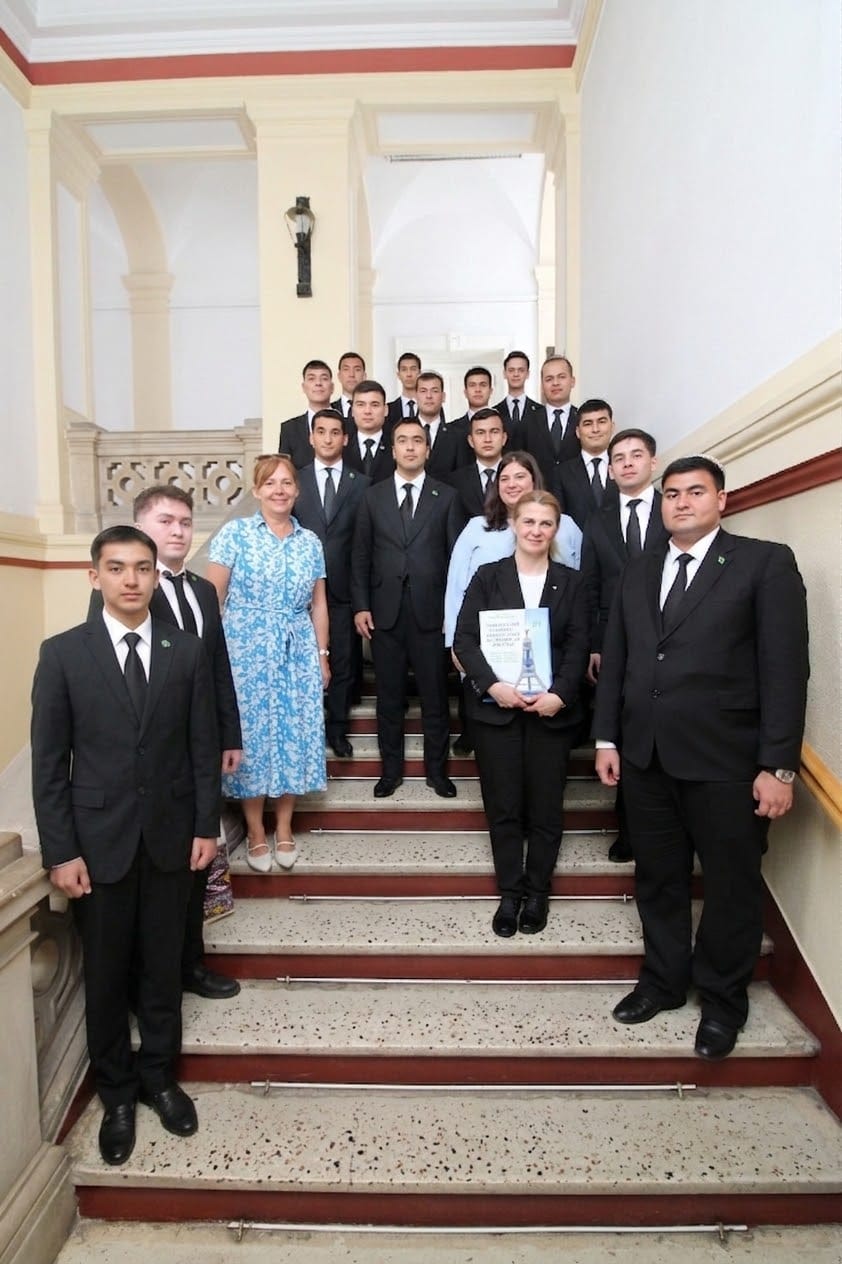
During official meetings with representatives of Romanian academic institutions, Turkmen students and faculty regularly deliver presentations highlighting the modern economic and educational potential of Turkmenistan. Partners are presented with valuable books authored by the National Leader, Hero-Arkadag, and the esteemed President of Turkmenistan Serdar Berdimuhamedov thereby contributing to the promotion of the nation’s rich cultural heritage and the principles of its permanent neutrality.
Upon returning home, students apply the skills they have acquired to their graduation theses and research projects, enriching the institute’s scientific and academic foundation. At the same time, these Romanian internships enhance the experience of ITIT faculty members, enabling them to promptly update curricula and educational programs at their home institution in accordance with global trends.
Such comprehensive cooperation serves as an additional guarantee that graduates of the Institute of Telecommunications and Informatics of Turkmenistan will possess an international outlook on their profession, an up-to-date body of practical knowledge, and the capacity to become a reliable pillar in the construction of a high-tech digital society in their country.
Batyr Babayev
Candidate of Physical and Mathematical Sciences, Senior Lecturer, Institute of Telecommunications and Informatics of Turkmenistan.