


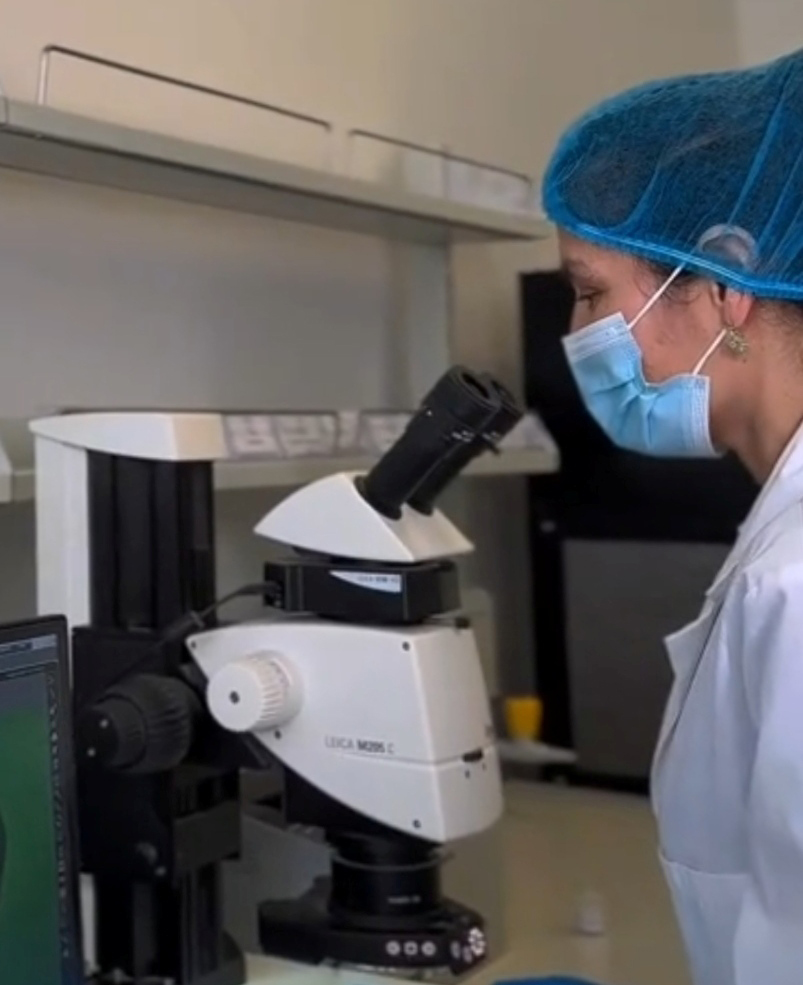
At the International scientific and technological park of the Academy of sciences of Turkmenistan, under the leadership of Altyn Rahmanova, head of the biotechnology laboratory, and Durdymyrat Gadamov, acting director, doctor of chemical sciences, corresponding member, a systematic research project is underway aimed at studying current trends in modern agrobiotechnology, including an in-depth analysis of issues related to genetically modified organisms (GMOs).
In the epoch of rapid development of bioengineering and innovative technologies, issues of biosecurity, ecosystem protection and food security are becoming of strategic importance for every state. Today, the global market for agricultural products and raw materials is actively transforming. However, uncontrolled handling and lack of proper monitoring of genetically modified components pose potential risks to both human and animal health.
Potential allergenicity, unexpected metabolic changes, resistance to therapeutic agents and disruption of natural biodiversity are factors that require the utmost vigilance from the scientific community.
Timely detection, accurate identification, and strict traceability of agricultural raw materials, seeds, and animal feed serve as a reliable shield against potential biological and environmental threats.
The researchers focus on agricultural crops and plants, their physiological characteristics and responses to modern biotechnological methods. It is important to emphasise that the activities of the laboratory at this stage are of a scientific research and academic nature, focused on studying the fundamentals and finding specialised solutions.
In parallel with pure scientific research, the laboratory is working on the methodological development and preparation of analytical protocols for the detection and control of GMOs in agricultural products and animal feed. This systematic work on adjusting methods and forming a research base is carried out with an eye to future quality control tasks and possible methodological alignment with the requirements of the standards system. This approach allows us to lay a solid scientific foundation for the future domestic expert base.