


The Ministry of Environmental Protection of Turkmenistan cooperates with the Food and Agriculture Organization of the United Nations (FAO) within the framework of the implementation of the FAO-GEF Regional Project "Integrated Natural Resources Management in Drought-Prone and Salt-Affected Agricultural Production Landscapes in Central Asia and Turkey (CACILM-2)" in the country.
The National Institute of Deserts, Flora and Fauna (NIDFF), S. Niyazov Turkmen Agricultural University (TAU), as well as partners of the pilot project area in Dashoguz velayat are involved in the implementation of this project.
The project implements a number of activities on the use effective technologies and methods aimed at introducing integrated approaches to the rational use of Turkmenistan's natural resources.
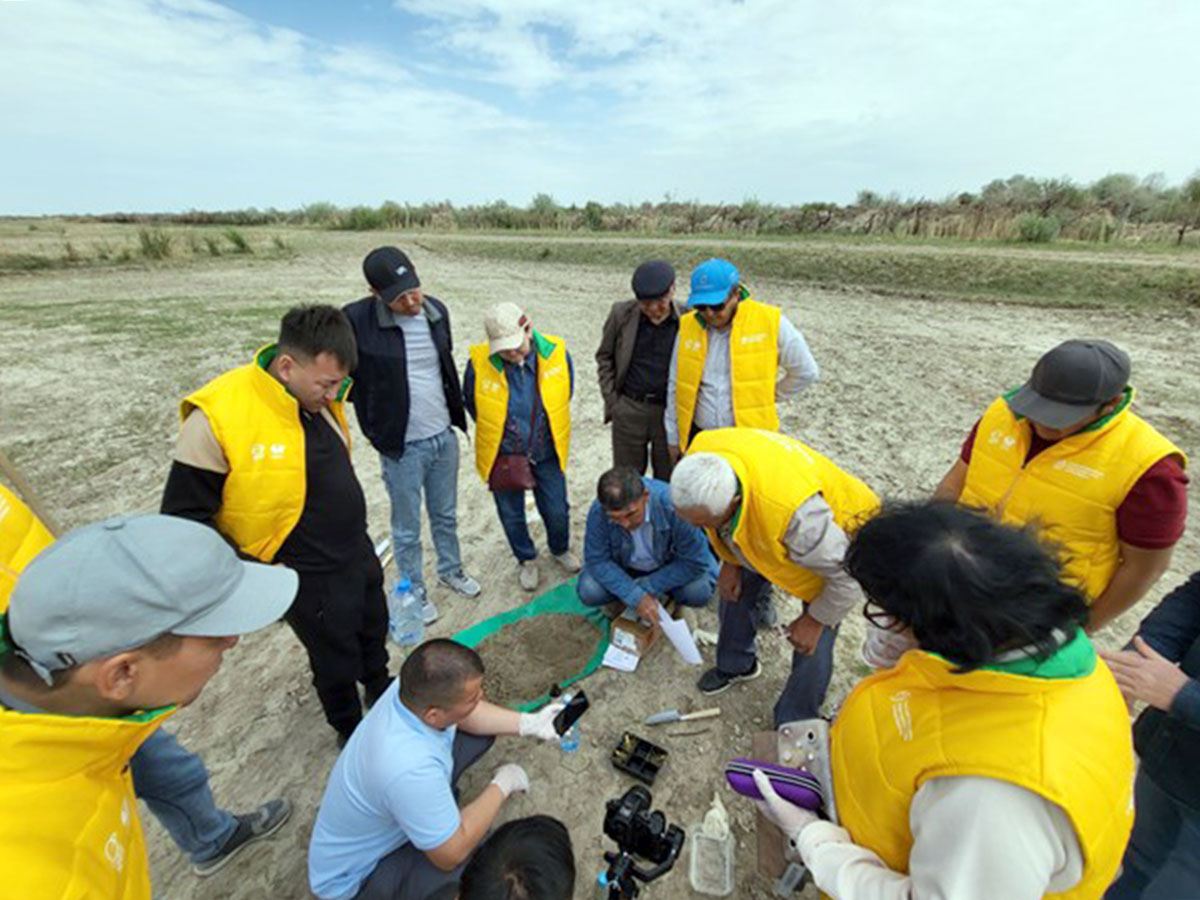
Research and constant monitoring of the soil–plant–atmosphere system is important for planning and forecasting crop yields, and for this it is necessary to have at one’s disposal modern equipment for conducting appropriate rapid tests. Taking this into account, within the framework of the CACILM-2 project, a set of equipment for rapid analysis of soil, water and plants was purchased and delivered to Turkmenistan.
It includes an agricultural mobile laboratory complex, a portable small-sized weather station, a plant transpiration rate meter, a manual nitrogen measurement sensor, a soil thermometer, a grain moisture meter and other measuring devices that will be used to conduct analyses on physical, chemical and biological indicators of soil, water and plants.
The purchased equipment is intended to assist the project partners in educational, scientific and practical activities.
Prompt and accurate analysis of physical, chemical and biological indicators of crops and soil with the help of these devices will allow, if necessary, to adjust the agricultural technology of production, rationalize the use of fertilizers and plant protection products, as well as the use of water and energy resources.
The research data obtained as a result of constant monitoring will help to respond to environmental changes in a timely manner and make adequate decisions, will contribute to strengthening the scientific and practical potential of the project partners and the training of highly qualified personnel for the agricultural sector of the country.