


Batyr Bekmyradov is the production designer of more than 60 plays and 10 films, as well as the author of paintings and graphic works. Batyr Gulnazarovich is the son of the People’s Artist of Turkmenistan Gulnazar Bekmyradov, the first rector of the State Academy of Arts of Turkmenistan. Moreover, his father was a member of the legendary group of artists that entered the history of Turkmen painting under the name "The Magnificent Seven."
We met with Batyr Gulnazarovich in the art workshop of the Magtymguly National Music and Drama Theater, and the first thing we asked him was, “Did your father’s fame help or, on the contrary, hinder your creativity?”
“I find it difficult to answer categorically because it was different at different times: sometimes it hindered me, sometimes it helped,” Batyr Bekmyradov admits frankly. “An interesting fact—I first saw my father when I was 6 years old. All those years, starting from my birth, he was studying at the Russian State University of Cinematography named after S. Gerasimov (VGIK). My father was raised in an orphanage, had no relatives, and my mother worked in a museum and saved money to send to him. During summer holidays, he earned extra money in Moscow. But the goal justifies all the difficulties. Of course, his profession influenced me. Dad was worried that I entered not VGIK but the Moscow State Academic Art Institute named after V.I. Surikov. He wanted me to follow in his footsteps. I was, however, very pleased to enroll in Professor Mikhail Mikhailovich Kurilko’s course.”
“Why did you choose the specialty of theatrical artist? After all, thanks to your father’s authority, you could have become a painter or sculptor?”
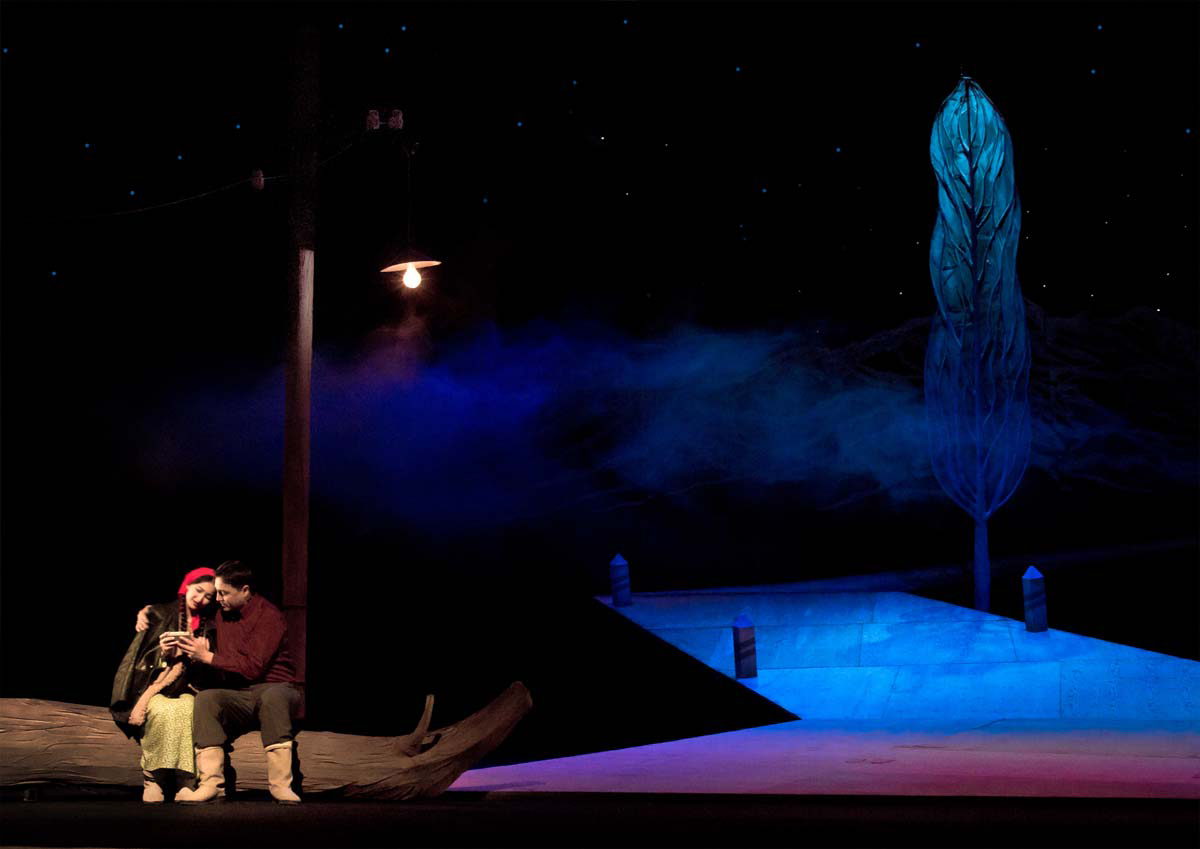
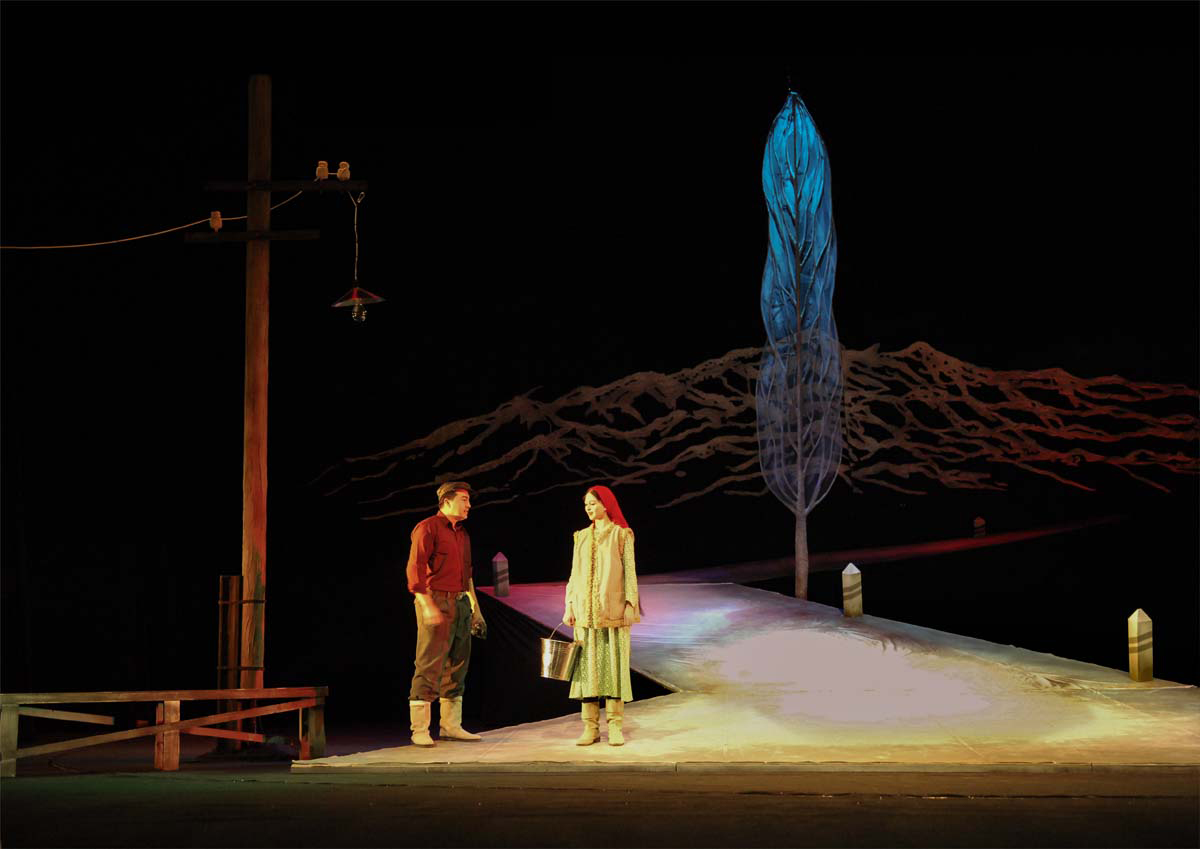
“I like theater. As a child, I played a boy in the play ‘My Little Poplar with a Red Headscarf’ directed by Oraz Hojimyradov. By the way, a little incident happened to me during that play. Walking behind the scenes, I went down the stairs, opened a door, and ended up in the basement. I walked down one corridor, then another, and got lost. My entrance to the stage was imminent, but I couldn’t get out of the basement. I shouted and called for help. Finally, I opened another door and, miracle of miracles, found myself again on the stairs. The most important thing—I made it in time for my entrance on stage.”
This play won the “Golden Mask” award in the city of Rostock (Germany).
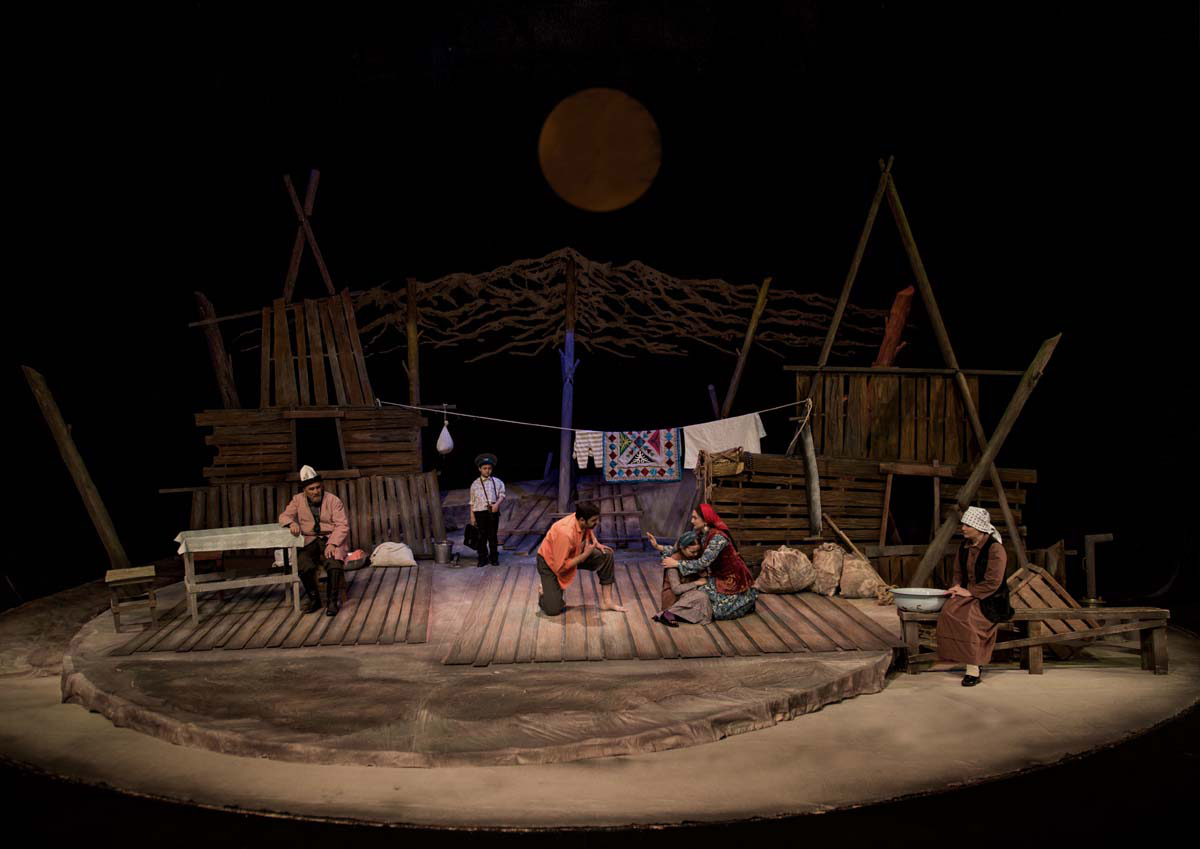
I dedicated my work on the scenography of ‘The White Ship’ to Oraz Hojimyradov. We worked on this play together with Mekan Annamyradov, who, incidentally, is my best student and also my father’s student. We created on stage a closed space for the play ‘The White Ship’ that does not allow people to escape oppressive situations.
Every work by Chingiz Aitmatov literally calls out to be performed on stage and on film. Hojaguly Narlyev began directing the film ‘Mankurt.’ As production designer and costume designer for this film, I was nominated for the Nika film award. I did not win the award, but I still felt highly honored for my work.
“I really liked your scenography in Magtymguly Myshshyev’s play ‘Ene,’ during which the walls of the house began to crumble. Such a stunning analogy—it’s not the house that’s falling apart, but the family.”
“A set must perform alongside the actors. A very indicative example in this regard is the play ‘Parthian Love’ directed by Gochmyrat Bekiev. Initially, the tower on stage serves as a defensive structure, then it turns into a castle, and then it becomes a prison. That is, one object transforms several times.”
Working with Renat Ismailov became an excellent school of creativity for me. Audiences who once watched the play ‘The Marriage of Balzaminov’ still remember it. Largely, this is due to the scenography done in a futuristic style.
“In several plays, you combine the work of production designer with directing. How do you manage this?”
“When you work on the stage design, you become so immersed in the literary work that you emotionally transition from production designer to director. This happened in the films ‘Lukman Hekim,’ ‘Ship of Love,’ and in the plays ‘Ashyk Peyker,’ ‘Ene.’”
“In addition to creative work, you teach at the State Academy of Arts. What do you see as most important in your profession, and what skills do you pass on to your students?”
“Today, minimalism allows for just four stools on stage, and you can play anything—from Shakespeare’s tragedies to ‘The Princess Turandot.’ And yet, if the production designer indicates the era, culture, suggests some character traits, and expresses their attitude toward what is happening through the setting, this will ease the perception of the story’s authenticity.”
“The profession of a theatrical artist obliges those who choose it to be interested in literature, history, music, and to have engineering skills. This profession is difficult but very interesting.”
— We wish you new creative successes!