


The latest issue of the quarterly popular science journal “Miras” has been published. The journal was prepared for publication by the Magtymguly Institute of Language, Literature and National Manuscripts of the Academy of Sciences of Turkmenistan in Turkmen, Russian, and English.
The publication continues its series of articles devoted to new discoveries and research findings in the field of the historical, cultural, and spiritual heritage of the Turkmen people, including manuscript heritage, as well as issues of linguistics, literary studies, and historical science.
The opening pages of the journal feature congratulatory Messages from President Serdar Berdimuhamedov on the occasion of the National Day of the Turkmen Horse, Constitution and State Flag Day of Turkmenistan, Turkmen Carpet Day, Science Day, the Day of Culture and Art Workers, as well as the Poetry Day of Magtymguly Fragi, all of which were solemnly celebrated during the Year “International Neutral Turkmenistan – the Homeland of Purposeful Winged Horses.”
The traditional section “New Scientific Discoveries” presents the article “The Horse in Manuscript Sources.” The author turns to the rich literary heritage of the Turkmen people, created over many centuries and occupying a worthy place in world history. The article focuses on the extensive work carried out by Turkmen scholars to collect manuscripts and search for their copies in the world's largest foreign libraries. Today, these valuable materials in Arabic, Persian, and Turkic, transferred in the form of digital media and microfilms, are carefully preserved in the collections of the Magtymguly Institute of Language, Literature and National Manuscripts of the Academy of Sciences of Turkmenistan, opening new horizons for fundamental scientific research.
Of particular scholarly interest is the body of historical treatises on horse breeding culture, known in the Eastern manuscript tradition under the titles “Feresnama,” “Baytarnama,” “Hayulnama,” and “Furusnama,” which in Turkmen translation are collectively referred to as “Atnama.” Each of these unique works contains exceptionally rare information of tremendous importance to modern scholarship. As emphasized in the publication, these primary sources today serve as essential theoretical and practical guides for the detailed study of the history of the legendary horses’ origin, the centuries-old traditions of national horse breeding, and the preservation of the invaluable gene pool of the Akhal-Teke breed.
The theme of continuity between generations and profound attachment to humanity’s faithful companions—horses—is continued in the article “The Horse – Our National Pride.” The publication reveals the sacred attitude of the ancestors toward these graceful horses, which became an integral part of the nation’s cultural identity.
Supporting this continuity of tradition is the article by German researcher D. Messler entitled “A Saddled Horse Without a Rider – A Symbol of the Parthian Era.” The scholar presents a convincing system of scientific arguments by comparing depictions of noble horses on ancient coins from various historical periods, clearly demonstrating their exceptional status in the consciousness of ancient societies.
Material evidence of such profound reverence for horses is regularly uncovered by archaeologists. During excavations at numerous archaeological sites across Turkmenistan, specialists discover elegant clay and bronze horse figurines, which served not merely as ritual objects but also as vivid expressions of sincere admiration for these animals. These artifacts, preserved through the centuries, testify that for millennia the horse remained a focal point of spiritual devotion and the foremost symbol of strength, beauty, and loyalty.
A harmonious link in this chain of evidence is the famous Pazyryk Carpet—the world’s oldest known carpet masterpiece—on which majestic figures of horsemen and horses are carefully woven. Its remarkable similarity to images found on Parthian artifacts and traditional Turkmen carpet motifs confirms the common origin of this artistic tradition. Thus, coins, small sculptural forms, and patterns on ancient textiles merge into a unified picture, emphasizing that devotion to the horse is a living heritage passed down from generation to generation.
The author notes that the literary portrayal of the horse has undergone a long process of development. Tracing the relationship between horse and human from oral folk traditions to contemporary literature reveals that this artistic image has survived as a distinctive literary tradition.
The study of the artistic image of the horse in Turkmen classical literature fosters a proper understanding of the history of horsemanship, our material and cultural heritage, and cultivates love for national sacred values.
Readers are also presented with the article “The Turkmen Heroic Epic ‘Gorogly’: A Synthesis of Ethnic and Universal Values,” authored by Mykola Vaskiv, Doctor of Philological Sciences and Chief Research Fellow at the Research Institute for the Study of the Ukrainian Language of Taras Shevchenko National University of Kyiv. The researcher notes that the heroic epic became humanity’s faithful companion several thousand years ago, virtually from the emergence of the earliest civilizations. The scholar reveals the profound philosophical essence of the ancient literary monument “Gorogly,” which constitutes part of humanity’s cultural heritage.
The “Gorogly” epic was created by Turkic peoples and for Turkic peoples over many centuries, preserving in oral tradition their enduring material and spiritual achievements. To this day, the epic remains a relevant guide and the highest aesthetic value for the Turkmen people, as emphasized by the Chairman of the Halk Maslahaty of Turkmenistan, Gurbanguly Berdimuhamedov: “The epic ‘Gorogly’ is today a beacon of the spiritual world of our society, one of its most perfect cultural treasures.”
As the author emphasizes, this epic narrative embodies fundamental values that spiritually unite the Turkmen and Ukrainian peoples, as well as all the peoples of the world. At its core are concepts sacred to every human being: devotion to family and lineage, sincere attachment to one’s homeland, and readiness to defend it. It is precisely this sincerity and depth of feeling that determine the enduring relevance and timeless value of the “Gorogly” epic for readers around the world.
In addition, the pages of the epic vividly reflect the Turkmen tradition of hospitality, unwavering fidelity to one’s word, and exceptional courage. The uncompromising struggle of its characters for justice and for the preservation of their identity and material and spiritual heritage makes this work a true hymn to human dignity.
The article “The Literary Connections Between Magtymguly and Durdy Shahyr” examines in detail the profound creative dialogue and continuity between these two great masters of the written word. The publication presents research into poetic parallels and the ideological and artistic affinity of their works, emphasizing the invaluable contribution of both authors to the treasury of national literature.
To substantiate his conclusions and reveal the full significance of these classical poets, the researcher draws upon both contemporary and fundamental scholarly works. A key point of reference is President Serdar Berdimuhamedov’s book “Magtymguly – the Sage of the World,” which provides a profound philosophical framework for studying this heritage. The article also cites the classical works of Academician V.M. Zhirmunsky, which allow these literary connections to be viewed within the broader context of Eastern literary traditions.
An important scholarly foundation for the article is Professor Kakajan Atayev’s book “Literary Discoveries,” whose materials shed light on little-known archival evidence and facts concerning the creative interaction between the poets. Thanks to this comprehensive approach, the publication clearly demonstrates how the enduring spiritual values of the Turkmen people are carefully preserved and studied.
The section “Interaction of Cultures, Peoples, and Civilizations” features the publication “From the History of the Formation of Turkmen–Russian Literary Relations.” It emphasizes that the creative dialogue between the Turkmen people and the broader artistic world dates back to ancient times. Over the centuries, this exchange enriched national literature, creating a solid foundation for integrating national literary heritage into the global cultural space.
Modern literary scholarship has accumulated a substantial body of fundamental works devoted to the study of international literary contacts. Of particular importance are the studies of prominent Russian Orientalists and researchers such as A. Samoylovich, E. Bertels, Kh. Korogly, L. Klimovich, and S. Aliyeva. In their research, they thoroughly analyzed the points of contact between the Turkmen classical tradition and foreign literary traditions, laying a solid theoretical foundation for future generations of scholars.
A significant contribution to the development of this field was also made by Turkmen specialists—well-known philologists, writers, and critics B. Karryyev, M. Kosayev, D. Nuraliyev, Sh. Geldiyeva, and others, who authored numerous monographs and scholarly articles.
The author of the publication notes that translations from Russian into Turkmen played an important role in the interaction between the two fraternal literatures. Through these translations, Turkmen readers became acquainted with the famous works of Russian authors, while translator-writers received an excellent school of literary translation.
The journal concludes with the traditional section “Chronicle of Scientific and Cultural Life,” which presents an overview of significant events for the country and society, reflecting the progressive peace-building policy successfully pursued under the leadership of President Serdar Berdimuhamedov, as well as the large-scale socially oriented reforms being implemented to strengthen the economic power of the Motherland and ensure the well-being of the Turkmen people.
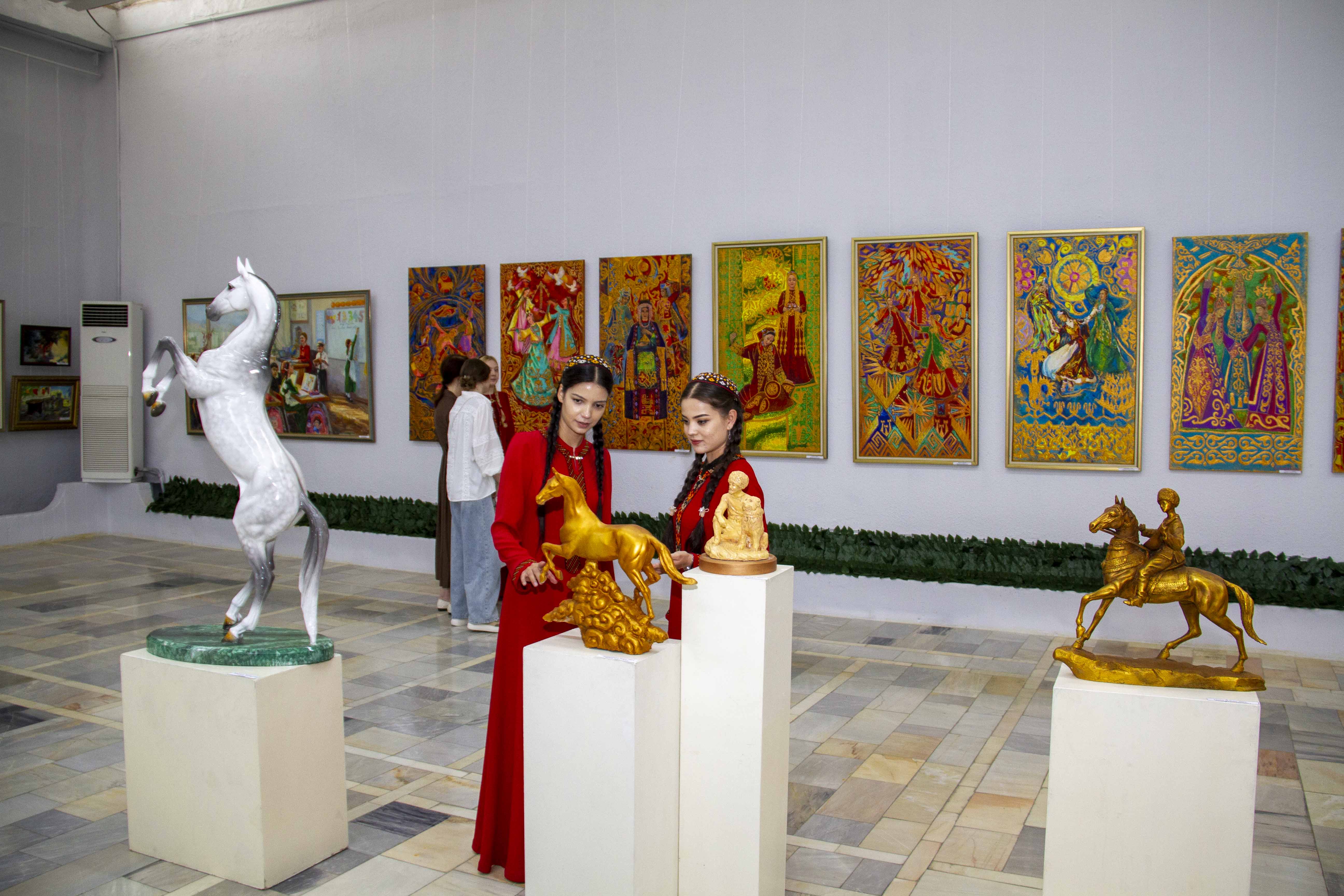
It should be noted that the publication is richly illustrated with reproductions of paintings and photographs by contemporary artists, rare museum and archival materials, and cartographic illustrations. The quarterly popular science journal “Miras” is intended for a broad readership.