


On the 10th of August, the international ethnographic expedition «Greater Altai: Turkic heritage 2026» began in the Altai Territory. The project is being implemented by Altai state university (AltSU) as part of the activities of the Scientific and educational centre for Altaic and Turkic Studies.
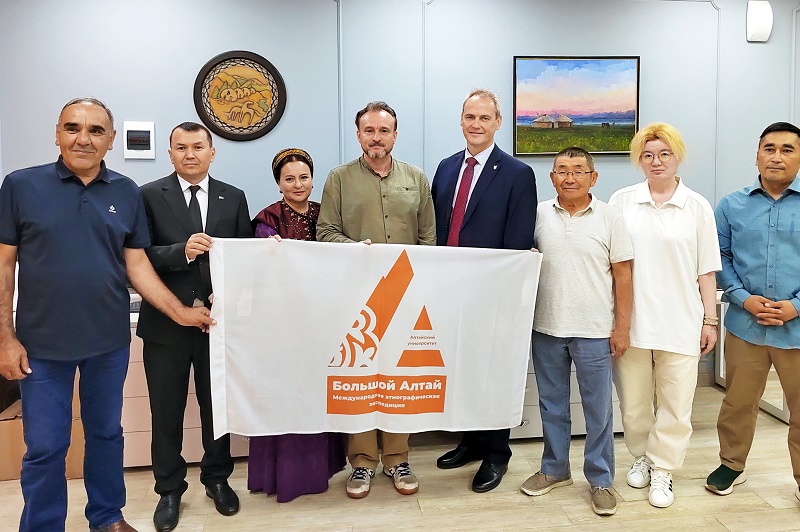
A special feature of expedition of this year was the significant expansion of the geography of the participants. The research group included scientists from Kyrgyzstan, Tajikistan, Uzbekistan, and, for the first time, ethnographers from Turkmenistan.
The Turkmen delegation is represented by Ayna Baymyradova, a doctoral student at the Institute of history and archaeology of the Academy of sciences of Turkmenistan, and Toyly Hommyyev, a lecturer at the Turkmen state university named after Magtymguly. Specialists from Turkmenistan are actively conducting scientific research into the ethnography, history, and traditions of the Turkmen people and plan to identify ethnocultural parallels with the traditional culture of the Altai peoples.
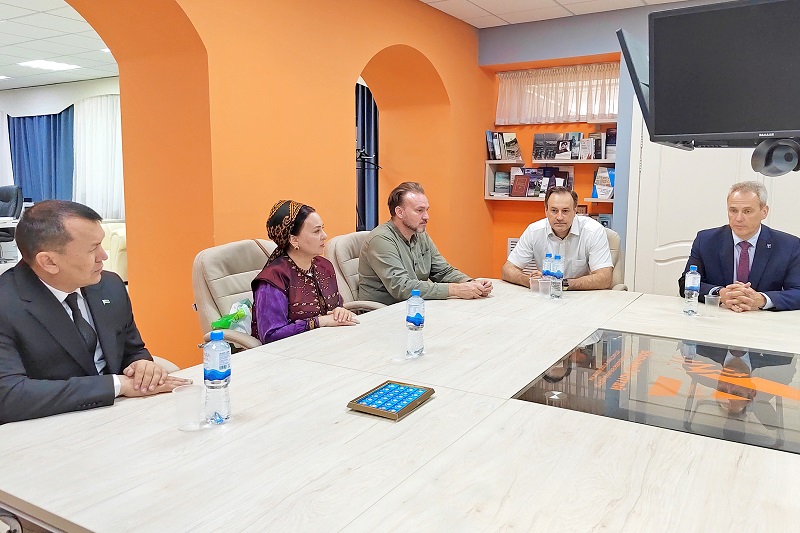
The expedition route covers the territories of the Altai krai and the Republic of Altai. Scientists are studying the traditional culture and folklore of the indigenous ethnic communities of the regions: the kumandins, chelkans, tubalars, altais, and telengits.
Before setting off on the route, the researchers met with the rector of AltSU Sergei Bocharov, who emphasised the importance of the project for strengthening scientific and cultural ties:
«Field research is the basis for creating an objective picture of the history and culture of the Turkic peoples. The materials of archaeologists and ethnographersmake it possible to study living culture and identify common features in the traditions of the peoples of Altai and Central Asia. Therefore, your work fulfils a vital purpose – it serves to strengthen friendship and international cooperation. The task of scientists is to unite peoples, because we have common origins», – said Sergey Bocharov.
According to the expedition leader, Ivan Nazarov, director of the Institute of history and international relations at AltSU, Altai occupies a special place in the history of the Turkic peoples; many modern Turkic‑speaking peoples of Altai and Central Asia still regard Altai as their historical homeland.
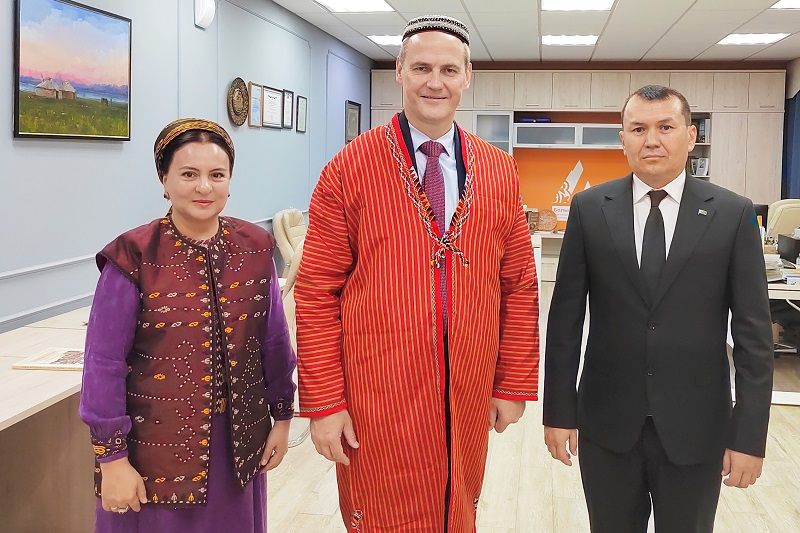
– Ethnographic science allows us to trace these connections through preserved cultural phenomena in the economy, housing, clothing, food, social relations, terms of kinship and beliefs. It is precisely this circumstance that makes our expedition project attractive to scientists from different countries, – noted Ivan Nazarov.
The start of field work symbolically coincided with the International day of indigenous peoples of the world. The first point on the route was the kumandin community in the city of Biysk. Community leaders and elders conducted a traditional fire worship ceremony for the expedition participants, organised a tour of the ethnocenter, and treated the scientists to national dishes.
The route then passes through the Turochak district of the Republic of Altai, home to indigenous peoples of the North, Siberia, and the Far East of RF. In the Ust-Kanskiy and Ust-Koksinskiy districts, ethnographers will focus on documenting elements of the traditional culture of the southern Altai people.
Over ten days of fieldwork, the organisers hope to collect a unique array of data demonstrating the resilience of the traditional culture of the Altai peoples. The obtained materials will form the basis for identifying ethnocultural ties with other peoples of Central Asia and will be reflected in a series of scientific publications.
The project is being implemented with the support of the Altai regional branch of the Russian geographical society, which allows not only for the expansion of the research but also for the strengthening of its educational component. Specifically, a traveling photo exhibition will be created based on the footage, which will begin operating in universities, museums, and public spaces across the region in the fall of 2026.