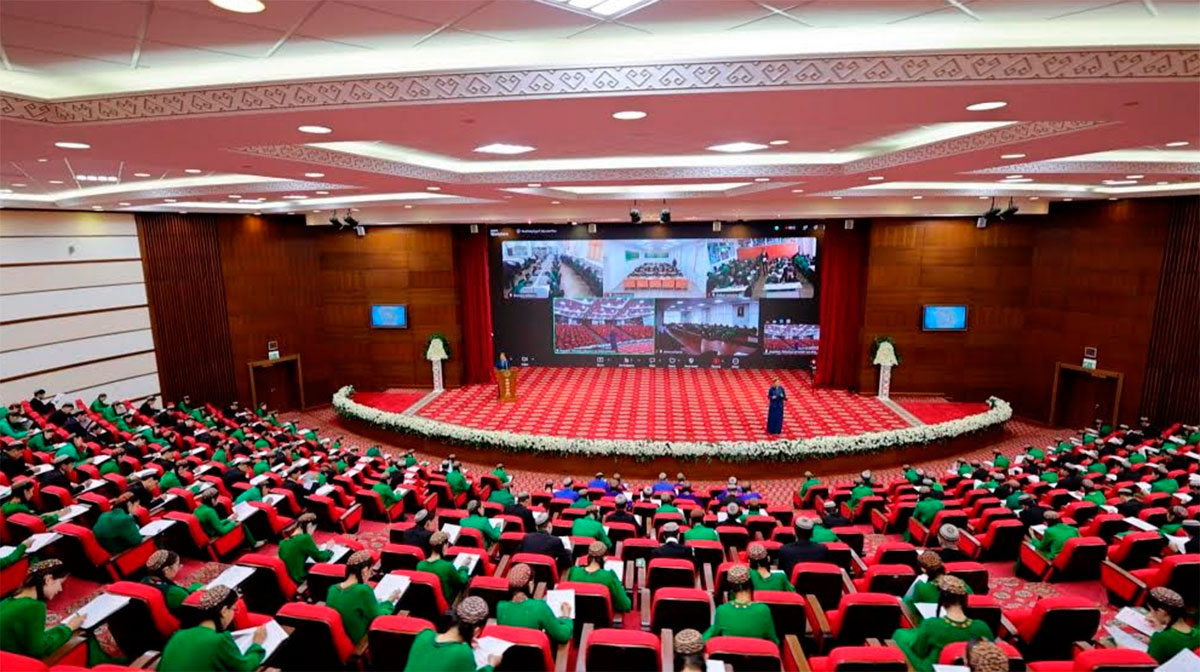



The two-day international scientific conference entitled “Baha-ud-Din Naqshbandi and Sufi Literature” closed in Ashgabat. The representative scientific forum organized by Magtymguly Institute of Language and Literature under the Academy of Sciences of Turkmenistan was dedicated to the life and creative activity of an outstanding representative of XIV-century Central Asian Sufism, the founder of the community of Sufis known as Nagyshbendiye and its traditions in oriental literature.
Along with Turkmen scientists the representative forum brought together participants from more than twenty countries of the world. Foreign guests including scientists, who were visiting Turkmenistan for the first time, saw with their own eyes the scale of progressive reforms taking place in the country and learnt more about accomplishments achieved by the people of Turkmenistan, who celebrated the 20th anniversary of the state independence recently.
Over a hundred of reports were presented, and a wide spectrum of issues related to the study of the spiritual heritage of Naqshbandi and tarikas - Sufi schools, which were widely spread in the Muslim world, their influence on the creative work of the great poet and thinker Magtymguly and other classic poets of the 17th-19th century Turkmen literature were discussed during three forum sessions. The discussions focused on such issues as the history of the Naqshbandiye movement, the transition from mysticism of early Sufi to rationalism in oriental philosophy, the influence of Naqshbandi’s ideas on Turkmen classical poetry and European literature.
The most of the reports spotlighted the significant role of Baha-ud-Din Naqshbandi’s spiritual heritage in studying philosophy, history, linguistics, theology and folklore of the Turkmen people and neighbouring nations. Forum participants exchanged views on the aspects of research in the history of Turkmen literature in the Middle Ages and modern times and delivered a number of reports on mutual influence of cultures.
Conference participants emphasized that ideas of Baha-ud-Din Naqshbandi as an outstanding representative of his epoch were widely disseminated and popular and had a significant influence on the development of Sufism, the scientific and artistic ideas in Muslim countries over many centuries after his death. Such great popularity going beyond the historical frames and national borders illustrates that Naqshbandi belongs to the world cultural heritage.
The conference was summed up during the closing ceremony. Forum participants called for furthering close and fruitful cooperation.
Along with Turkmen scientists the representative forum brought together participants from more than twenty countries of the world. Foreign guests including scientists, who were visiting Turkmenistan for the first time, saw with their own eyes the scale of progressive reforms taking place in the country and learnt more about accomplishments achieved by the people of Turkmenistan, who celebrated the 20th anniversary of the state independence recently.
Over a hundred of reports were presented, and a wide spectrum of issues related to the study of the spiritual heritage of Naqshbandi and tarikas - Sufi schools, which were widely spread in the Muslim world, their influence on the creative work of the great poet and thinker Magtymguly and other classic poets of the 17th-19th century Turkmen literature were discussed during three forum sessions. The discussions focused on such issues as the history of the Naqshbandiye movement, the transition from mysticism of early Sufi to rationalism in oriental philosophy, the influence of Naqshbandi’s ideas on Turkmen classical poetry and European literature.
The most of the reports spotlighted the significant role of Baha-ud-Din Naqshbandi’s spiritual heritage in studying philosophy, history, linguistics, theology and folklore of the Turkmen people and neighbouring nations. Forum participants exchanged views on the aspects of research in the history of Turkmen literature in the Middle Ages and modern times and delivered a number of reports on mutual influence of cultures.
Conference participants emphasized that ideas of Baha-ud-Din Naqshbandi as an outstanding representative of his epoch were widely disseminated and popular and had a significant influence on the development of Sufism, the scientific and artistic ideas in Muslim countries over many centuries after his death. Such great popularity going beyond the historical frames and national borders illustrates that Naqshbandi belongs to the world cultural heritage.
The conference was summed up during the closing ceremony. Forum participants called for furthering close and fruitful cooperation.