


A test container train that made its first trip on the route China-Kazakhstan-Turkmenistan-Iran arrived at the Serahs railway station in Turkmenistan from Iran on February 10.
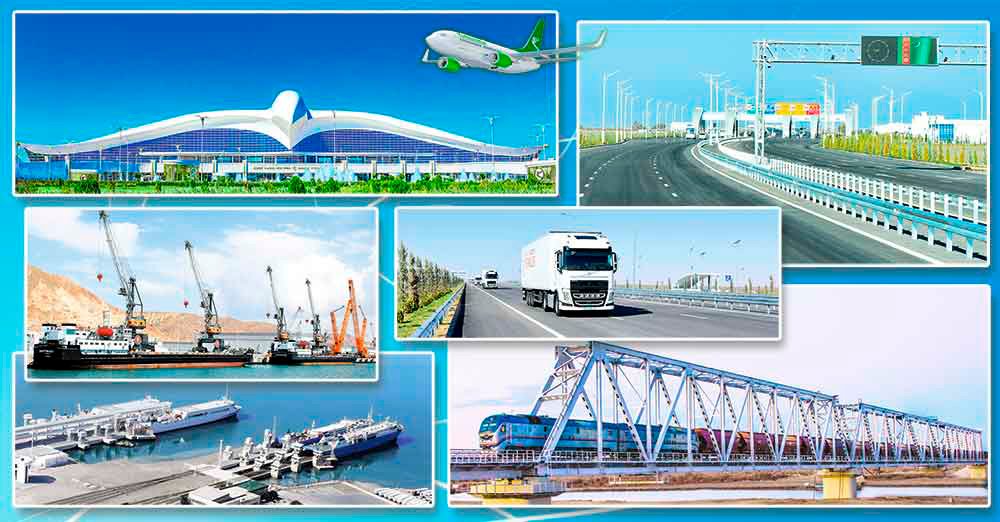
President Gurbanguly Berdimuhamedov has initiated the ambitious projects aimed at promoting mutually beneficial economic relations and strengthening international cooperation through the development of strong transport and communication infrastructure.
On February 9, the freight train, testing transport and logistics infrastructure capabilities of four friendly countries, crossed the border of Turkmenistan and arrived at the Serhetyaka station from where it headed to Bereket.
In the morning on February 10, the meeting ceremony of the test container train on the route China-Kazakhstan-Turkmenistan-Iran took place at the train station in the capital of Turkmenistan.
The test trip is aimed at ‘running-up’ the opportunities to establish regular rail service and address logistics issues in each country participating in the transit and transport project, actively promoted by our national leader.

The train started its trip in late January from Yiwu city, the major industrial centre of the People’s Republic of China located in the east of Zhejiang Province and passed through the Alashankou checkpoint in the Xinjiang Uygur Autonomous Region in the northwest of China, having run 4,491 kilometres for 5 days. It took the train 4 days to cross the territory of Kazakhstan – the distance to the border with Turkmenistan is 3,417 kilometres.
The Turkmen section of the transnational route stretches 1,156 kilometres from the Serhetyaka station to Serahs. It was calculated that the train would run along this section for 2 days. The train will get to Tehran, the capital of Iran in 3 days.
Thus, the total length of the route China-Kazakhstan-Turkmenistan-Iran is about 10,000 kilometres and travel time is about 2 weeks, which is on average two times faster than that by sea, which takes 25-30 days.
In the afternoon on February 10, the first container train on this route crossed the Turkmen-Iranian border through the Serahs railway crossing. Thus, the train loaded with various consumer goods run along the Turkmen section of the route for 28 hours instead of the anticipated two days. A significant reduction in travel time as well as in transport costs is obvious, i.e. the cost-effectiveness of the route is increased.
According to the foreign press, the route that stretches across the territory of the neighbouring countries, including Turkmenistan, is the first logistics solution to the speedy delivery of goods from the coast of East China to the Persian Gulf markets.
Based on the needs of suppliers and carriers in Turkmenistan, two routes are provided: from Serhetyaka to Serahs, to the southeastern border with Iran, or to Akyayla and then to the north of Iran.
For Turkmenistan, the participation in this ambitious logistics project means the intensification of transit capacity as the state with an extensive and developed transport network, which is nowadays one of the most important attributes of social, economic and technological progress, the integration of our country in the global economic system.

Thanks to the successful implementation of the transport policy of President Gurbanguly Berdimuhamedov the Great Silk Road is being revived in Turkmenistan in a new capacity, in the form of modern transnational motor, rail and air routes. These routes, which practically reproduce the directions of the Great Silk Road, will contribute to strengthening foreign economic relations, expanding transit traffic flows on the continent and cultural and tourist relations.
The significance of transport as an important component of Turkmen economy is determined by its key role in the territorial division of social labour and the effective distribution of the productive forces.
From an economic point of view, the railway offers the shortest route for delivery of goods, including transit goods, and for conveyance of passengers in the future. Moreover, the new railway will give a powerful impetus to the development of the Caspian region, including the expansion of its transport, industrial and social infrastructure.
The project also envisages the connection to the transport network towards the south and the east with an outlet to major economic centres, such as China, India, Pakistan and countries in the Asia-Pacific region, which means the creation of a new, wider format of cooperation, providing an example of truly innovative thinking in global geo-economics, the vision of the strategic prospects of its development.
The aims of this ambitious project objectively meet the long-term strategy of the United Nations and its specialized agencies, the Organization for Security and Cooperation in Europe that views the region as a lasting link in the chain of strategic stability in the southern belt of Eurasia, a promising economic partner, a major transport and transit hub of the continental significance.
At present, the task of building transnational transport corridors as a basis of the spatial model of infrastructure development for regional and interregional cooperation is becoming increasingly urgent. President Gurbanguly Berdimuhamedov underlines that the creation of international transport corridors meets the external and internal economic interests of Turkmenistan.
Taking the geographical location and national economic interests into consideration, Turkmenistan, Kazakhstan, Iran and its neighbours are interested in Eurasian integration that goes beyond a region and covers the most important areas of development of the continent. A reliable basis of these positive processes are the concrete integration projects in certain key sectors which transfer an impulse, a momentum to all other sectors as if in the electrical circuit, transforming into long-term multiplicative effects.
In this context, transport is one of the priority sectors. It is one of the leading forms of social production, an essential social and economic factor which the state and development of industry, agriculture, tourism, etc., and certainly, the well-being and comfort of citizens depend on.
International transport corridors have become key mechanisms of globalization of the world economy. Turkmenistan, having become a catalyst for these processes, is building one of the most important transportation centre of the continent on its territory, relying on sustainable economic and social development of the country and the strategy for implementing the geo-economic potential of our country in the interests of the region and the continent, developed by the Turkmen leader Gurbanguly Berdimuhamedov.
President Gurbanguly Berdimuhamedov has initiated the ambitious projects aimed at promoting mutually beneficial economic relations and strengthening international cooperation through the development of strong transport and communication infrastructure.
On February 9, the freight train, testing transport and logistics infrastructure capabilities of four friendly countries, crossed the border of Turkmenistan and arrived at the Serhetyaka station from where it headed to Bereket.
In the morning on February 10, the meeting ceremony of the test container train on the route China-Kazakhstan-Turkmenistan-Iran took place at the train station in the capital of Turkmenistan.
The test trip is aimed at ‘running-up’ the opportunities to establish regular rail service and address logistics issues in each country participating in the transit and transport project, actively promoted by our national leader.
The train started its trip in late January from Yiwu city, the major industrial centre of the People’s Republic of China located in the east of Zhejiang Province and passed through the Alashankou checkpoint in the Xinjiang Uygur Autonomous Region in the northwest of China, having run 4,491 kilometres for 5 days. It took the train 4 days to cross the territory of Kazakhstan – the distance to the border with Turkmenistan is 3,417 kilometres.
The Turkmen section of the transnational route stretches 1,156 kilometres from the Serhetyaka station to Serahs. It was calculated that the train would run along this section for 2 days. The train will get to Tehran, the capital of Iran in 3 days.
Thus, the total length of the route China-Kazakhstan-Turkmenistan-Iran is about 10,000 kilometres and travel time is about 2 weeks, which is on average two times faster than that by sea, which takes 25-30 days.
In the afternoon on February 10, the first container train on this route crossed the Turkmen-Iranian border through the Serahs railway crossing. Thus, the train loaded with various consumer goods run along the Turkmen section of the route for 28 hours instead of the anticipated two days. A significant reduction in travel time as well as in transport costs is obvious, i.e. the cost-effectiveness of the route is increased.
According to the foreign press, the route that stretches across the territory of the neighbouring countries, including Turkmenistan, is the first logistics solution to the speedy delivery of goods from the coast of East China to the Persian Gulf markets.
Based on the needs of suppliers and carriers in Turkmenistan, two routes are provided: from Serhetyaka to Serahs, to the southeastern border with Iran, or to Akyayla and then to the north of Iran.
For Turkmenistan, the participation in this ambitious logistics project means the intensification of transit capacity as the state with an extensive and developed transport network, which is nowadays one of the most important attributes of social, economic and technological progress, the integration of our country in the global economic system.
Thanks to the successful implementation of the transport policy of President Gurbanguly Berdimuhamedov the Great Silk Road is being revived in Turkmenistan in a new capacity, in the form of modern transnational motor, rail and air routes. These routes, which practically reproduce the directions of the Great Silk Road, will contribute to strengthening foreign economic relations, expanding transit traffic flows on the continent and cultural and tourist relations.
The significance of transport as an important component of Turkmen economy is determined by its key role in the territorial division of social labour and the effective distribution of the productive forces.
From an economic point of view, the railway offers the shortest route for delivery of goods, including transit goods, and for conveyance of passengers in the future. Moreover, the new railway will give a powerful impetus to the development of the Caspian region, including the expansion of its transport, industrial and social infrastructure.
The project also envisages the connection to the transport network towards the south and the east with an outlet to major economic centres, such as China, India, Pakistan and countries in the Asia-Pacific region, which means the creation of a new, wider format of cooperation, providing an example of truly innovative thinking in global geo-economics, the vision of the strategic prospects of its development.
The aims of this ambitious project objectively meet the long-term strategy of the United Nations and its specialized agencies, the Organization for Security and Cooperation in Europe that views the region as a lasting link in the chain of strategic stability in the southern belt of Eurasia, a promising economic partner, a major transport and transit hub of the continental significance.
At present, the task of building transnational transport corridors as a basis of the spatial model of infrastructure development for regional and interregional cooperation is becoming increasingly urgent. President Gurbanguly Berdimuhamedov underlines that the creation of international transport corridors meets the external and internal economic interests of Turkmenistan.
Taking the geographical location and national economic interests into consideration, Turkmenistan, Kazakhstan, Iran and its neighbours are interested in Eurasian integration that goes beyond a region and covers the most important areas of development of the continent. A reliable basis of these positive processes are the concrete integration projects in certain key sectors which transfer an impulse, a momentum to all other sectors as if in the electrical circuit, transforming into long-term multiplicative effects.
In this context, transport is one of the priority sectors. It is one of the leading forms of social production, an essential social and economic factor which the state and development of industry, agriculture, tourism, etc., and certainly, the well-being and comfort of citizens depend on.
International transport corridors have become key mechanisms of globalization of the world economy. Turkmenistan, having become a catalyst for these processes, is building one of the most important transportation centre of the continent on its territory, relying on sustainable economic and social development of the country and the strategy for implementing the geo-economic potential of our country in the interests of the region and the continent, developed by the Turkmen leader Gurbanguly Berdimuhamedov.