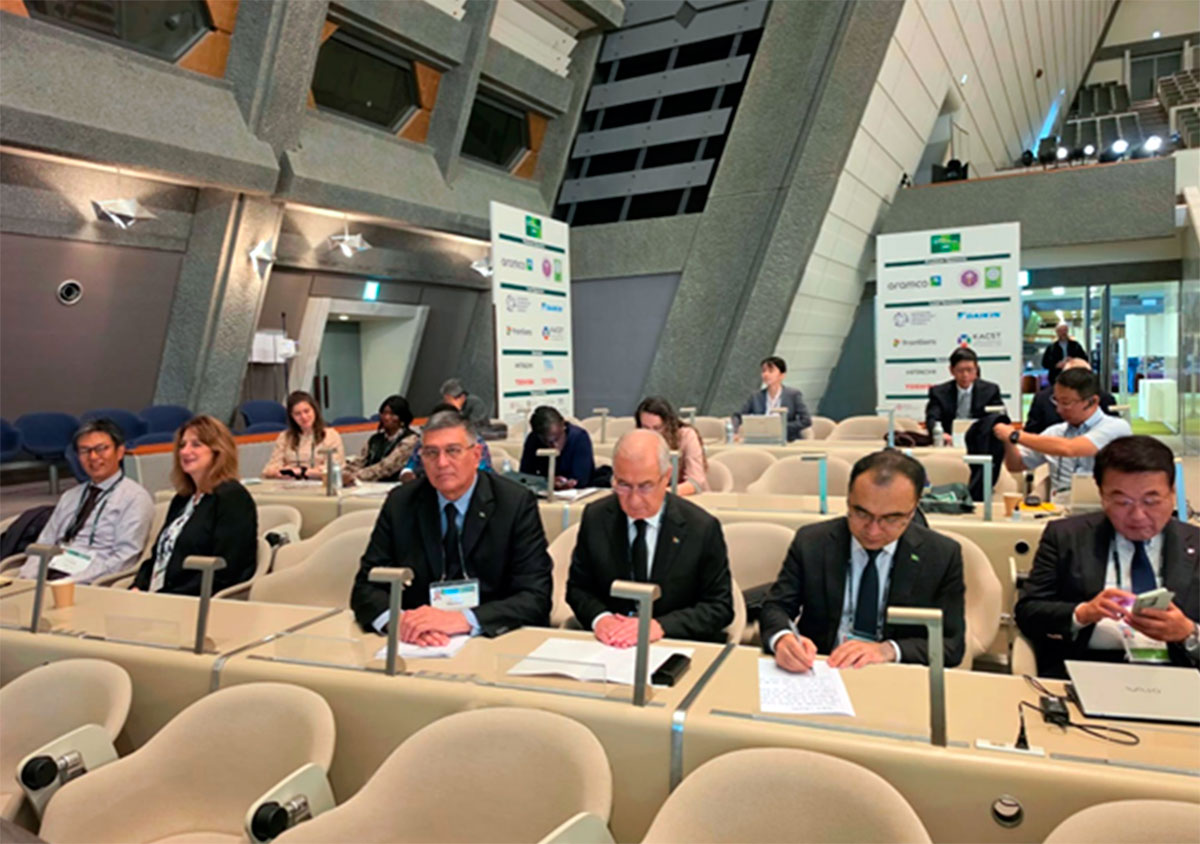



The scientific forum is timed to the holiday “Drop of water – a grain of gold”, being traditionally celebrated in Turkmenistan on the first Sunday of April. Employees of Research Institutes of AST, teachers of leading agrarian higher educational establishments of the country - Turkmen Agricultural University and Turkmen Agricultural Institute, specialists of the Ministry of Agriculture and Water economy of Turkmenistan, experts of the State Committee of Turkmenistan for environmental protection and land resources, as well as representatives of the community and mass-media became its participants.

Within the framework of conference “Rational use of water and land resources, land improvement and ecological condition of the saline lands”, it was held the view exchange on issues of ecological agenda in sphere of water use, application of fertilizers and introductions of schemes of crop and pasture rotations for increase of crop capacity of fields as well as restoration of saline lands and struggle against primary and secondary salinization of the irrigated areas. Methods of sustainable management of land resources for preservation of their fertile potential and environmental protection have been offered.

Upon completion of plenary session, the work of conference has proceeded in a format of sectional sessions in directions: rational water use and scientifically grounded use of irrigated land resources.
At sectional meetings, the scientists-agricultural technicians discussed the value, norms and terms of conducting the stripping watering, forest obstructive method of decrease of ground waters of the irrigated lands, prospects of wide application of drip irrigation, ecological state of Amyderya.

Soil scientists have offered techniques of definition of soil structure, have discussed crop rotation schemes as aspect of careful land tenure. Lecturers in the performances have mentioned value of “Altyn asyr” Turkmen lake, especially ecological component of this scale hydraulic engineering project. Creation of this artificial reservoir provides completion of deficiency of water, stabilization of ecological processes and improvement of a state of environment not only in the zone of lake or territory of Aral, but also all region. As it is known, from the moment of delivery of the first stage of object, it was organized a tap from oases of mineralized collector-drainage waters, before dumped in Amyderya or in desert falls. The drainage system of the Turkmen lake works on improvement of a ameliorative condition of the irrigated earths, decrease in salt loading and regulation of level of ground waters. Rhythmical work of all hydrosystems of lake provides levelling of negative consequences of a drought in arid conditions, creation of favorable conditions for development of small oasis agricultural industry and animal world.

Section work on improvement of condition of the salted lands has taken place in an administrative centre of Dashoguz velayat in the base of the Turkmen agricultural institute in view of urgency of salinization and recultivation issues for the north of Turkmenistan which is under the influence of the drying out Aral sea. Teachers of high school and local experts in land improvement, struggle against desertification and degradation of the earths have taken part in session work.

Participants of Dashoguz section have shared results of researches of domestic desert scientists, applicable for region conditions, and practical work on struggle with salinization and restoration of fields fertility. The participant of conference - scientific pro-rector of the Turkmen agricultural institute, Candidate of Biological Sciences Ashir Yollybaev, has told about restoration of efficiency of pastures by phytomeliorative ways - by means of disembarkation of salt resistant kinds of plants – halophytes. According to the Turkmen scientists, about two thirds of growing in territory of the country halophytes can have industrial value. Their kinds and ecotypes are a rich genetic resource fodder, food, olive, herbs and biomeliorants, capable to master such ecological niches, as alkaline soils, coastal sand, dry takyr-kind earths where traditional cultures do not get accustomed. Long-term halophytes affect soil for a long time, stabilizing its deep and well branched out root system. Grassy salt resistant plants are capable to expand quickly, creating long pasturable ecosystems of autumn-winter use. Cultivation of salt resistant cultures on boggy and badlands promotes decrease in level of ground waters, allows to provide manufacture of highly nourishing forages, as well as to involve in agricultural turn the badlands by simultaneous optimization of a condition of ecology of Garagum desert.

Practicing the planting of salt-tolerant halophytes, it is possible to provide agricultural animals with less unprofitable additional highly nourishing insurance stock of forages, gradually improving a condition of the lands that in future will bear possibility to return in crop rotation. In the perspective, actions for similar development of saline soils in region will be continued, with coverage of various types of clay deserts and semi-deserts, steppes and takyrs, including collectors zone of the “Altyn asyr” Turkmen lake, - the scientist has underlined.

Participants of Dashoguz section also have discussed the problems of efficiency increase of sowing areas, influences of Aral Sea on soils the region, new kinds of microfertilizers and prospects of their application in the country as well as actual aspects of development of virgin lands.


Within the framework of conference “Rational use of water and land resources, land improvement and ecological condition of the saline lands”, it was held the view exchange on issues of ecological agenda in sphere of water use, application of fertilizers and introductions of schemes of crop and pasture rotations for increase of crop capacity of fields as well as restoration of saline lands and struggle against primary and secondary salinization of the irrigated areas. Methods of sustainable management of land resources for preservation of their fertile potential and environmental protection have been offered.
Upon completion of plenary session, the work of conference has proceeded in a format of sectional sessions in directions: rational water use and scientifically grounded use of irrigated land resources.
At sectional meetings, the scientists-agricultural technicians discussed the value, norms and terms of conducting the stripping watering, forest obstructive method of decrease of ground waters of the irrigated lands, prospects of wide application of drip irrigation, ecological state of Amyderya.
Soil scientists have offered techniques of definition of soil structure, have discussed crop rotation schemes as aspect of careful land tenure. Lecturers in the performances have mentioned value of “Altyn asyr” Turkmen lake, especially ecological component of this scale hydraulic engineering project. Creation of this artificial reservoir provides completion of deficiency of water, stabilization of ecological processes and improvement of a state of environment not only in the zone of lake or territory of Aral, but also all region. As it is known, from the moment of delivery of the first stage of object, it was organized a tap from oases of mineralized collector-drainage waters, before dumped in Amyderya or in desert falls. The drainage system of the Turkmen lake works on improvement of a ameliorative condition of the irrigated earths, decrease in salt loading and regulation of level of ground waters. Rhythmical work of all hydrosystems of lake provides levelling of negative consequences of a drought in arid conditions, creation of favorable conditions for development of small oasis agricultural industry and animal world.
Section work on improvement of condition of the salted lands has taken place in an administrative centre of Dashoguz velayat in the base of the Turkmen agricultural institute in view of urgency of salinization and recultivation issues for the north of Turkmenistan which is under the influence of the drying out Aral sea. Teachers of high school and local experts in land improvement, struggle against desertification and degradation of the earths have taken part in session work.
Participants of Dashoguz section have shared results of researches of domestic desert scientists, applicable for region conditions, and practical work on struggle with salinization and restoration of fields fertility. The participant of conference - scientific pro-rector of the Turkmen agricultural institute, Candidate of Biological Sciences Ashir Yollybaev, has told about restoration of efficiency of pastures by phytomeliorative ways - by means of disembarkation of salt resistant kinds of plants – halophytes. According to the Turkmen scientists, about two thirds of growing in territory of the country halophytes can have industrial value. Their kinds and ecotypes are a rich genetic resource fodder, food, olive, herbs and biomeliorants, capable to master such ecological niches, as alkaline soils, coastal sand, dry takyr-kind earths where traditional cultures do not get accustomed. Long-term halophytes affect soil for a long time, stabilizing its deep and well branched out root system. Grassy salt resistant plants are capable to expand quickly, creating long pasturable ecosystems of autumn-winter use. Cultivation of salt resistant cultures on boggy and badlands promotes decrease in level of ground waters, allows to provide manufacture of highly nourishing forages, as well as to involve in agricultural turn the badlands by simultaneous optimization of a condition of ecology of Garagum desert.
Practicing the planting of salt-tolerant halophytes, it is possible to provide agricultural animals with less unprofitable additional highly nourishing insurance stock of forages, gradually improving a condition of the lands that in future will bear possibility to return in crop rotation. In the perspective, actions for similar development of saline soils in region will be continued, with coverage of various types of clay deserts and semi-deserts, steppes and takyrs, including collectors zone of the “Altyn asyr” Turkmen lake, - the scientist has underlined.
Participants of Dashoguz section also have discussed the problems of efficiency increase of sowing areas, influences of Aral Sea on soils the region, new kinds of microfertilizers and prospects of their application in the country as well as actual aspects of development of virgin lands.