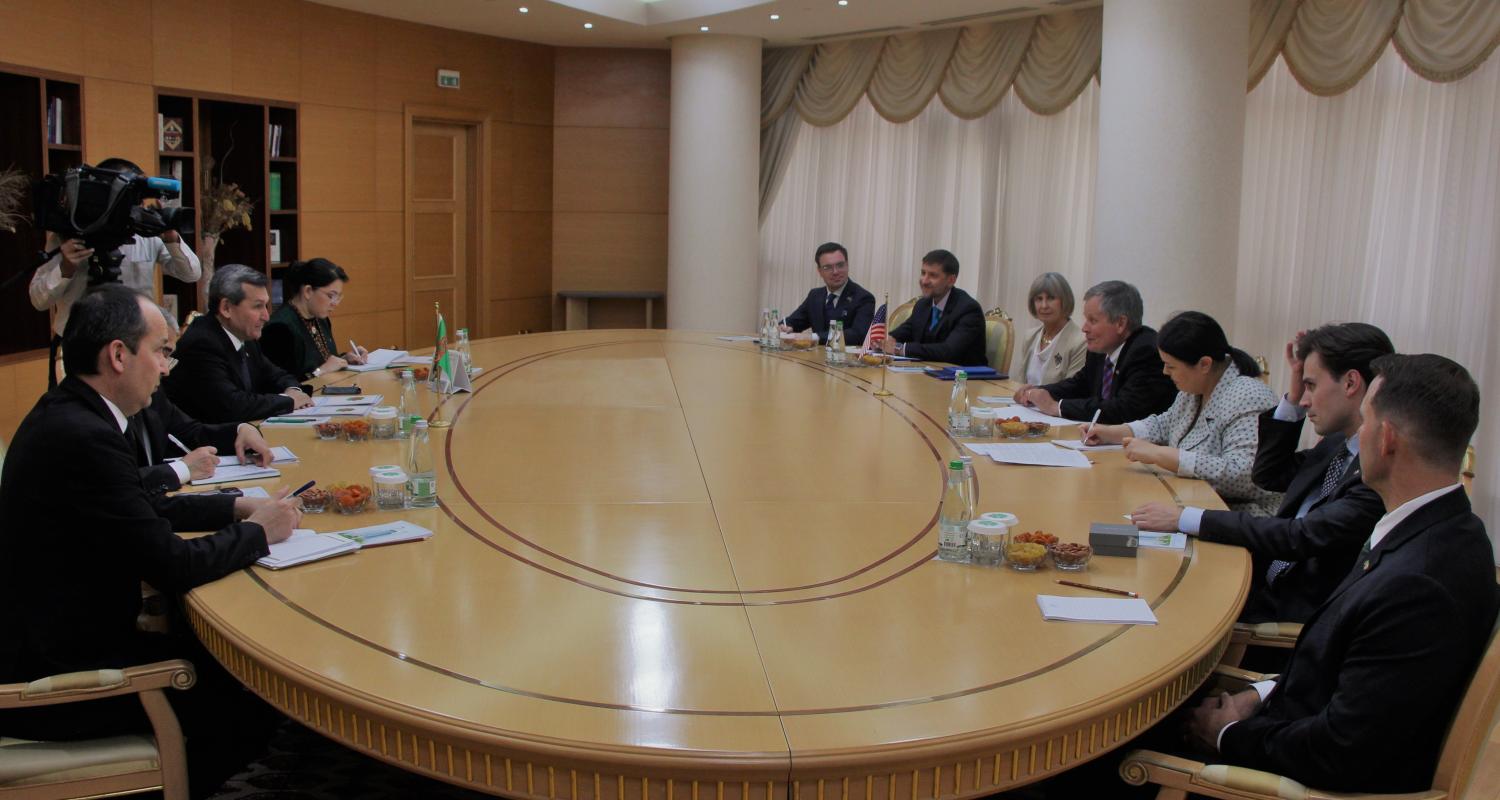



The meeting was attended by representatives of the SPECA member countries - Azerbaijan, Kazakhstan, Kyrgyzstan, Tajikistan and Turkmenistan, as well as representatives of the Economic Commission for Europe (UNECE) and ESCAP - one of five regional commissions of the Economic and Social Council.
The agenda of the session highlights topical issues of interaction - from the optimization of transit freight to the development of transport infrastructure in the SPECA countries. It is discussed issues of realization of the international transport conventions and agreements, the use of national coordinating mechanisms, the creation of databases, strengthening public-private partnerships, safety on the roads in the SPECA region.
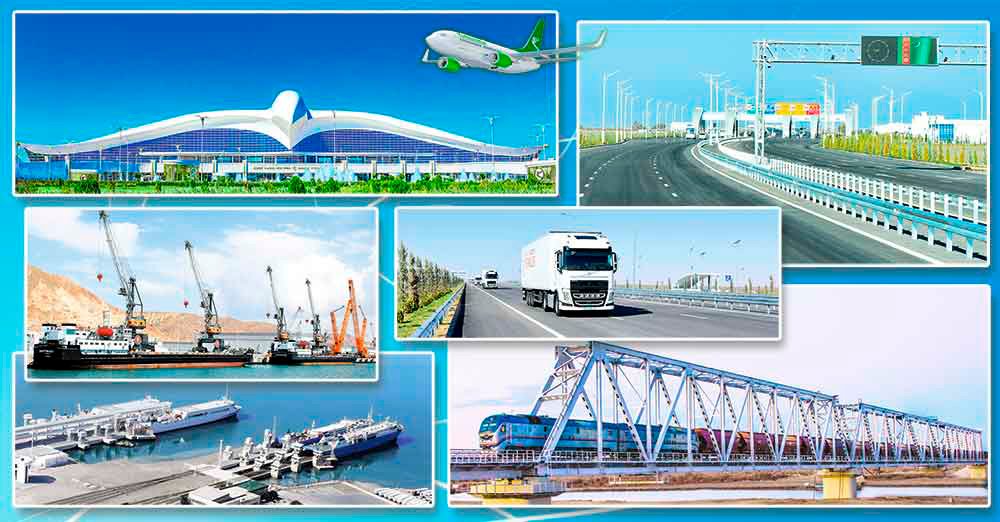
Participants of the meeting stressed that Central Asia was a geo-strategically important region and developing integration processes in the transport sector, the country enhances its potential as an important transport hub of intercontinental values. In this context, as noted the role of the international initiatives of the President of Turkmenistan Gurbanguly Berdymuhamedov, aimed at creating a new global architecture of transport and transit corridors. In this regard, it was noted that the idea of the meeting belonged to the Turkmen side.
As stated the senior officer of ESCAP Sub-regional Office for North and Central Asia Nikolai Pomoshnikov: "This initiative is an important and timely, indicating the interest of the SPECA countries in the active work of its thematic groups. The idea of holding this meeting in Ashgabat expands the geography of the meetings, opens up new opportunities for the exchange of experiences, knowledge and ideas. SPECA program implemented under the auspices of ESCAP and UNECE acts as intergovernmental platform for enhancing cooperation, allowing countries to reach the high level of integration. In turn, the work of the ESCAP secretariat aimed at establishment of international intermodal transport and logical system in Asia, with a focus on the development and upgrading of the Asian Highway and Trans-Asian Railway, together with the development of dry ports - terminal centers. Great prospects in this context are at the Turkmenbashi sea port. "
During the exchange of views, participants demonstrated a common strategic vision and a common approach to resolving problems in the sphere of transport communications. The meeting follow ups and recommendations were adopted.
In the framework of the thematic working group of SPECA seminar it was held "Statistics of road transport and road safety." Those participants of the workshop are international experts, who were familiarized with the participants with the UN activities in the field of transport statistics, best practices of Eastern European countries in its collection. The representative of ESCAP briefed on regional goals, objectives and indicators in the field of road safety for the Asia and Pacific region. SPECA presented examples of national mechanisms for the data collection. Wrapping up the work results; the participants noted that the seminar has expanded opportunities to improve the collection of reliable statistical information in the field of road transport and road safety, enabling efficient and safe operation of regional transport infrastructures.
The agenda of the session highlights topical issues of interaction - from the optimization of transit freight to the development of transport infrastructure in the SPECA countries. It is discussed issues of realization of the international transport conventions and agreements, the use of national coordinating mechanisms, the creation of databases, strengthening public-private partnerships, safety on the roads in the SPECA region.
Participants of the meeting stressed that Central Asia was a geo-strategically important region and developing integration processes in the transport sector, the country enhances its potential as an important transport hub of intercontinental values. In this context, as noted the role of the international initiatives of the President of Turkmenistan Gurbanguly Berdymuhamedov, aimed at creating a new global architecture of transport and transit corridors. In this regard, it was noted that the idea of the meeting belonged to the Turkmen side.
As stated the senior officer of ESCAP Sub-regional Office for North and Central Asia Nikolai Pomoshnikov: "This initiative is an important and timely, indicating the interest of the SPECA countries in the active work of its thematic groups. The idea of holding this meeting in Ashgabat expands the geography of the meetings, opens up new opportunities for the exchange of experiences, knowledge and ideas. SPECA program implemented under the auspices of ESCAP and UNECE acts as intergovernmental platform for enhancing cooperation, allowing countries to reach the high level of integration. In turn, the work of the ESCAP secretariat aimed at establishment of international intermodal transport and logical system in Asia, with a focus on the development and upgrading of the Asian Highway and Trans-Asian Railway, together with the development of dry ports - terminal centers. Great prospects in this context are at the Turkmenbashi sea port. "
During the exchange of views, participants demonstrated a common strategic vision and a common approach to resolving problems in the sphere of transport communications. The meeting follow ups and recommendations were adopted.
In the framework of the thematic working group of SPECA seminar it was held "Statistics of road transport and road safety." Those participants of the workshop are international experts, who were familiarized with the participants with the UN activities in the field of transport statistics, best practices of Eastern European countries in its collection. The representative of ESCAP briefed on regional goals, objectives and indicators in the field of road safety for the Asia and Pacific region. SPECA presented examples of national mechanisms for the data collection. Wrapping up the work results; the participants noted that the seminar has expanded opportunities to improve the collection of reliable statistical information in the field of road transport and road safety, enabling efficient and safe operation of regional transport infrastructures.