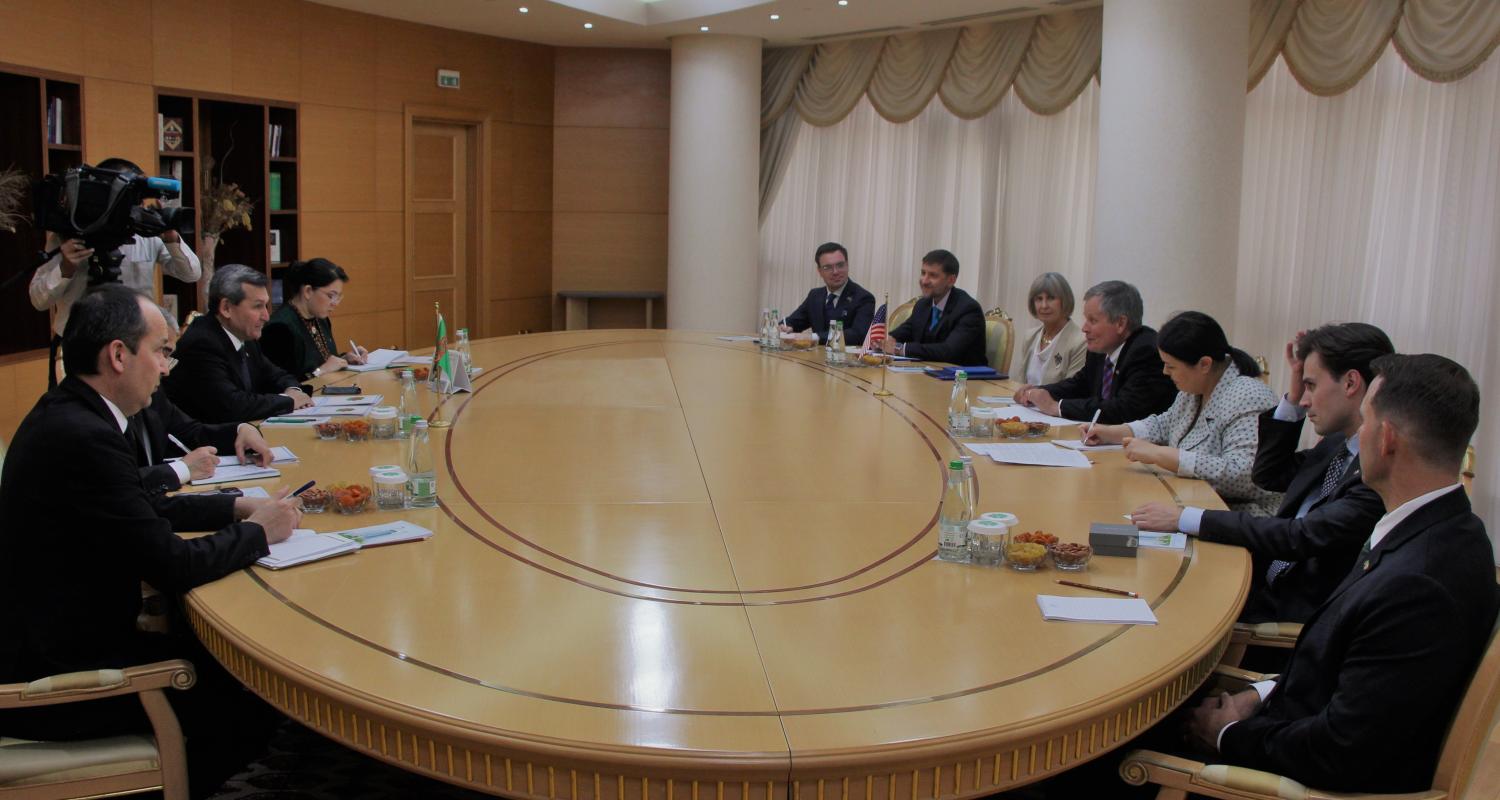



Training course “Marine Spatial Planning”, organized by the Ministry of Foreign Affairs and the State Office of the Caspian Sea Affairs under the President of Turkmenistan in cooperation with International Ocean Institute, is continued in Ashgabat.
The training is conducted by experienced lecturers from Germany, France and Malta.
The seminar “Caspian Sea: Sustainable Development and Management” for the specialists from the Republic of Azerbaijan, the Islamic Republic of Iran, the Republic of Kazakhstan, Russian Federation and Turkmenistan, which are related by the activity in the Caspian Sea, are is held annually by Turkmenistan in cooperation with International Ocean Institute in 2013 – 2017.
The objectives of the training course “Marine Spatial Planning” are the replenishment of the knowledge and improvement of practical skills of Turkmen specialists in marine spatial planning, understanding of the role of marine and coastal ecosystems in human life, coordination of the interests of different departments during the work in coastal zones and offshore, improvement of analytical, coordination, negotiation and public speech skills of the students.
The specialists of the ministries and departments of Turkmenistan working in planning and management of marine and coastal territories and natural resources, in particular natural protection sphere, fishery, tourism, transport, development of marine resources as well as structures involved in interdepartmental coordination in the Caspian Sea were invited to the session.
The lectures are built on existing experience of practical implementation and reflect such principles and elements of ecosystem approach to planning and management of marine and coastal zones as planning, organization of participation of interested parties, evaluation and analysis of the conditions, development and approval of spatial planning, monitoring and execution of the plan, review and amendment.
The course includes practical examples and tasks and uses interactive teaching methods. After brief introduction theory part, the participants are divided into working group and assign the experts for participation in practical sessions. The lecturers provides theoretical and methodological assistance. At the end of the course, working groups and their experts present their plans.
The final part of the seminar, which will last until July 21, will allow the participants applying theoretical knowledge in practice.
The training is conducted by experienced lecturers from Germany, France and Malta.
The seminar “Caspian Sea: Sustainable Development and Management” for the specialists from the Republic of Azerbaijan, the Islamic Republic of Iran, the Republic of Kazakhstan, Russian Federation and Turkmenistan, which are related by the activity in the Caspian Sea, are is held annually by Turkmenistan in cooperation with International Ocean Institute in 2013 – 2017.
The objectives of the training course “Marine Spatial Planning” are the replenishment of the knowledge and improvement of practical skills of Turkmen specialists in marine spatial planning, understanding of the role of marine and coastal ecosystems in human life, coordination of the interests of different departments during the work in coastal zones and offshore, improvement of analytical, coordination, negotiation and public speech skills of the students.
The specialists of the ministries and departments of Turkmenistan working in planning and management of marine and coastal territories and natural resources, in particular natural protection sphere, fishery, tourism, transport, development of marine resources as well as structures involved in interdepartmental coordination in the Caspian Sea were invited to the session.
The lectures are built on existing experience of practical implementation and reflect such principles and elements of ecosystem approach to planning and management of marine and coastal zones as planning, organization of participation of interested parties, evaluation and analysis of the conditions, development and approval of spatial planning, monitoring and execution of the plan, review and amendment.
The course includes practical examples and tasks and uses interactive teaching methods. After brief introduction theory part, the participants are divided into working group and assign the experts for participation in practical sessions. The lecturers provides theoretical and methodological assistance. At the end of the course, working groups and their experts present their plans.
The final part of the seminar, which will last until July 21, will allow the participants applying theoretical knowledge in practice.