


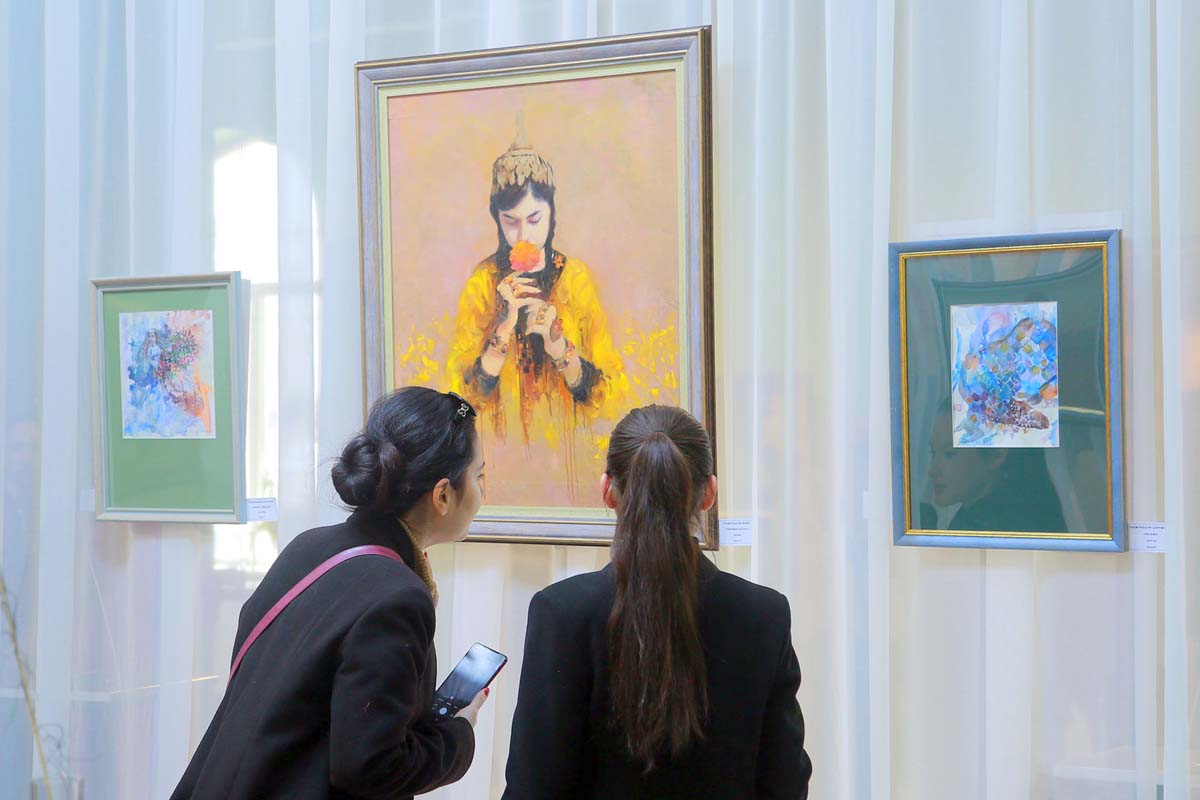
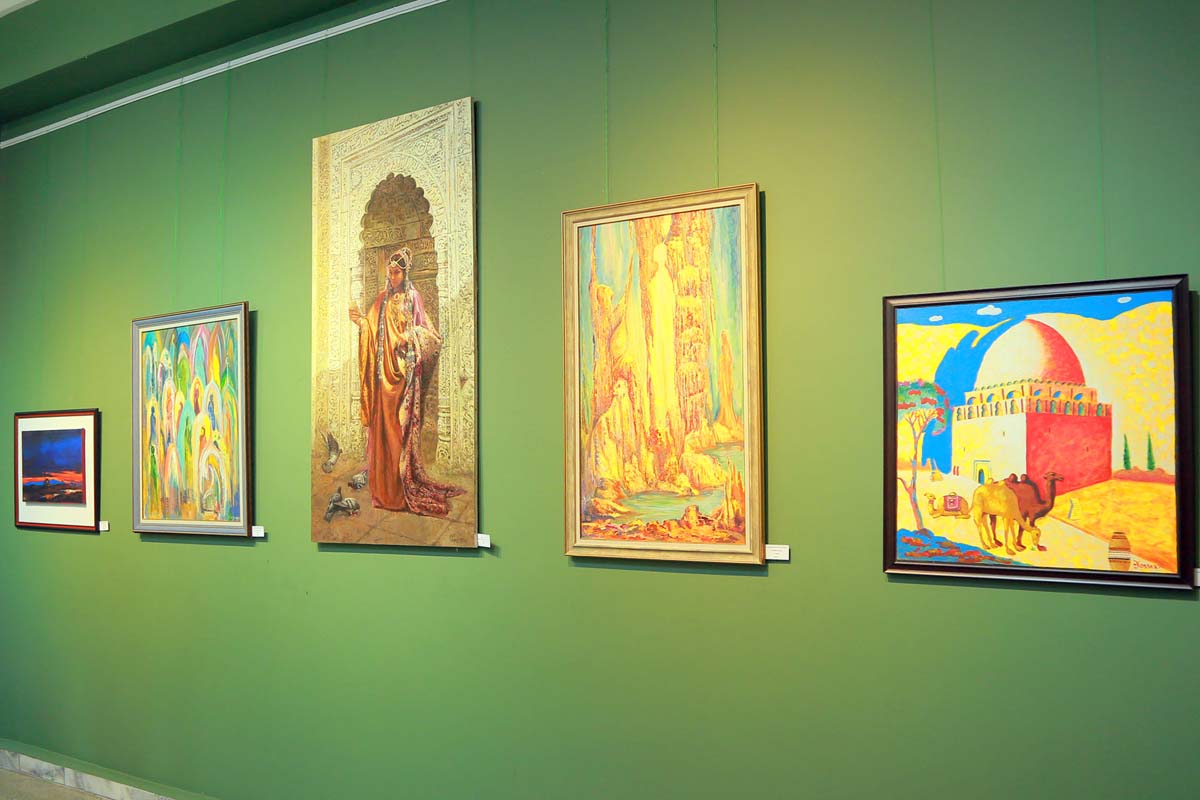

A truly Eastern palette—dense and richly saturated—has filled the halls of the Art Gallery of the Union of Artists of Turkmenistan. An exhibition of works by contemporary Turkmen artists is currently on display here. The concept of the exhibition was explained by its curator, art historian Aibolek Berdiyeva:
“The exhibition is titled ‘About Life, About Love’, as the works presented explore the phenomenon of love through the lens of the artists’ personal life experience, their worldview, and the cultural heritage formed in their early years. In their works, the artists erase the distance between abstract concepts and reality, creating a direct dialogue with the viewer and inviting them to interpret the proposed narrative in their own way.”
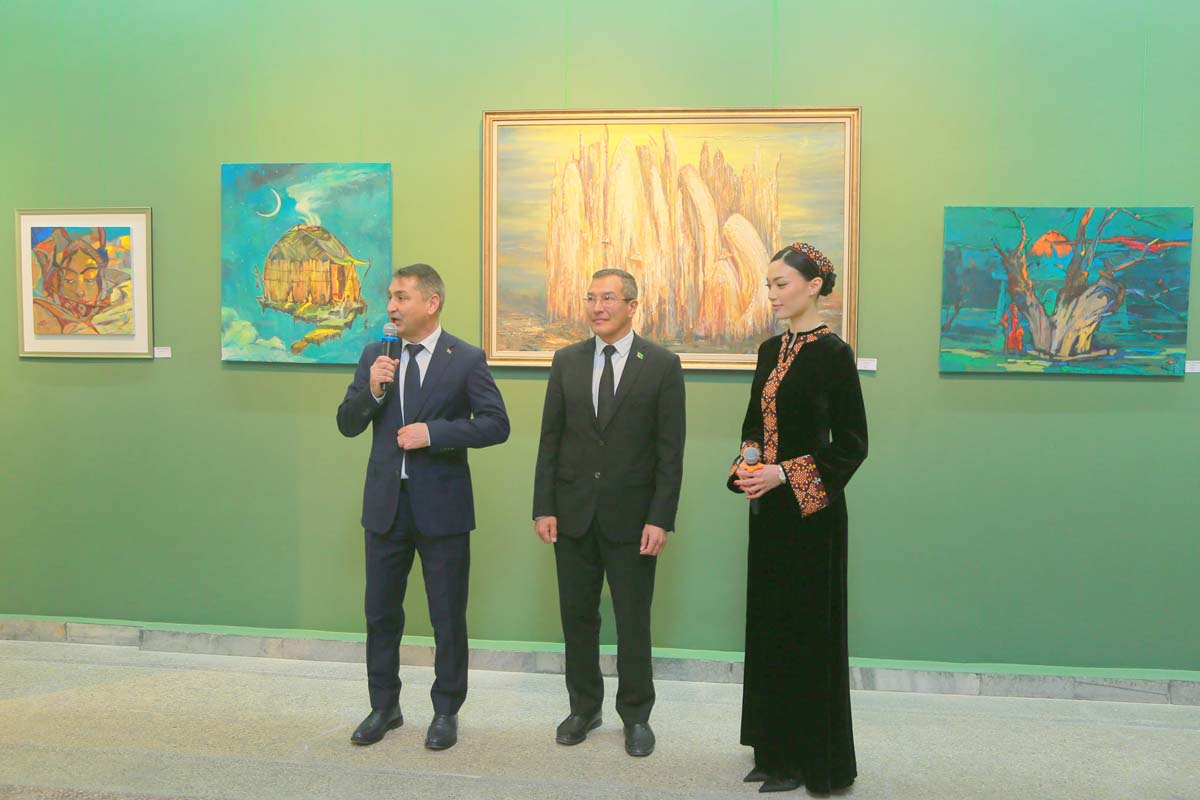
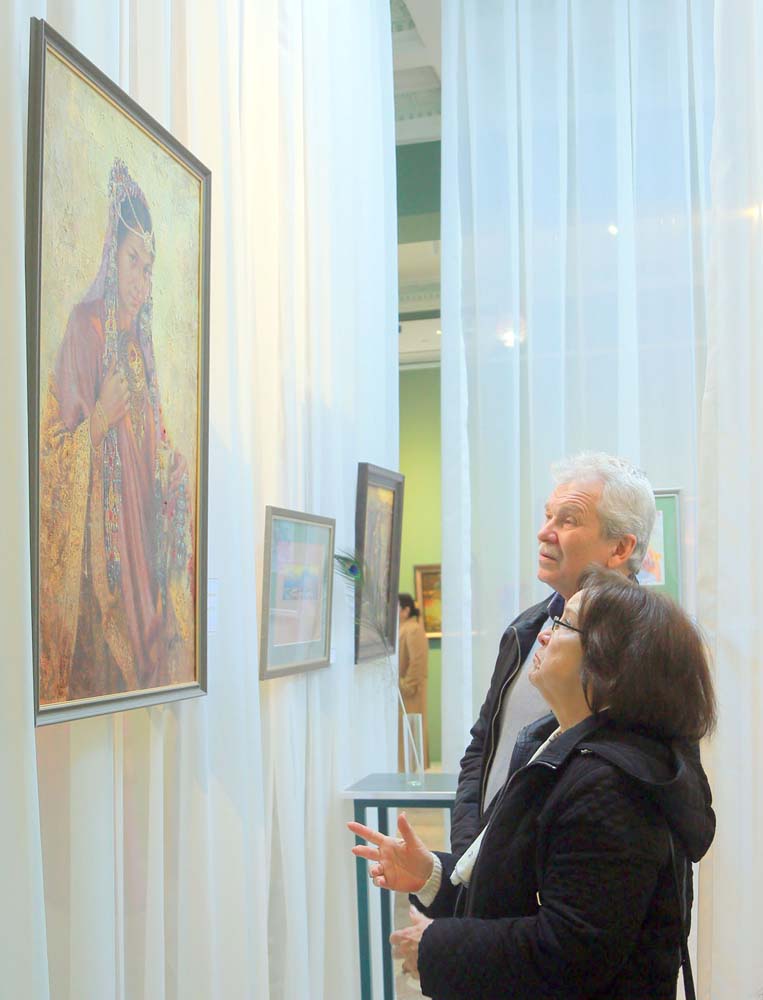
Every detail of the exhibition space has been carefully thought out—from the arrangement of the paintings to the interior design. To deepen the sense of space, a labyrinth made of light, semi-transparent fabric was created in the hall. Entering this improvised cube, the viewer finds themselves face to face with scenes from everyday Turkmen life. Details keenly observed by the artists acquire new meaning here, allowing visitors to see a familiar way of life from a fresh perspective.
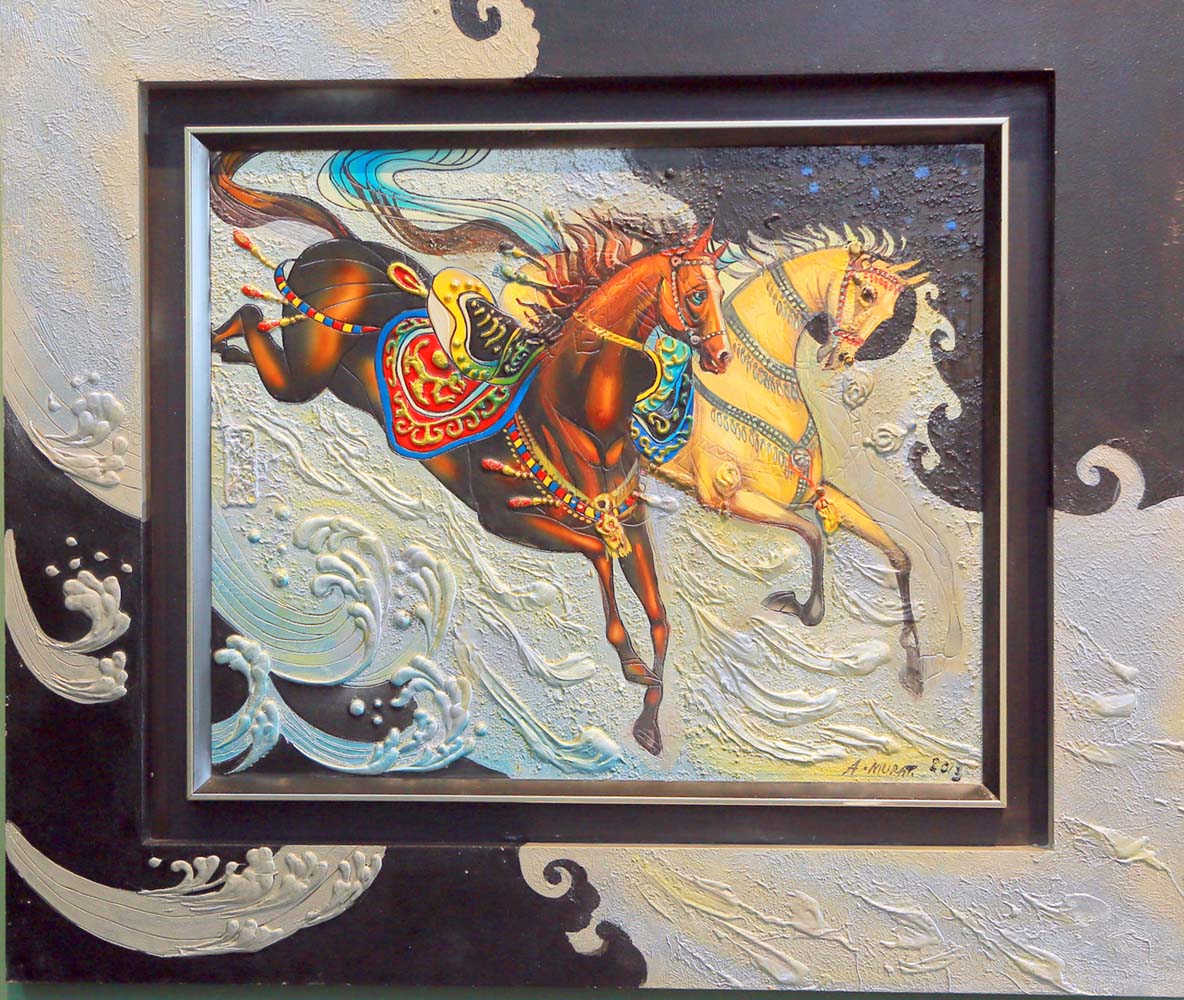
A special atmosphere is created by peacock feathers placed throughout the halls, gently swaying at the slightest breath of air. Thanks to this technique, despite the monumentality of some of the canvases, the entire exhibition feels light and floating, as if on a flying carpet. The subjects of the paintings enchant the viewer: frozen images of Eastern fairy beauties, playful and graceful Ahal-Teke horses, touching portrayals of children in traditional costumes, and endless landscapes of the native land.
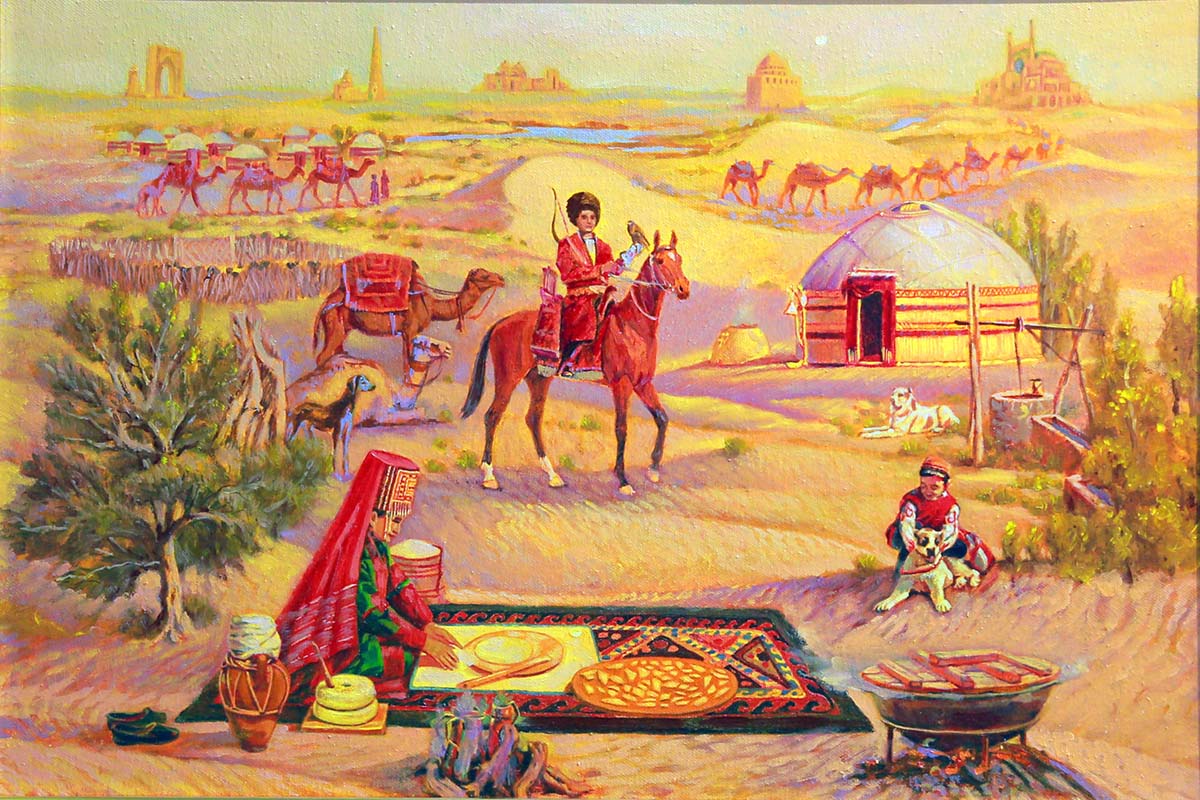
As art historian Azat Annayev notes, different generations coexist harmoniously within the exhibition:
“Here we see both established masters—professors of the Academy of Arts and the art college—and young artists. For example, Toyli Chopanov is a vivid representative of realism who always paints from life. The subjects of his paintings are often his own students, which turns the creative process into a kind of master class and emphasizes the living continuity of the traditions of the Turkmen art school.”
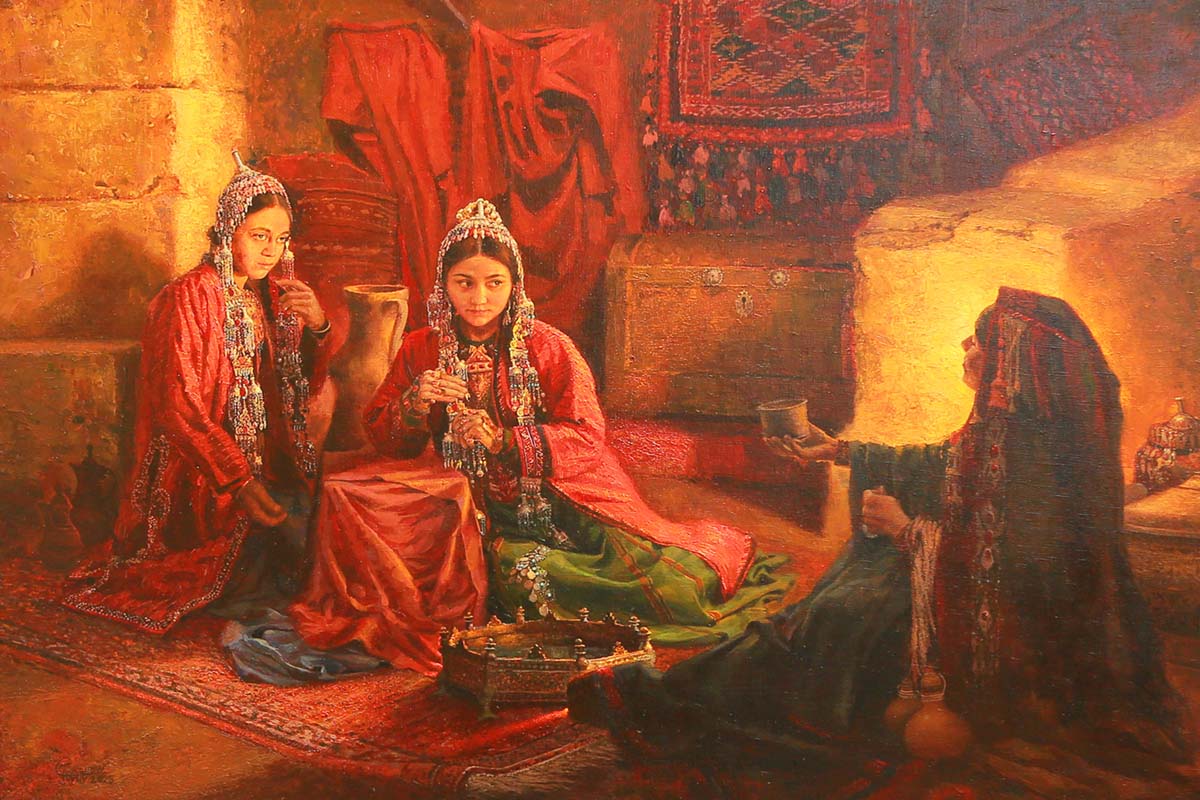
The exhibition space also features works by recognized masters such as Ovezmuhammet Mammetnurov, Kakageldi Gurbangeldiyev, Kossekmyrat Nurmyradov, Mejek Charyev, and Allamyrat Muhammedov. Speaking about Muhammedov’s works, the art historian emphasizes his high level of mastery in working with spatial forms and volumes.
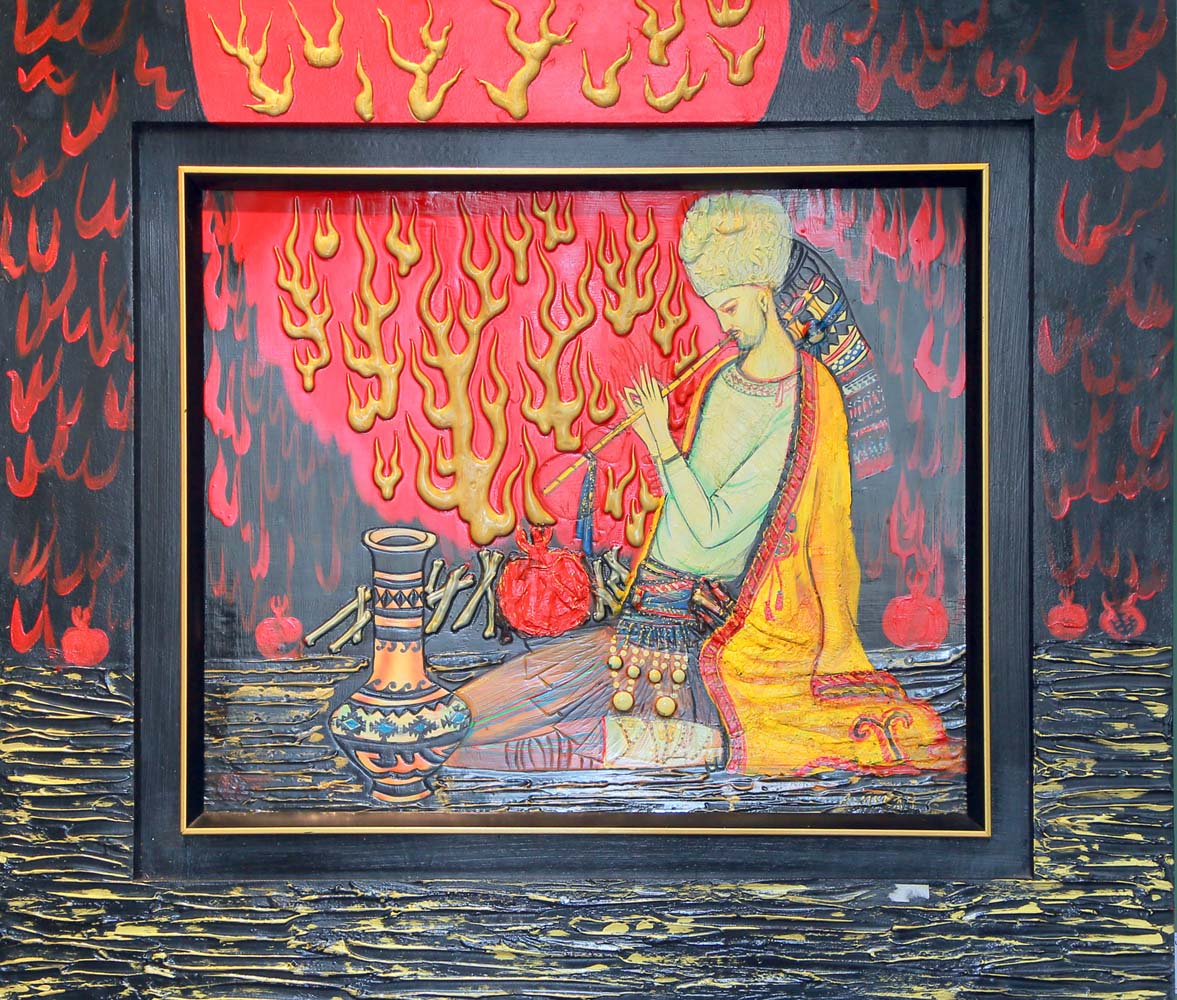
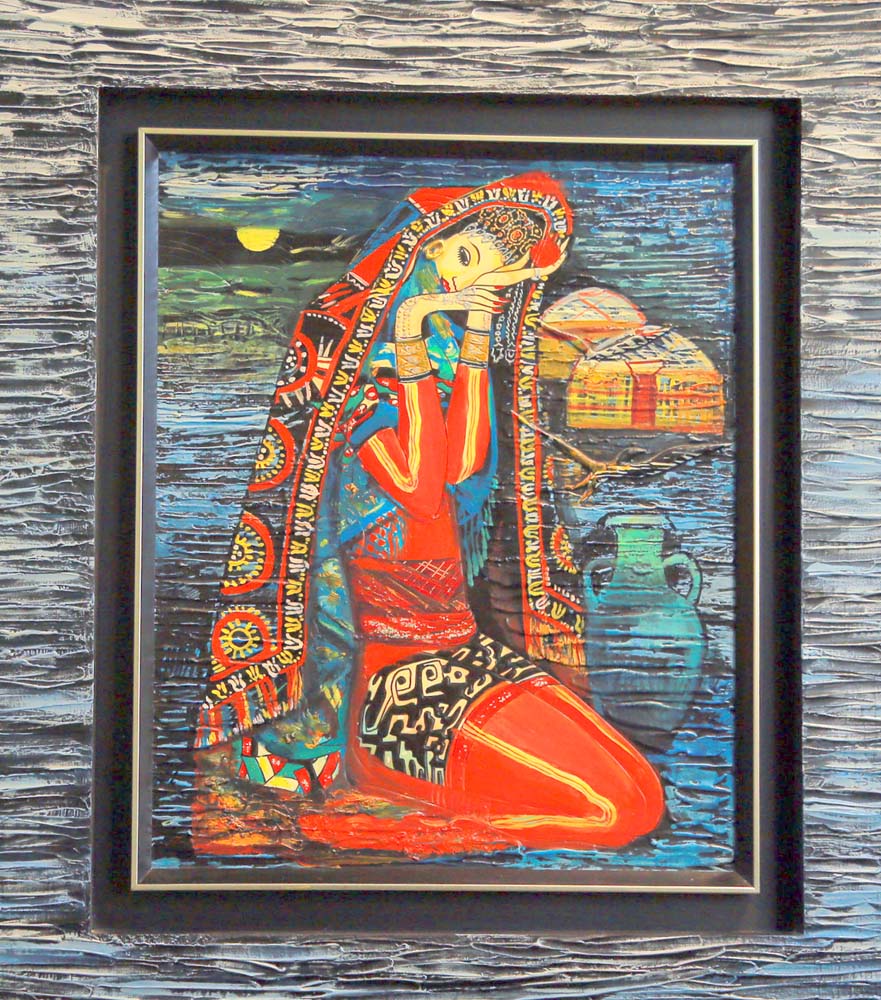
“His art is a play with space—it recedes inward and projects outward through the mixing of textures and materials. The artist achieves a sense of material embodiment for every idea. This is felt in the color, in the confident contours, and even in the presentation. Here, both the mat and the frame work toward the overall artistic objective.”
The halls are also adorned with works by Rustam Abdullaev, Charymyrat Yazmyradov, Ogulsadap Kuliyeva, Zakirjan Babaev, Guncha Myradova, Azat Myradov, Gurbangeldi Gurbanov, Polat Charyev, Shohrat Berdiyev, and Merdan Babajanov.
A distinctive feature of the exhibition is that any artwork on display can be purchased for a private collection. The exhibition will remain open until the end of February, offering everyone a wonderful opportunity to engage with the world of contemporary Turkmen art.