


As Hero-Arkadag notes in his book, «The Continuation of the meaning of my life», our ancestors considered it their duty to pass on their knowledge to others and prepare true masters of their craft. Respect for a mentor was always elevated to the level of respect for a father, and a student was treated like a child. In this way, a school of mentoring was created, which became one of the principles of the Turkmen people and firmly entered into its national traditions.
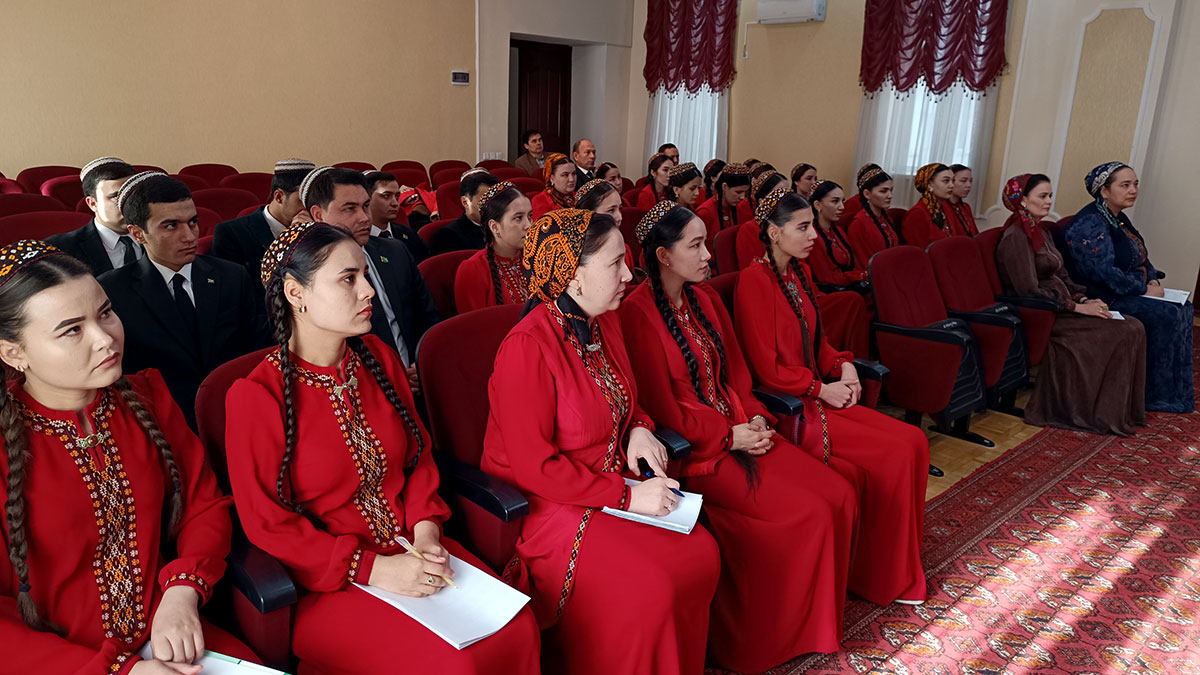
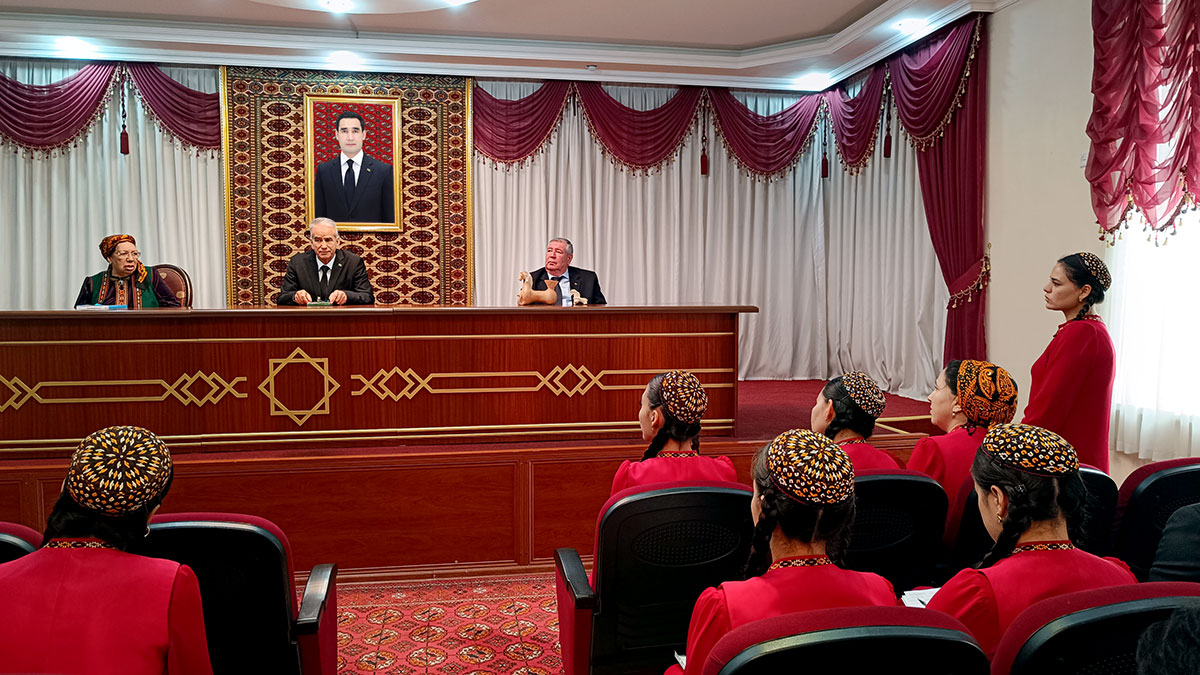
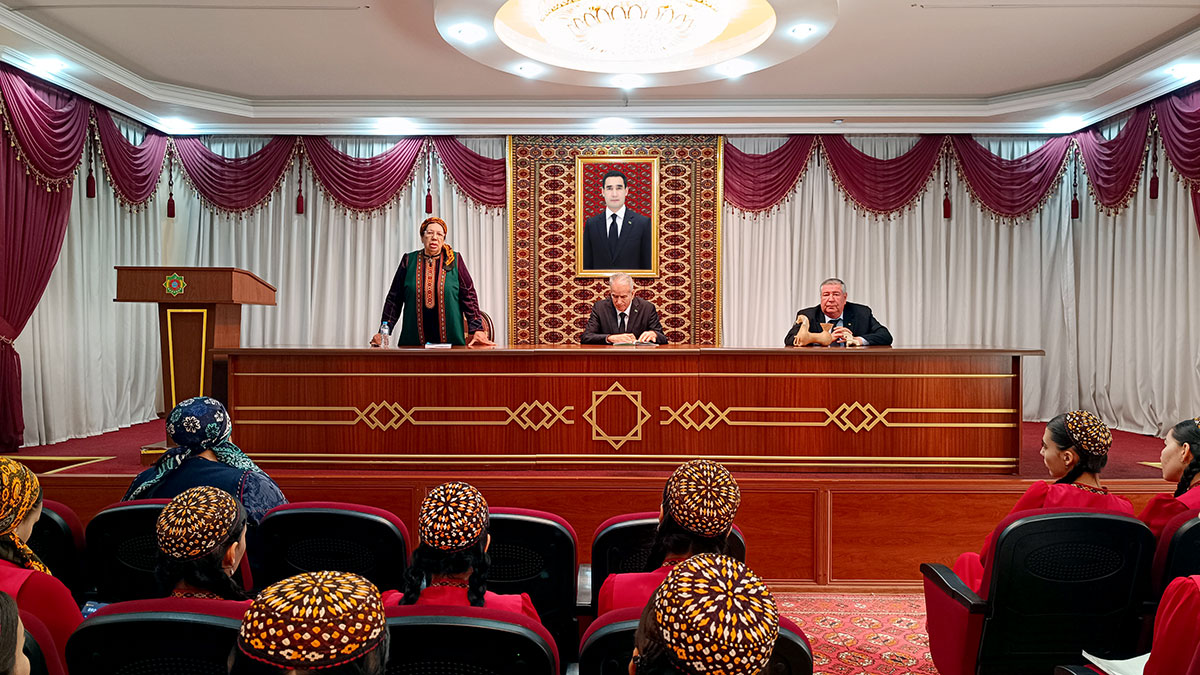
A vivid confirmation of the continuity of this noble tradition in the modern epoch was the mentoring meeting organised on the 24th of February of this year by the department of restoration of cultural values and museum studies of the Turkmen state institute of culture in conjunction with the Institute of history and archaeology of the academy of sciences of Turkmenistan. The meeting, held at the Institute of history and archaeology of the academy of sciences of Turkmenistan, was attended by scientists and research staff from the Institute, teachers from the Turkmen state institute of culture, as well as 2nd and 4th year students studying «archaeology».
Opening the meeting, deputy director of the Institute of history and archaeology of the AST, Han-Durdy Gurbanov, expressed his sincere gratitude to the President of the country, as well as to the National Leader of the Turkmen people, for the opportunities created for studying and passing on to future generations the rich cultural heritage and preserving ancient monuments of nation.
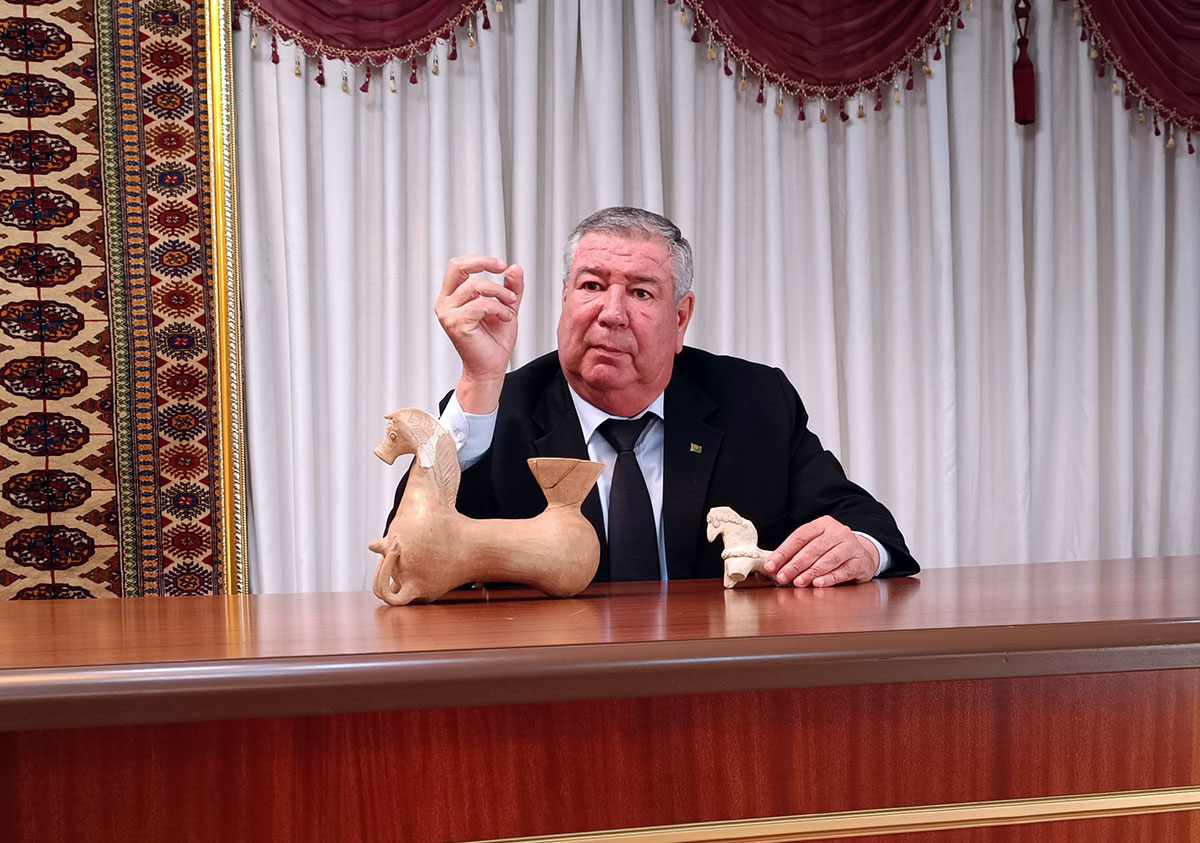
Then, the head of the department of the Institute of History and Archaeology of the AST, candidate of historical sciences Allaguly Berdiyev, gave a report on the origin of the Turkmen Ahal-Teke horses. «As is known from history, the Turkmen people were among the first in the world to domesticate wild animals. Irrefutable evidence of this is provided by the skilfully crafted figurine of a saddled horse discovered during excavations in Altyn-depe, one of the most ancient civilisations in our country, the horse bones in the Anev hills, and the horse bones and chariot found in the royal necropolis of Margush, considered the fifth oldest civilisation in the world. Furthermore, the images of horses on ceramic vessels from various eras found at historical sites are executed at a high artistic level», − noted Allaguly Berdiyev.
Since ancient times, horses have been inextricably linked with the life of the Turkmen people. The Turkmen considered his horse to be his faithful friend and comrade, and never parted with it either during battles or during celebrations. Even a horseshoe was used as a talisman against the evil eye and misfortune, as well as a home decoration.
The audience was greatly impressed by the presentation by Nurgozel Bashimova, chief researcher at the Institute of history and archaeology of the AST, art historian, and scholar, about the use of ornaments found on ancient ceramics in modern carpet making, as well as the semantic significance of these patterns that have survived to this day.
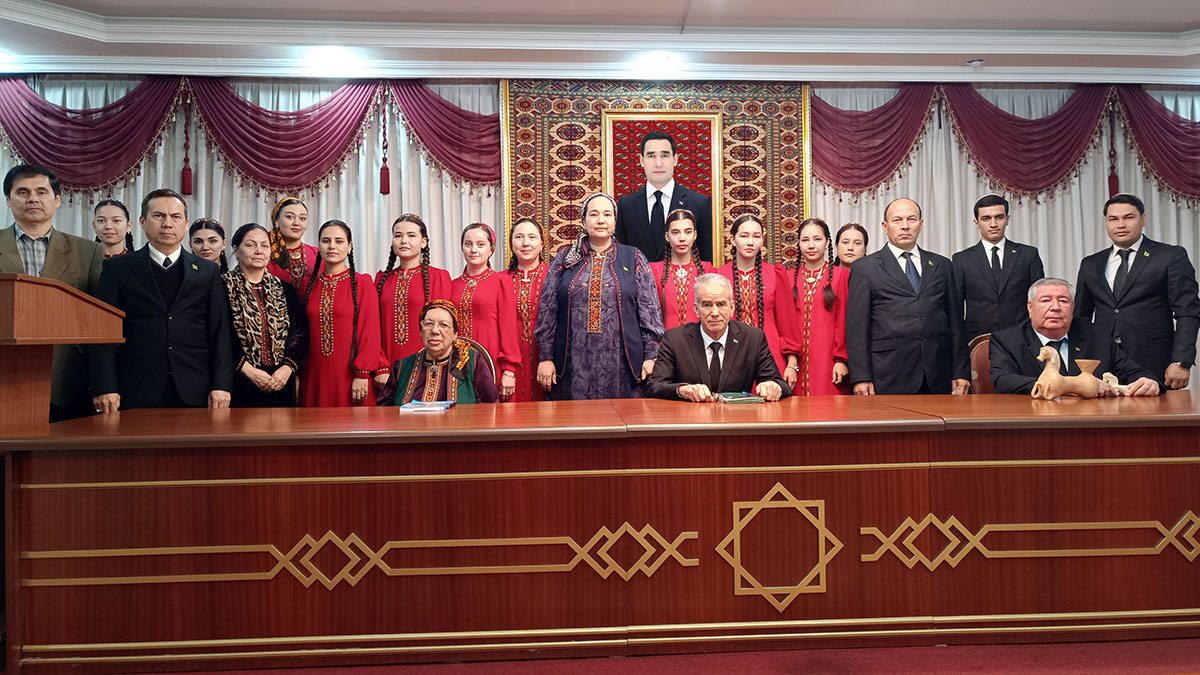
During the meeting, reports by Gulamylly Yagshymyradov, head of the ethnography department of the Institute of history and archaeology of the AST, on ancient lamps, and by Kerim Hojagulyyev, a research fellow at the Institute, on epigraphy, were also heard with great interest.
At the end of the mentoring meeting, a lively discussion took place between the scientists and students, which significantly increased the effectiveness of the meeting.