


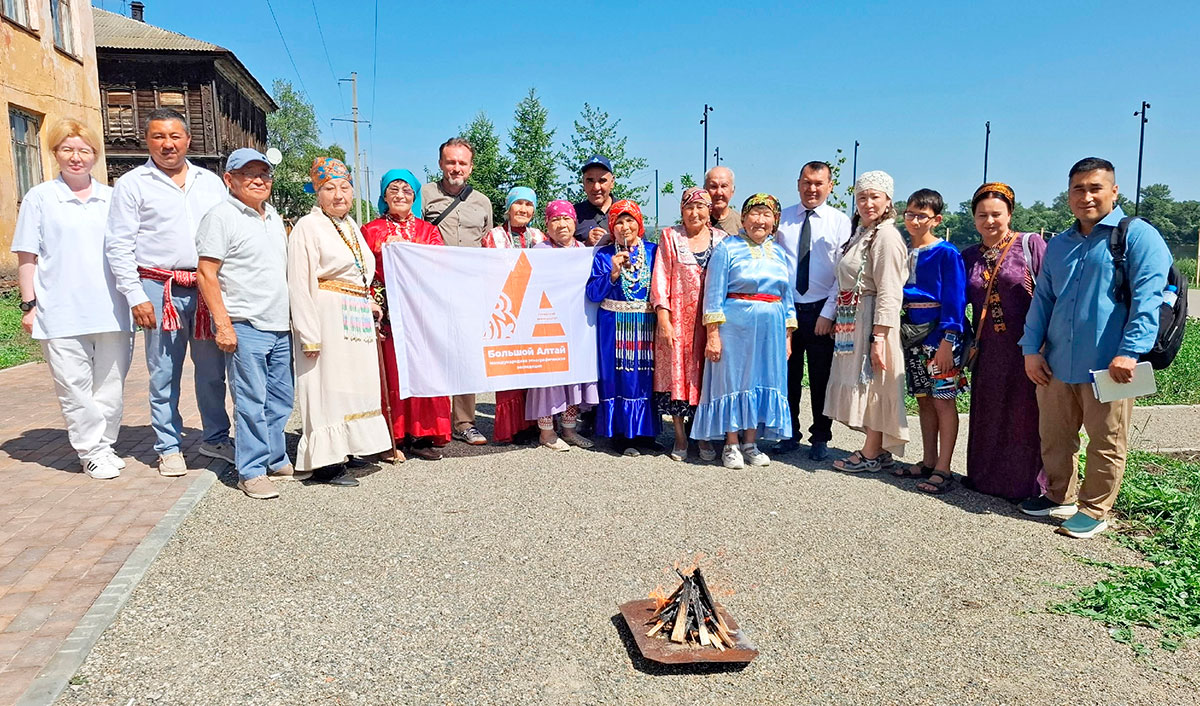
An international ethnographic expedition, “Greater Altai: Turkic Heritage 2026,” has concluded in Russia’s Altai Krai. Over the course of ten days, researchers from Russia, Kyrgyzstan, Tajikistan, Turkmenistan, and Uzbekistan studied the everyday life and traditions of the region’s indigenous peoples — the Kumandins, Chelkans, Tubalars, and Altaians.
Actively participating in the field research, ethnographers from Turkmenistan discovered numerous parallels between the culture of the Altai peoples and Turkmen national heritage.
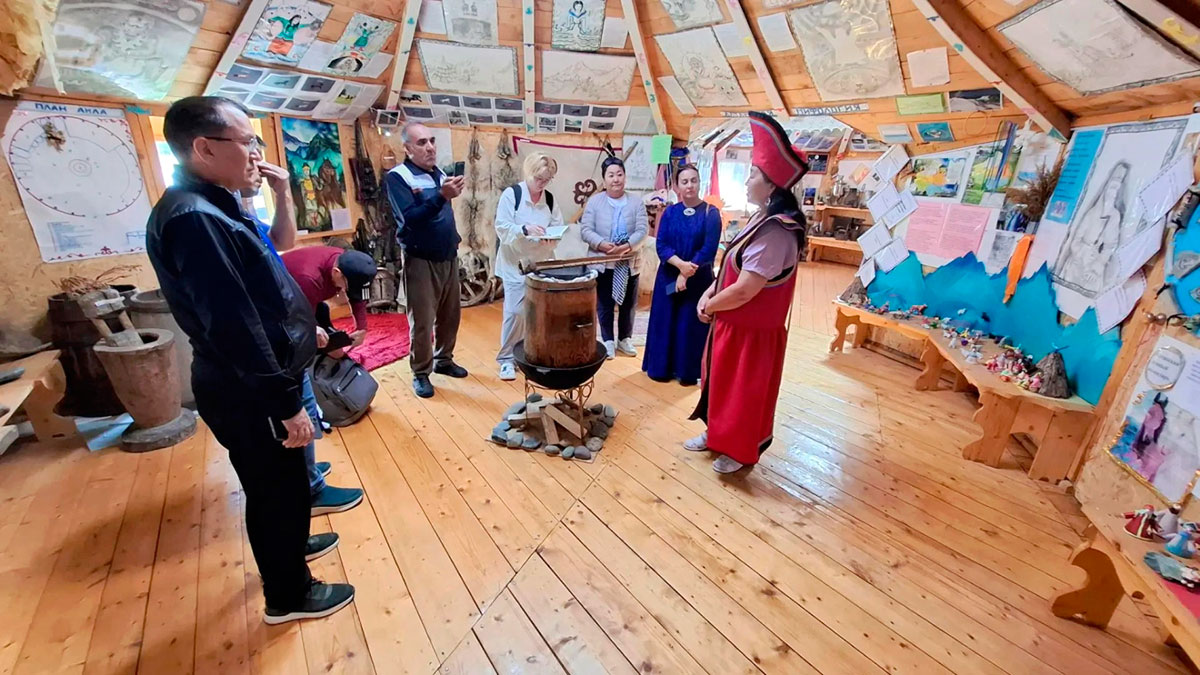
While visiting the Kumandin community in Biysk, Ayna Baymyradova, a representative of the Institute of History and Archaeology of the Academy of Sciences of Turkmenistan, particularly noted the deep linguistic and cultural affinity:
“The Kumandins have many words that are similar to ours because we share common roots within the Turkic languages. It is remarkable how similar our songs, beliefs, and traditions are. The elders told us many interesting things.”
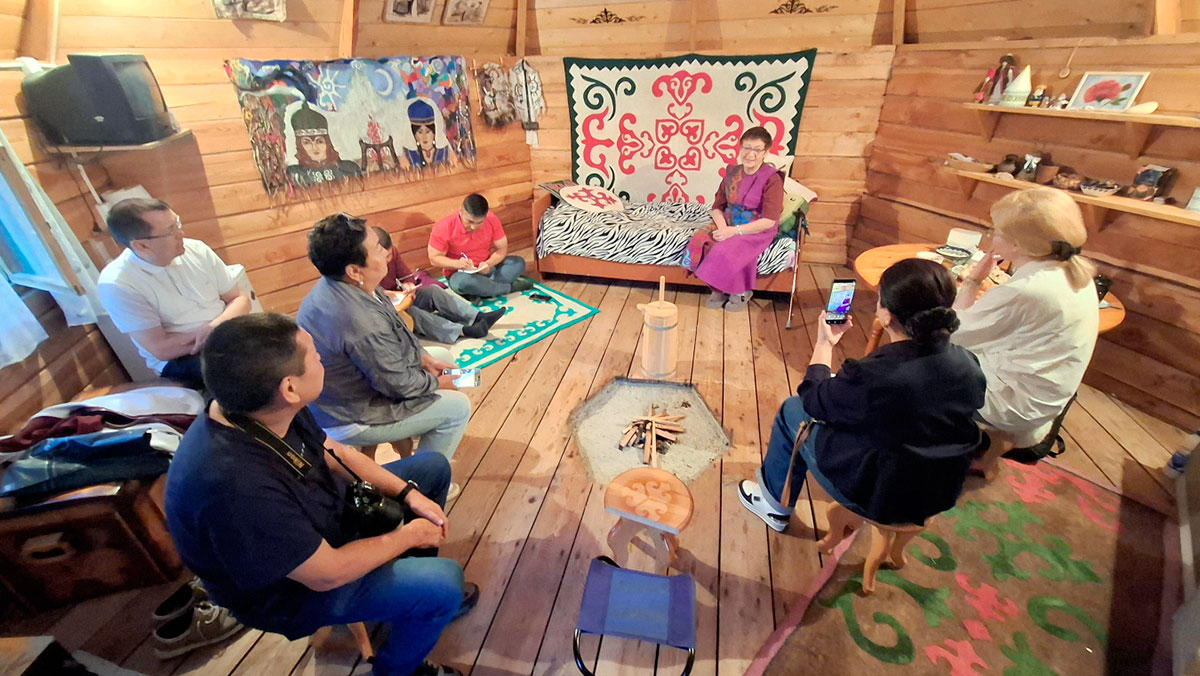
The guests were shown a traditional fire-worship ritual, treated to dishes of national cuisine, and introduced to the process of preparing talkan. In Turkmen culture, talkan is one of the oldest forms of traditional plant-based food. It is a type of flour made by grinding roasted wheat grains on hand-operated millstones (degirmen). According to an ancient Oguz tradition, it was mixed with butter before being eaten.
The researchers paid particular attention to traditional crafts and symbolism. In the Ust-Kansky and Ust-Koksinsky districts, felt-making is an important traditional occupation for women. Taking part in a felt-making workshop in Ust-Kansky, Ayna Baymyradova noted the similarities in techniques and patterns:
“The felting techniques and ornaments in Turkmenistan are very similar to those of the Altai. Every pattern carries a deep meaning — it serves both as a protective symbol for the home and as a symbol of prosperity. In particular, we saw the gochak ornament, depicting the horns of a mountain argali. The argali served as a totem for Turkic peoples, which is why this motif is also found among the Altai people — on felt products, in embroidery, and even in architectural elements.”
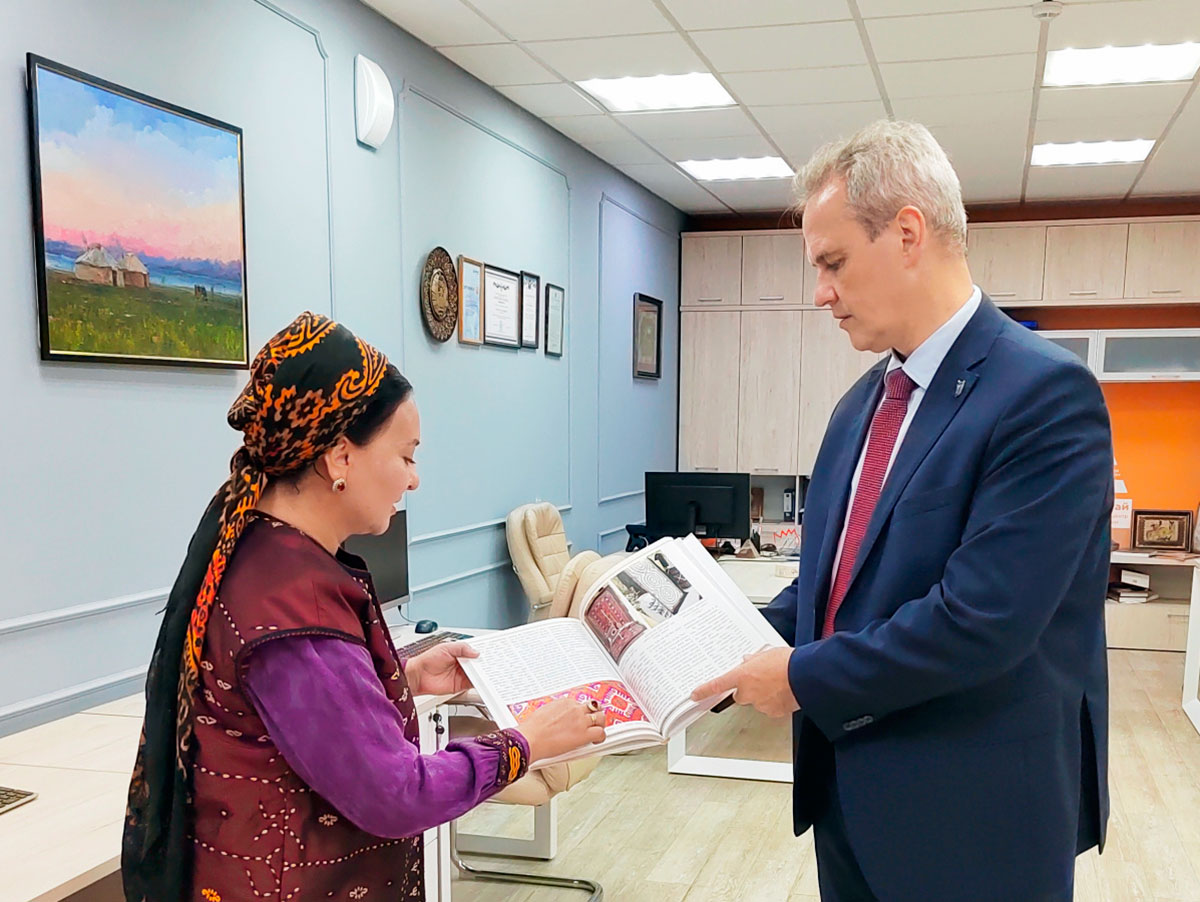
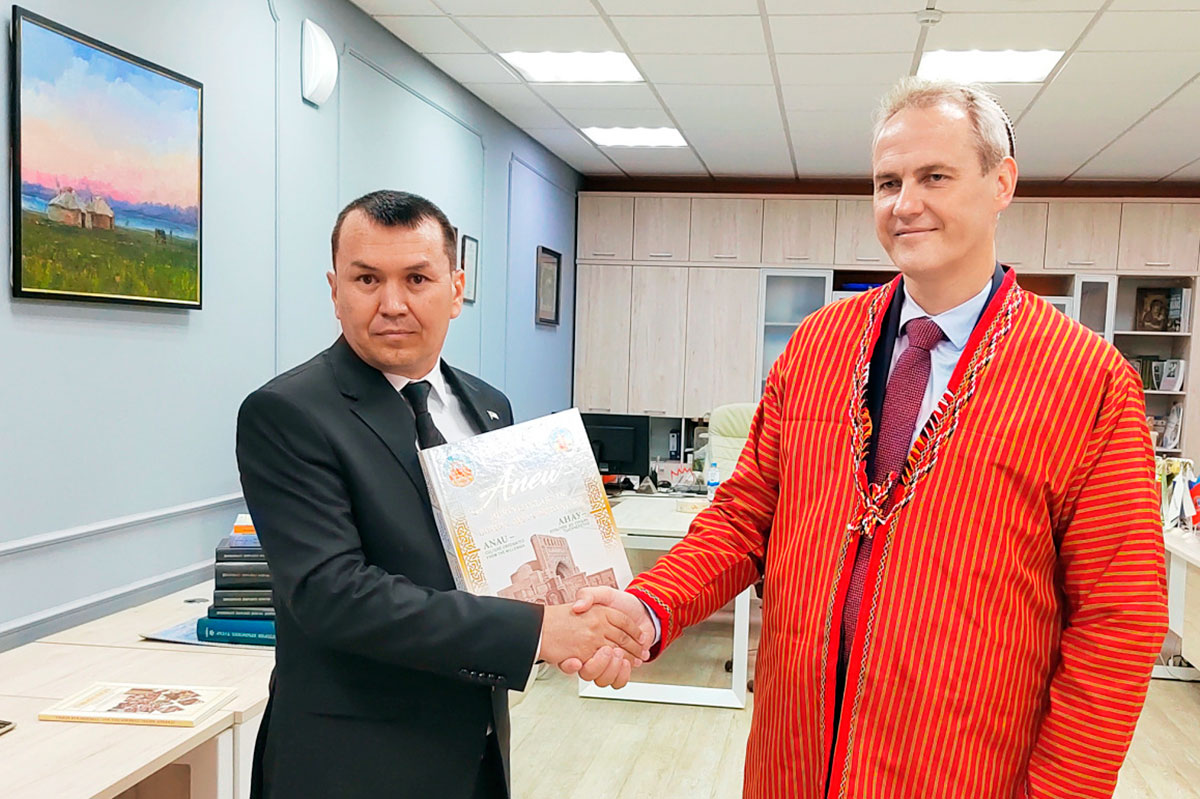
For many centuries, the felt carpet (keche) has been an integral part of everyday life, celebrations, and traditional rituals in Turkmenistan. As a gesture aimed at strengthening scientific ties, the expedition organizers were presented with a copy of the fundamental book “Turkmen Felt”, while Toyly Hommyev, a lecturer at Magtymguly Turkmen State University, presented them with the work of President of Turkmenistan Serdar Berdimuhamedov, “Anau – Culture Originated from the Millennia” (Änew – müňýyllyklardan gözbaş alýan medeniýet).
During the expedition, the international team covered approximately 2,000 kilometers and visited 10 settlements, speaking with dozens of experts and bearers of local traditions. The participants found many similarities in hunting traditions, livestock breeding, household arrangements, and beliefs — similarities that brought both the ethnographers and local residents closer together.
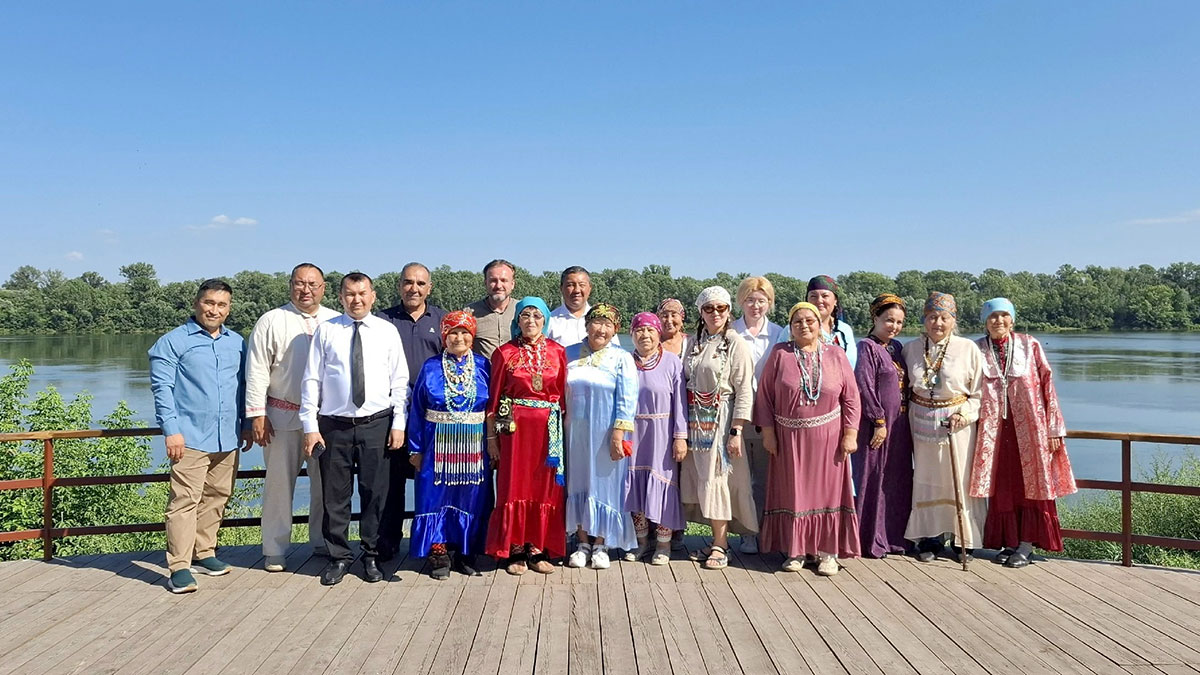
The large-scale project was organized by the Greater Altai Research and Educational Center for Altaic Studies and Turkology at Altai State University and Gorno-Altaisk State University, with the support of the Altai Republican Branch of the Russian Geographical Society (RGS).
Following the expedition, an extensive archive was compiled, including dozens of hours of audio recordings, photographic materials, and unique field notes. The collected data will form the basis for joint monographs and new international research projects.