


The editors of the Golden Age have repeatedly referred to history.
Turkmenistan and Ashgabat, she talked about events and facts that took place in the past. After such publications, as a rule, there were many responses and wishes in order to return as often as possible to the origins of the country and its capital, to personalities who were pioneers in various spheres of public life. There were requests for the need to remind young people of those who have left a vivid, noticeable mark on their lives and in the history of Turkmenistan. They must be remembered, they must not be forgotten.
And this, I think, is right, we need to talk about the personalities who glorified the country, because their lives, creativity and all thoughts were entirely aimed at creating the best, at discoveries and records.
Today, a word about the natives of Turkmenistan, about those who were among the first, about those who received the basics, the first lessons and instructions from our coaches, about those who glorified the country on the sports stages and arenas of the world. I would like to make a reservation right away that this publication is a reminder only of some outstanding athletes.
It is impossible to mention all those who deserve it in one article. That is why we are confident that the stories about the wonderful athletes from our country and natives of Turkmenistan will continue.
And today we are going to give you short stories about the following outstanding athletes of the past.
Olympic champion in 1952 in Helsinki, Joseph Konstantinovich Berdyev:
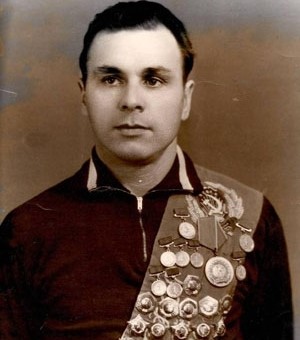
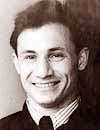
The historian Ovez Gundogdiyev was the first to reveal the secret of the origin of his name and named his real name and patronymic. In his book "The Tekin Equestrian Regiment", published in 1992, he writes: "Ensign Kakajan Berdyev, father of the first Turkmen Olympic champion Yusup Kakajanovich Berdyev. Yusup had to change his first and last name due to the outbreak of a new wave of repression. He became Joseph Konstantinovich. Berdyev...". His father, a native of Mary Velayat, was a military man.
In his youth, Yusup was distinguished by good health, slimness and fitness. The pre-war fascination with gymnastics in the Ashgabat. Berdyev often played for Dynamo teams in the capital of Turkmenistan and even Moscow at that time. The war interrupted peaceful life. Yusup went to the front. He served as a battery commander of an artillery regiment and had the military rank of captain.
Yusup Kakadzhanovich Berdyev was awarded the Order of Red Stars (1945) and the Order The Great Patriotic War of the 2nd degree (1985). After the war, he went to study at the Higher School of Coaches at he graduated from the Military Institute of Physical Culture and Sports in Leningrad (now Saint Petersburg) in 1953.
The 1952 Olympic Games in Helsinki greatly contributed to the successful completion of his studies. On the eve of the Games, as one of the best vault gymnasts, he is enrolled in the national team for a trip to Helsinki.
In the year of the Helsinki Olympics, a student of the Military Institute of Physical Education named after V. I. Lenin (later he became Joseph Berdiev was 28 years old at the Lesgaft Institute. He belonged to the middle generation of Soviet gymnasts, was he is already a four-time champion of the USSR in the vault and achieved success in the all-around for the first time at the national championships.
A master of the basic jump, he has repeatedly received the highest score for it - "ten". But to prove their superiority over foreign ones he could not compete with his rivals: the judges, who were not yet accustomed to the manner of performance of Soviet gymnasts, interpreted the rules according to the usual canons. This was especially true when evaluating mandatory exercises.
It was the gymnasts who brought the first gold medals to our country back then.
According to the results of the draw for Yusup Berdyev on July 21 in 1952, he was honored to be the first to perform on the Olympic Platform of the spacious Messuhalli exhibition Hall.
He coped with his task more than successfully. As a result, the team of gymnasts, beating the then world champions of the Swiss, became the champion of the XV Olympic Games. Berdyev made a significant contribution to the team success.
After Helsinki, Yu. Berdyev was still involved in sports for a long time. Three more times he became the champion of the USSR in the vault and he finished his sports performances only in 1955. Then, as chairman of the sports club, he passed on his experience to the students.
* * *
Three-time Olympic champion (gold in 1964 in Tokyo, gold in 1968 in Mexico City, gold in 1972 in Munich) Vladimir Ivanovich Morozov.
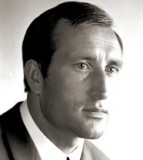

Vladimir Ivanovich Morozov was born in March 1940 in Krasnovodsk (now Turkmenbashi). He spent his childhood on the shore the Caspian Sea. Together with his peers from Sovetskaya Street (now Shagadam Street), where the Morozov family lived, he began rowing and canoeing. Due to the age of his heroic physique, the boy stood out sharply from his peers in training. In addition, his early gymnastics classes had an effect. In those early fifties of the last century, the success of gymnasts at the world championships attracted many teenagers go to gyms to practice this particular sport. So Volodya Morozov began to practice gymnastics at a young age, until one day he was noticed by rowing coach Viktor Sergeevich Sheikin. Physical characteristics of Vladimir, gymnastic training, the coach's experience was not slow to affect his sporting success Morozova. One day it so happened that the USSR rowing team came to Krasnovodsk for training camps. That's when the coaches the national team also spied the Turkmen burly Morozov. That opened the way for him to join the Union national team. And after some time in 1963, and V. Morozov then turned incomplete 23 years old, at the third Spartakiad of the Peoples of the Soviet Union (the competition was equated to the USSR championship) a young athlete, Vladimir Morozov, becomes the winner in the rowing competition on single kayaks at a distance of 500 meters.
The success and capabilities of V. Morozov so impressed the coaches and sports officials of that time that a year later he was included in the rowing team to compete at the Olympic Games.
The 1964 Olympic Games in Tokyo. To imagine the events that the story of a young rower from Turkmenbashi, who had never been abroad, plunged into, it is worth remembering some of the features and events of these Games in the history of the Olympic Movement.
The 1964 Tokyo Games were the first to be held in Asia. Athletes from 93 countries were represented, and a total of 5,151 athletes took part in the competition. These Games have gone down in history, as it is now fashionable to say, as the most advanced for that time. It was from Tokyo that the first live TV broadcast via satellite was conducted. Thanks to this, the Games were watched by more than 800 million viewers on all continents. There were other innovations. So, for example, an invoice for 1/100 was entered seconds and a photo finish, as well as pictographs of all sports.
According to the established tradition, the finals of the rowers were held on the eve of the end of the Games. By that time, there were four kayaks in which, in addition to the athlete from Turkmenistan V. Morozov, there were N.Chuzhikov, V. Ionov and A. Grishin successfully completed the preliminary heats and reached the final.
One can imagine how worried V. Morozov was then: the first The Olympics, the first finishing start. And now the finish line has been crossed. The first ones! Champions!
Whether Vladimir thought then that he would have two more such victorious finals is difficult to say now. Hardly, though. Nevertheless, this was followed by victories in 1968 in Mexico City at two-man kayak (with A. Shaparenko) and in 1972 in Munich in a four-man kayak (with Y.Filatov, Y. Stetsenko and V.Didenko). That's how he became a three-time Olympic champion.
His close friends and colleagues in sports remember him as a man with an iron will, strong, purposeful and with a great desire to fight to the end. Honored Master of Sports V. Morozov was awarded the Order of the Red Banner of Labor and the Badge of Honor for his sporting achievements.
* * *
Olympic champion of 1992 in Barcelona Shakirova (Bunatiants) Helen Rafaelovna:
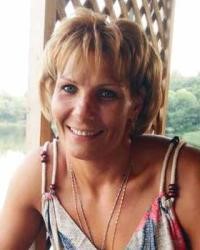
Helen Rafaelovna was born in 1970 in Mary. She started playing basketball in Ashgabat with coach Sergey Mikhailovich Ambartsumov. Helene explained the origin of her name simply: "My parents were big fans of French.
Movies, and Mom, almost every movie has a heroine named Helen, that's what they decided to call me." As a child, Helen studied music, but when it turned out that her daughter had no vocal skills, and there was plenty of energy, her mother I decided to send her to the sports section. Already in school years Helen was taller than all her friends, and when she grew up, she stretched to 190 centimeters. At first, Helen didn't get into basketball, she even skipped training, but over time, she got involved in Ambartsumov's training sessions so much that she couldn't imagine herself without basketball. At the age of 15, she is already playing for an adult team. Her role is central. Helen becomes the leading player of the team. In 1987, Bunatiants accepted an invitation from the CSKA Moscow Women's basketball club.
And two years later, at the age of 19, she became a national champion in the team and made her debut in the national team.
In 1992, at the Olympic Games in Barcelona, the women's national team the CIS achieved tremendous success, defeating rivals from the USA (79-73) in the semifinals and the Chinese national team in the final (76-66). Bunatiants participated in five matches of the tournament, and in the final game brought the team 15 points.
After her Olympic triumph, Bunatiants played for various professional teams, including abroad. Center E. Bunatiants, according to her teammates, does not have there were weak points. It is no coincidence that she has been performing at the highest level for a long time. She was able to do everything on the court, even things that, in principle, are not part of the duties of the centers.
After her playing career, Helen Rafaelovna became a coach. And here she achieves great results, having gone from the level of children's teams to the very top – she became the first woman to lead the Aktobe men's basketball team from Of Kazakhstan.
After getting married, Helen Rafaelovna took her husband's last name and became Shakirova. However, she entered the annals of women's Olympic basketball and remained there as a native of Turkmenistan, Helen Rafaelovna Bunatiants.
* * *
Marat Ataevich, silver medalist of the 1960 Olympic Games in Rome Niyazov.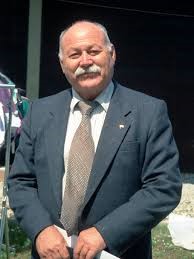
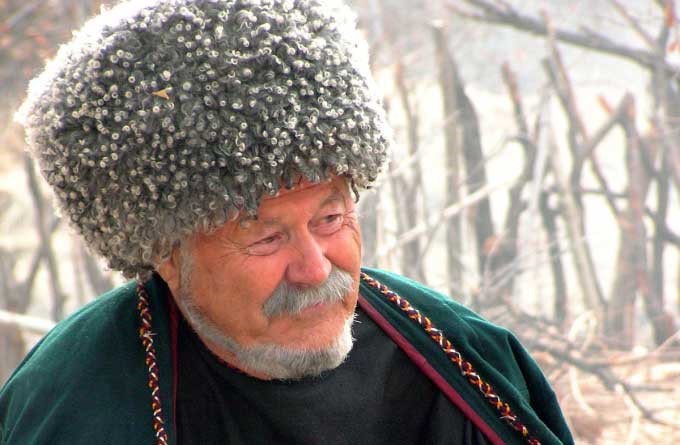
Marat Ataevich Niyazov was born in 1933 in Ashgabat.
The school years flew by. It was time to choose a future profession – prestige and prospects were seen in the oil and gas industry, which was rapidly developing in the republic at that time. Turkmenistan was in dire need of qualified personnel at that time.
Marat Ataevich, who was able to achieve his goals since childhood, became a student at the Gubkin Moscow Institute of Oil and Gas and successfully completed his studies in 1956. This is his first time at the institute.
He comes to the shooting sports section. Upon returning home to Ashgabat, Marat Ataevich enters the postgraduate program of the Academy of Sciences.
However, his passion for shooting still overpowers him, and for a while he works as an instructor at a sports club, then teaches at a school of Higher sports skills. Participating in the republican and All-Union competitions of that time, M.Niyazov is making significant progress in shooting with a sports rifle. His results impress the coaches, who invite him to the national team to participate in international competitions. From 1957 to the 1960 Olympics, he the undisputed champion of the Union. That's how he gets to the Roman
The 1960 Olympics. Do you remember those famous three seconds in basketball, when the USSR basketball players defeated the USA team at the the Olympic Games in Munich. This event has gone down in the history of world sports forever. So, something similar happened in Rome. Until the last shots, Marat Niyazov and his teammate Viktor Shamburkin walked abreast. As a result of the last series Shamburkin scores 1,149 points, Niyazov is only four points behind (1,145). And the gold was so close… However, this is without It was an exaggeration to say that the young Turkmen athlete was a great success. Marat Ataevich's character, constantly focused on achieving his goals, affected his post-Olympic results. After Rome, he became a seven-time world champion, three-time European champion, multiple winner of world and European championships.
Many of the records he set remained inaccessible to others for a long time. A man of great love of life, spiritual generosity, he eventually acquired new titles – a loving husband, caring a father, an affectionate grandfather. Already in his eighties , he continued to coach. Marat Ataevich Niyazov has realized himself abundantly. Just listing his wins and records will take up a lot of space. But, as usual, athletes remember and especially appreciate that very Olympic award. And he has it!
In addition, he is an Honored Master of Sports, an Honored coach.
Of the Turkmen SSR. For his successful performances at the 1960 Olympic Games, M. Niyazov was awarded the Order of Labor The Red Banner. To remember people like Marat Atayevich Niyazov, there is no need to look for a special reason. About him, about people like him, no matter how much you write or say, it's still not enough. Our famous countryman from Ashgabat glorified his native land. And it's not for nothing that he was popularly nicknamed "Our Mergen."
* * *
Boris Grigorievich Kramarenko, bronze medalist of the Olympic Games in Moscow (1980).
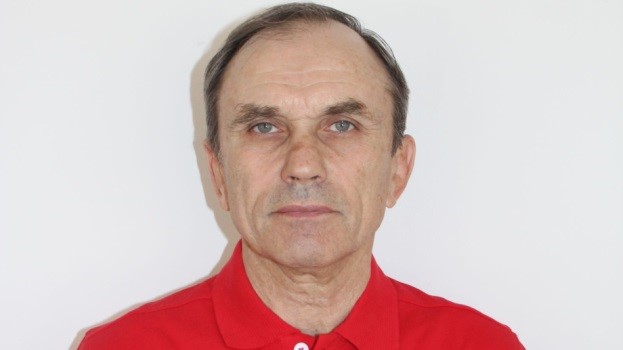
Boris Grigorievich Kramarenko was born in 1955 in Ashgabat. From 1962 to 1968 he studied at secondary school No. 19, and from 1968 to 1972 He spent a year at school No. 45 in Ashgabat. During his school years, he started wrestling. By the end of the tenth year, he had fulfilled the standard of the Master of sports of the USSR, and in 1977 he was already a master of sports of international class. Being a student at the Faculty of Physical Education at the Turkmen State University, he performed at the championship of the Union, having achieved significant success.
After graduating from TSU, B.Kramarenko was drafted into military service, where he continued to compete in various competitions. In 1977, his first great success came to him, he became the champion of the Union. Before the 1980 Olympics in Moscow, he was second to no one in the weight category up to 62 kg. In 1978 , he won the World Championship and was included in the the Olympic team. That's how he gets to Moskovskaya the Olympics.
At the Olympic Games, B. Kramarenko fought in his favorite weight class. The winner was determined by the minimum the number of penalty points that brought all the results in fights, except for a clean win. An athlete who received six penalty points before the final bouts was eliminated from the tournament.
After there were three or fewer wrestlers left, they played medals among themselves, with penalty points scored in the preliminaries being counted. Kramarenko, having won the first two fights, then lost and remained in third place. He became the bronze medalist of the Moscow the Olympics. After the Olympics, Boris Grigorievich became a coach and trained new Olympians. B. Kramarenko was awarded the medal "For Labor Distinction".
* * *
Bronze medalist of the Olympic Games in Melbourne (1956). Gennady Gennadievich Nikolaev.
Nikolaev Gennady Gennadievich, was born in 1936 in Ashgabat.
Unfortunately, there is no information about his life in Turkmenistan. But judging by the fact that he mainly played for army clubs, it is possible that he came from a family of servicemen who served in Turkmenistan. It is also known that Nikolayev, together with our famous countryman Marat Niyazov was a member of the Union national team.
The 1960 Rome Olympics. Then for the first time in the whole world The names of outstanding athletes of that time, Yuri, were mentioned.
Vlasov, Valery Brumel, Boris Lagutin, Larisa Latynina, Tamara Press, Igor Ter-Ovanesov. In Turkmenistan, however, after The Olympics, we joyfully welcomed our outstanding shooter Marat Niyazov, who won the silver medal in a hard struggle.
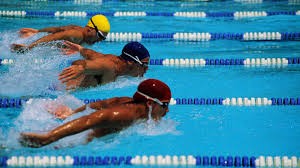
And Gennady Nikolaev came to the Olympics in Rome, being a bronze medalist in 200-meter swimming at the previous Olympic Games in Melbourne in 1956. Then he was a member of the team that won the prize for the first time in Olympic relay 4 200-meter freestyle. Now in Rome, unfortunately, G. Nikolaevu failed to repeat or improve his previous success.
However, after the Roman Olympics. At his favorite distance, G. Nikolaev improved the European records six times, was the world record holder, and became a multiple champion of the USSR.
* * *
Bronze medalist of the Olympic Games in Seoul (1988) and Barcelona (1992) Elina Alexandrovna Guseva.
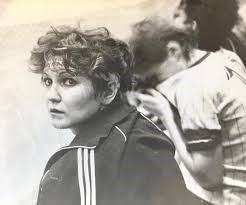
Guseva Elina Alexandrovna was born in 1964 in Ashgabat. Elina is the sister of the now famous Russian football coach Rolan Gusev. "Since childhood in the family," says Elina Alexandrovna, "there was an unspoken understanding between them. I went to the handball section, and Rolan was passionate about football." Rolan was jealous of Elina's results and repeated that he was unlikely to achieve the same results as his sister, but gradually Rolan calmed down. He worked, endured, and proved his worth.
Alla Alexandrovna, Roland's mother, recalled: "Since childhood Rolan was fast, he started when he was seven and a half months old, and at the age of five he was already playing football. I ran with adults on equal terms.
Rolan took his first serious steps in his life's work in Ashgabat, at the age of seven. He was shorter than his classmates for a long time, but then he got taller. One day while studying at In Ashgabat, he jumped out of the classroom window, fortunately it was the first floor,and went to the dining room. The teachers swore, but they always forgave Rolan, because he sang very well. In the first grade in Ashgabat, when the football coach came to recruit the team, Roland was the first to raise his hand." Even today, after many years, Roland is calm and self-contained, proving by deed that he, being the coach of the CSKA football club, can achieve high results. And the results of the football player Rolan Gusev were very impressive. Not every player, especially in football, manages to do this: he is a multiple champion of Russia, winner of the Russian Super Cup, Winner of the 2004/05 UEFA Cup, Honored Master of Sports, awarded the Order of Friendship.
However, in the correspondence competition with his sister Elina Alexandrovna, Roland still has something to strive for. Elina was the first in her family to receive the title of Honored Master of Sports. She is a multiple world champion, a bronze medalist at the Olympic Games in Seoul (1988) and Barcelona (1992). Being a point guard in a handball team is not an easy task. A player in this role must be able to "read" the situation on the court, find ways to the opponents' goal and bring the main ones to the kick the attackers. Elina coped with this role better than others, and in Barcelona, in addition to her main duties, she on the court, she scored 14 goals against her opponents!
After active sports, Elina Alexandrovna was engaged in social work, not forgetting, of course, about the education of new Olympians.
* * *
The champion of the XXII Olympic Games in the team competition and the silver medalist in the individual competition of the 1980 Moscow Olympics Kovshov Yuri Alexandrovich.
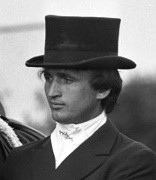
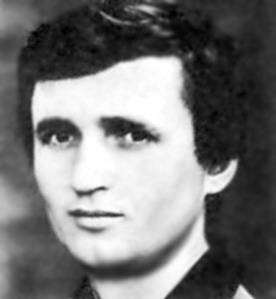
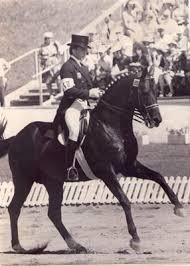
Kovshov Yuri Alexandrovich was born in 1951 in the Turkmen border town of Kushka (now Serkhetabad). It can be argued with a high degree of probability that the proverb that used to exist among military personnel – "They won't send you any further, they won't give you less than a platoon" – fully applies to the Kovshov family.
Yuri's father, Alexander Kovshov, was a military man. Obviously, this is how the Kovshov family ended up in Turkmenistan. You can also Presumably, it was here on the border that little Yura first saw the "heavenly horses" – the Turkmen Akhal-Teke.
How else to explain his incredible dedication and love for sports, where the main characters, besides the equestrian athlete, were those very "heavenly horses". At the age of 14, Yuri started equestrian sports at school. He began participating in the national championships in 1974, and has been a member of the Union dressage team since 1976, training under the guidance of his father. – Alexander Kovshov. At the age of 24, he is already competing with the best equestrian dressage riders, and a year later he is already a champion the Union. After leaving Turkmenistan, he is growing up as an athlete.
He achieves the highest success as a member of the Union national team at the Moscow the 1980 Olympics. Equestrian competitions at the summer the 1980 Olympic Games were held in the southwest of Moscow at the Bitsa equestrian complex, built specifically for the Olympic Games. The big prize in the show jumping was played at the large sports arena of the Luzhniki Stadium. The competition was held from July 25 to August 3. Traditionally, it was played out Six sets of awards were awarded in individual and team championships in show jumping, triathlon and dressage. Then the horsemen won all three team tournaments. Eleven horsemen, including Yuri Kovshov, who took part in the Moscow at the Olympics, they became Olympic champions.
Yuri Alexandrovich's sporting achievements are not accidental. His success was greatly facilitated by the fact that his irreplaceable "partner" was a horse named "Gambler", which was released on March 25, 1968. His father "Gunib" of the purebred horse breed belonged to the line of "Crystal" (Ladro – Hussier). It would not be superfluous here It should be recalled that almost all world-famous equestrians have achieved success on the same horses. With the "Player" Yuri Alexandrovich also became a silver medalist in individual competition at the Moscow Olympics.
Honored Master of Sports Yu.Kovshov was awarded two Orders of the Badge of Honor (1980 and 1984) for his achievements in sports.
* * *
Bronze medalist of the Olympic Games in Atlanta (1996) Babakova (Butkus) Inga Alvidasovna.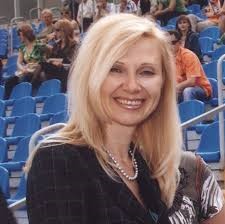
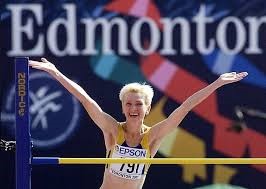
Inga Babakova was born in 1967 in Ashgabat. Inga as well as Yu.Kovshov, Nikolayev was born into a military family. In Soviet times, this was a normal phenomenon. Military families moved from one part of the country to another. But it is important for us that all those who were born in Turkmenistan remain ours forever, and not because they have become so famous and have reached considerable heights in their lives. The important thing is that they (and there is great confidence in this) have always considered and Turkmenistan is considered the second (maybe the first!) Their homeland, the place where they took their first steps in life.
Already studying at school, Inga and her family move to Krasnodar. There she continues to practice athletics. After graduating from the Mykolaiv State Pedagogical Institute, she continued to practice high jumping. She married Sergei Babakov, who later became her coach. In 1993, she reached a height of two meters for the first time, and she set a personal best two years later, breaking the bar at altitude 2.05 centimeters.
At the Olympic Games in Atlanta, I. Babakova won the bronze medal, losing to Niki Bakoyanni and Stefka Kostadinova. Honored Master of Sports Inga Babakova has been awarded many orders and medals.
P.S.: The editors of the Golden Age will be grateful for new information about the personalities we mentioned today.