


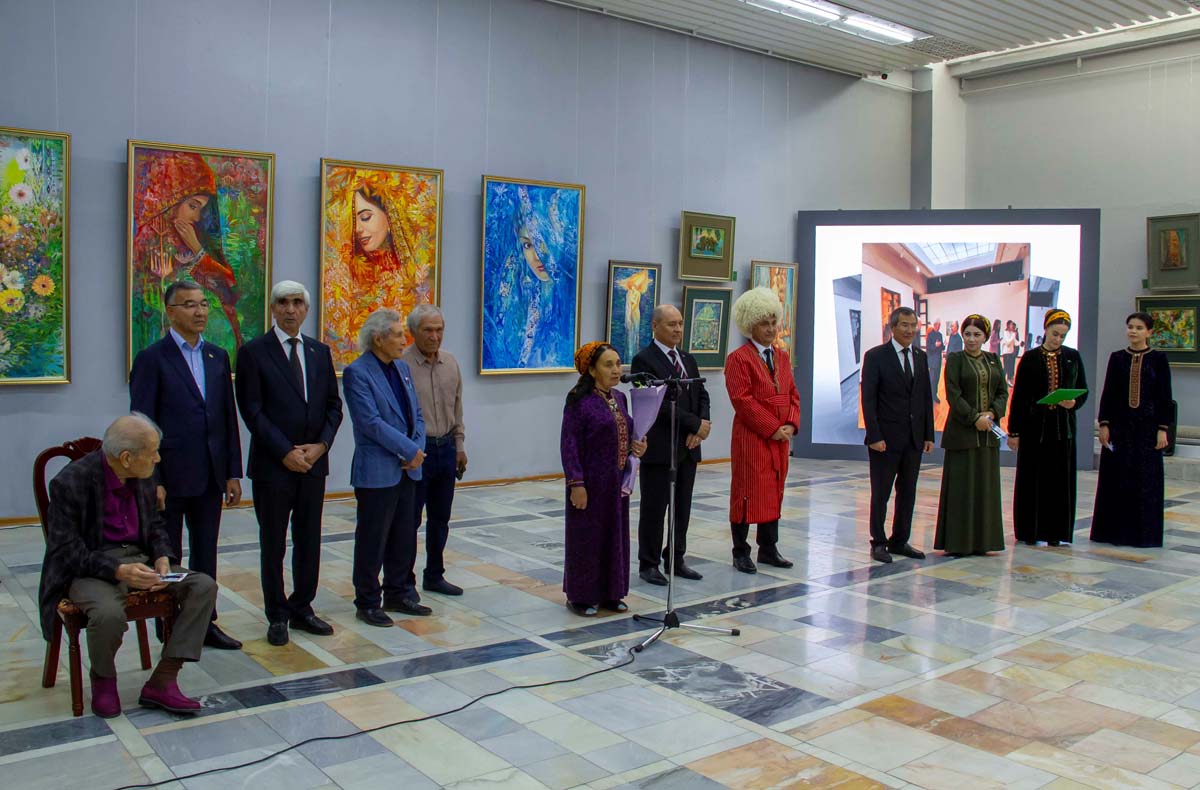
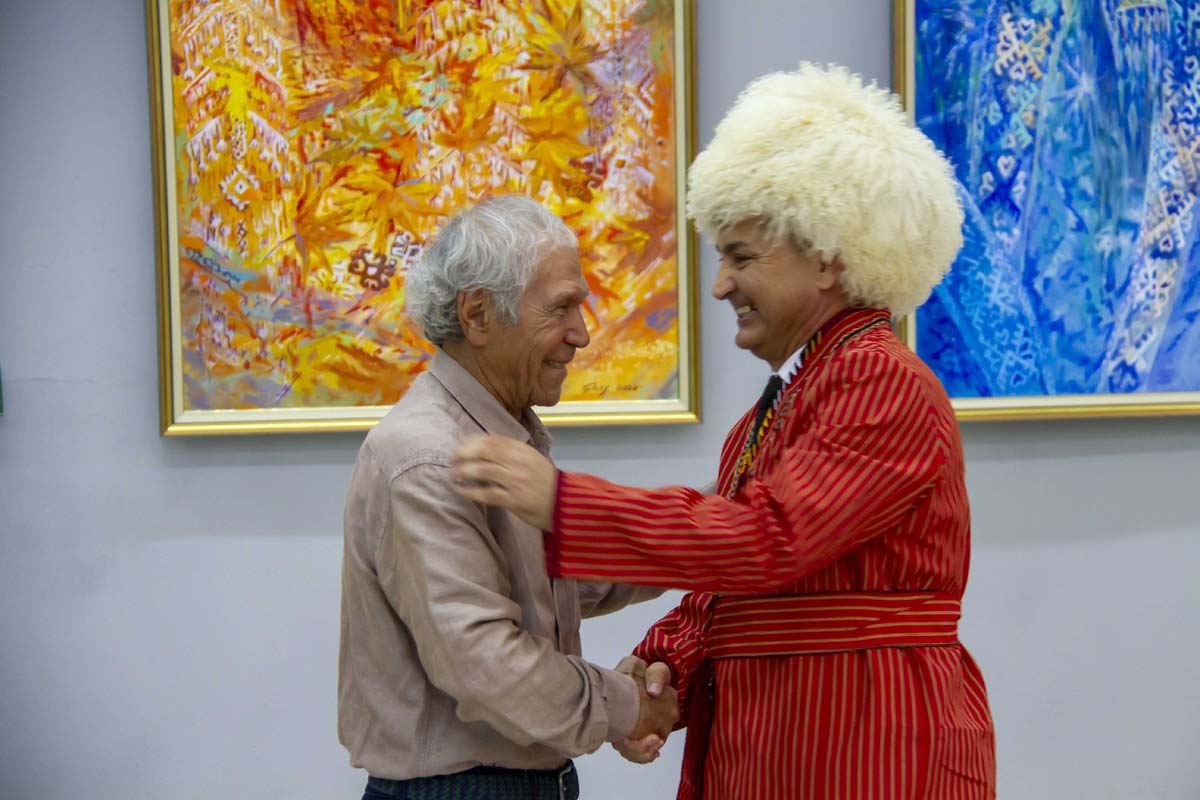
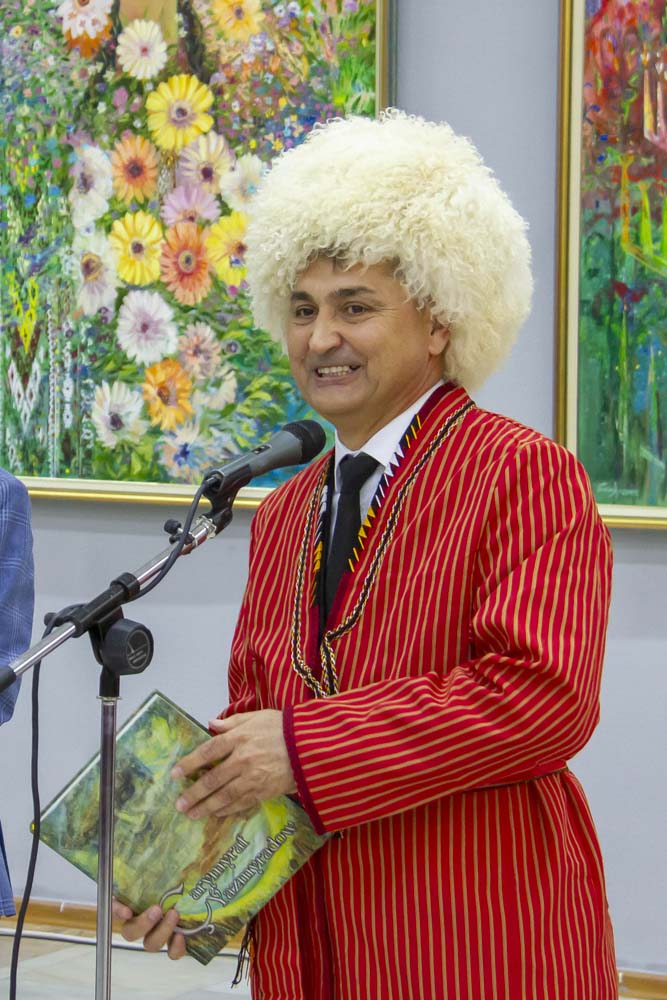
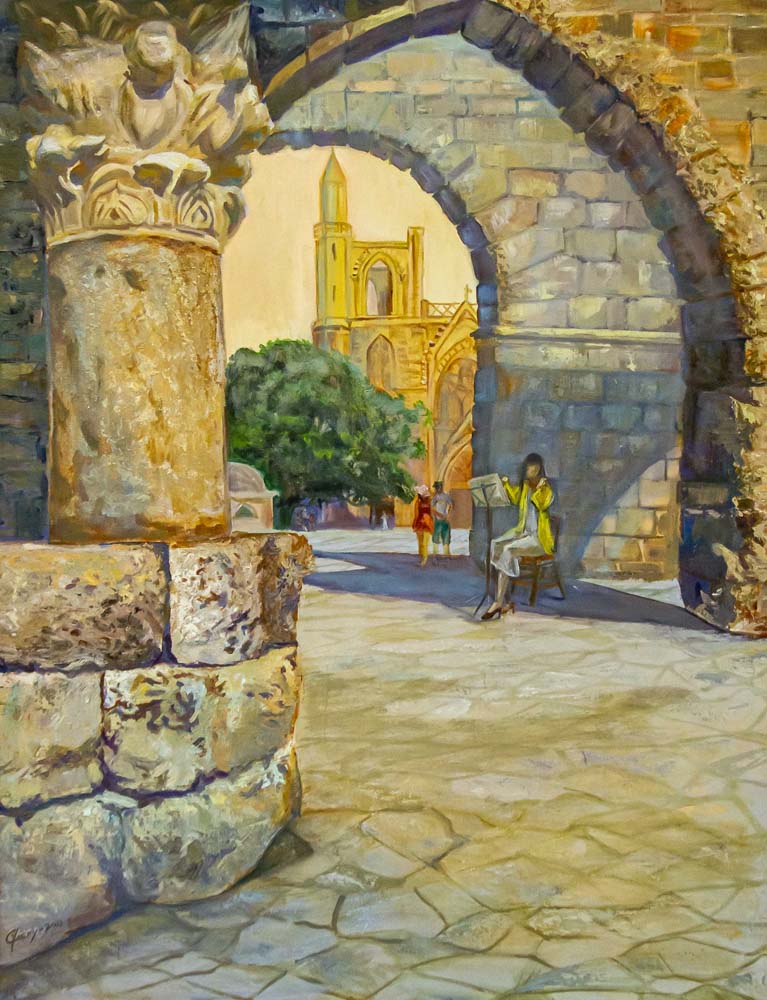
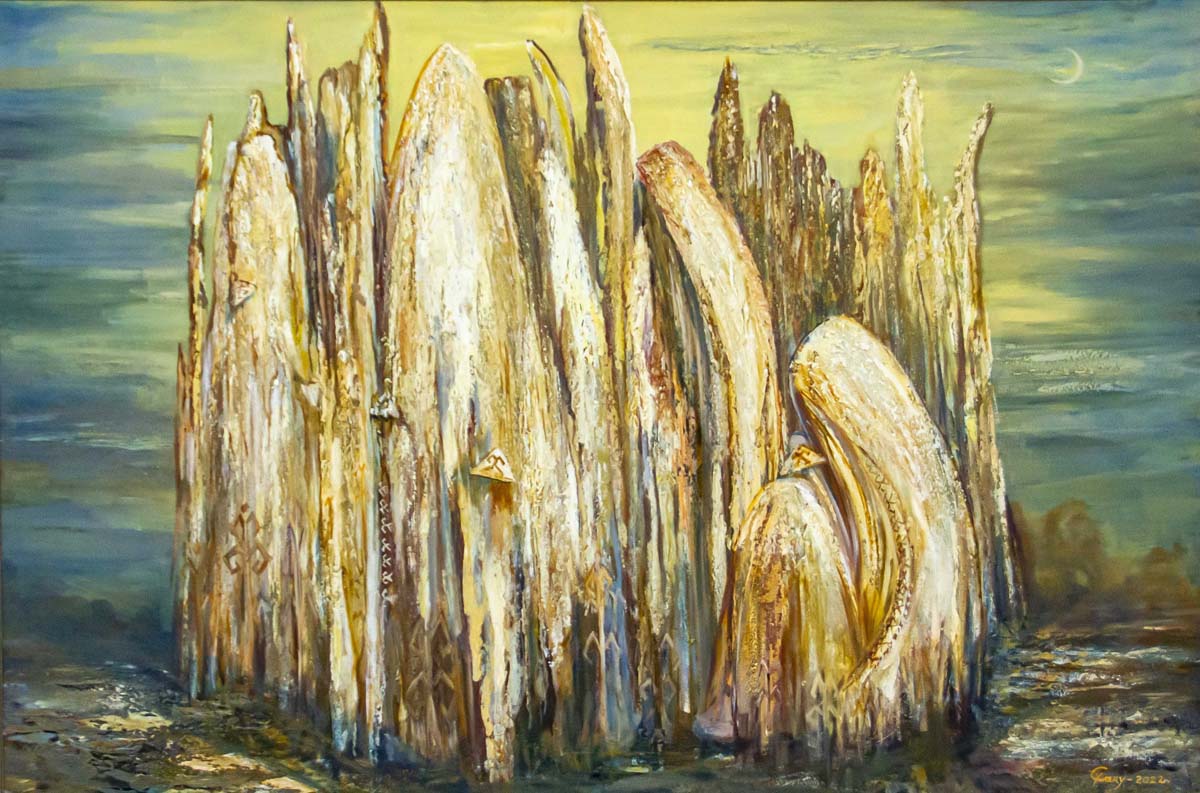
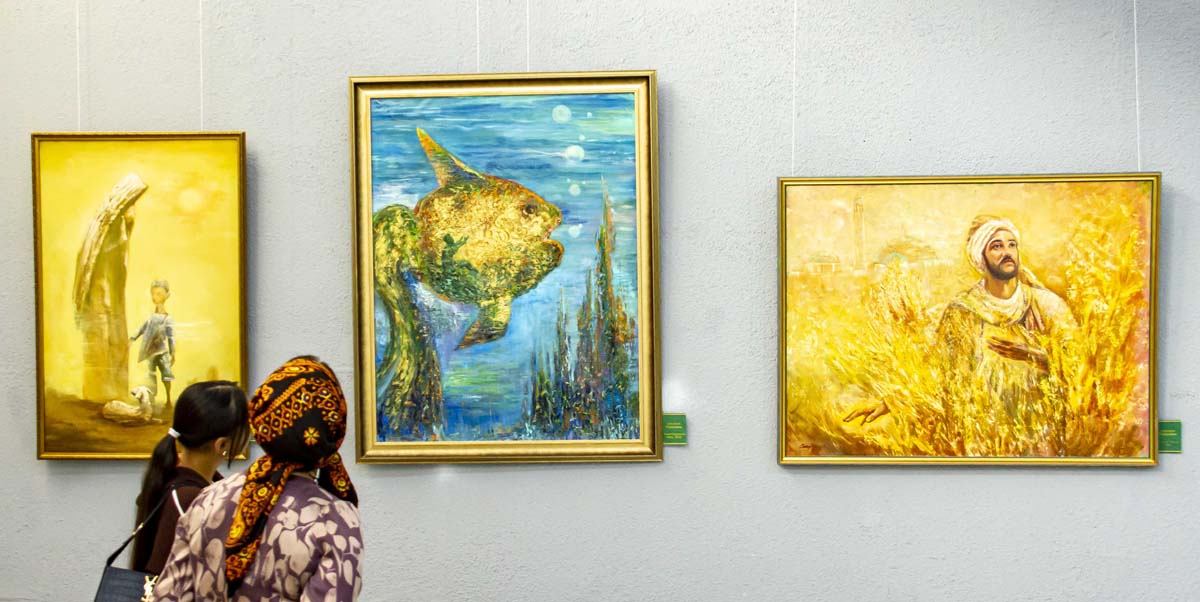
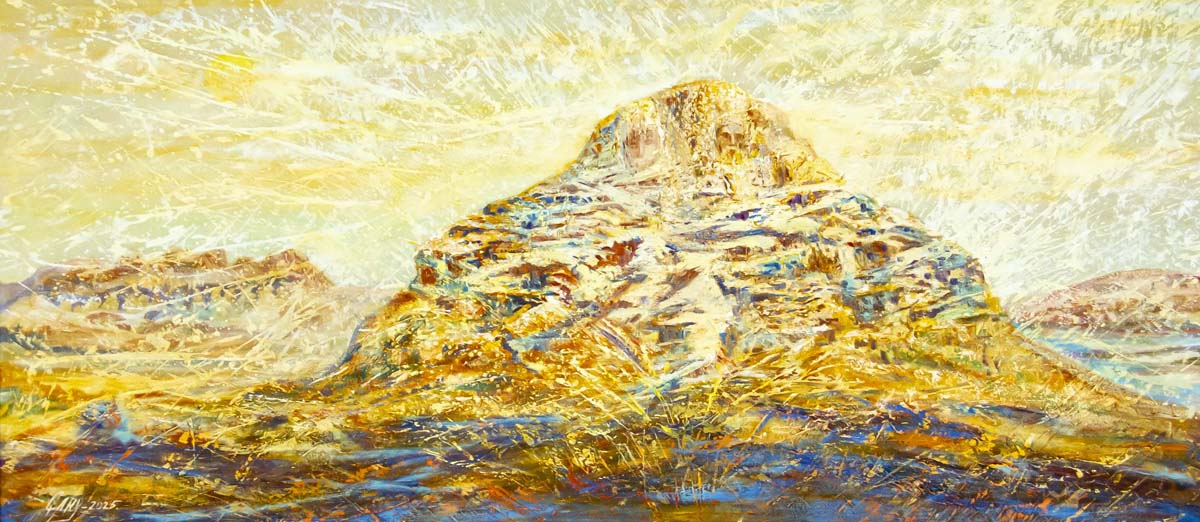
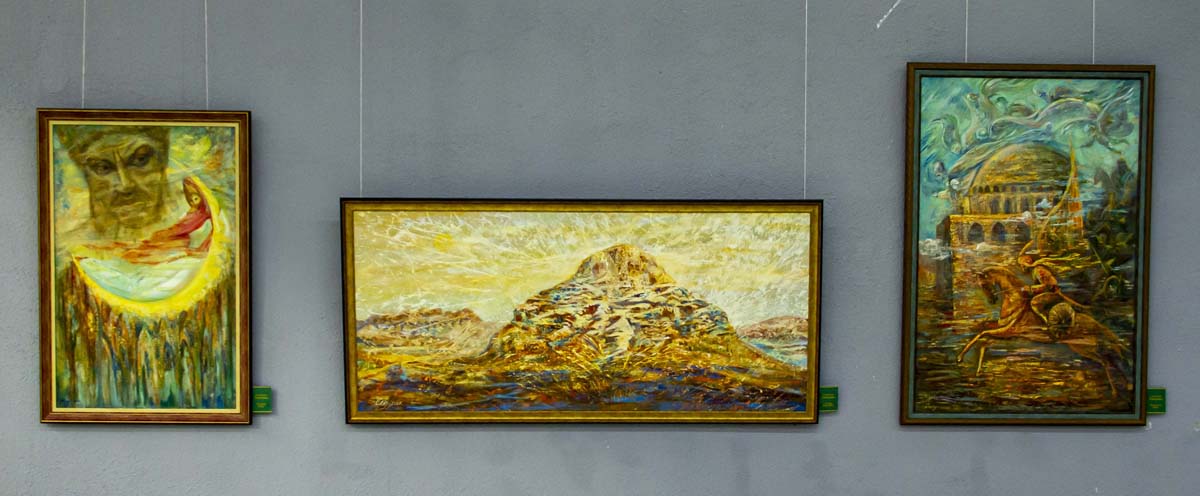
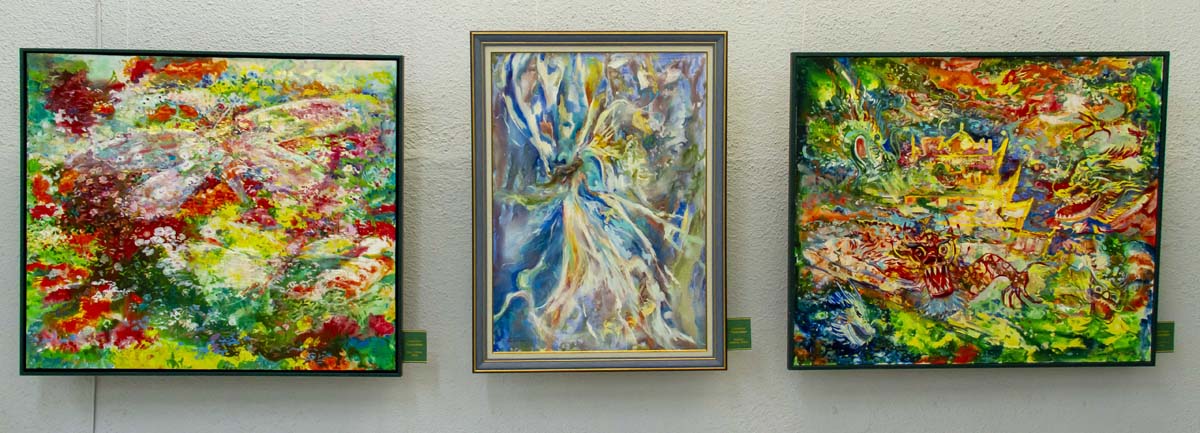
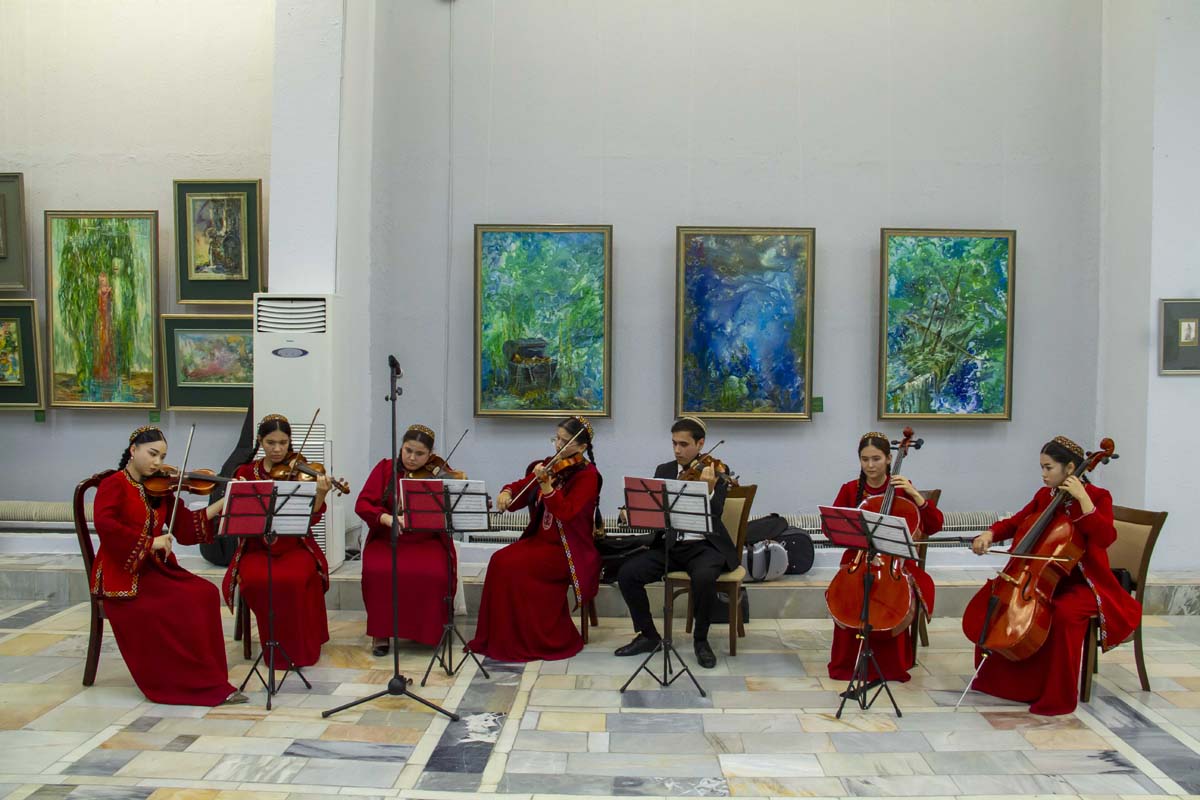

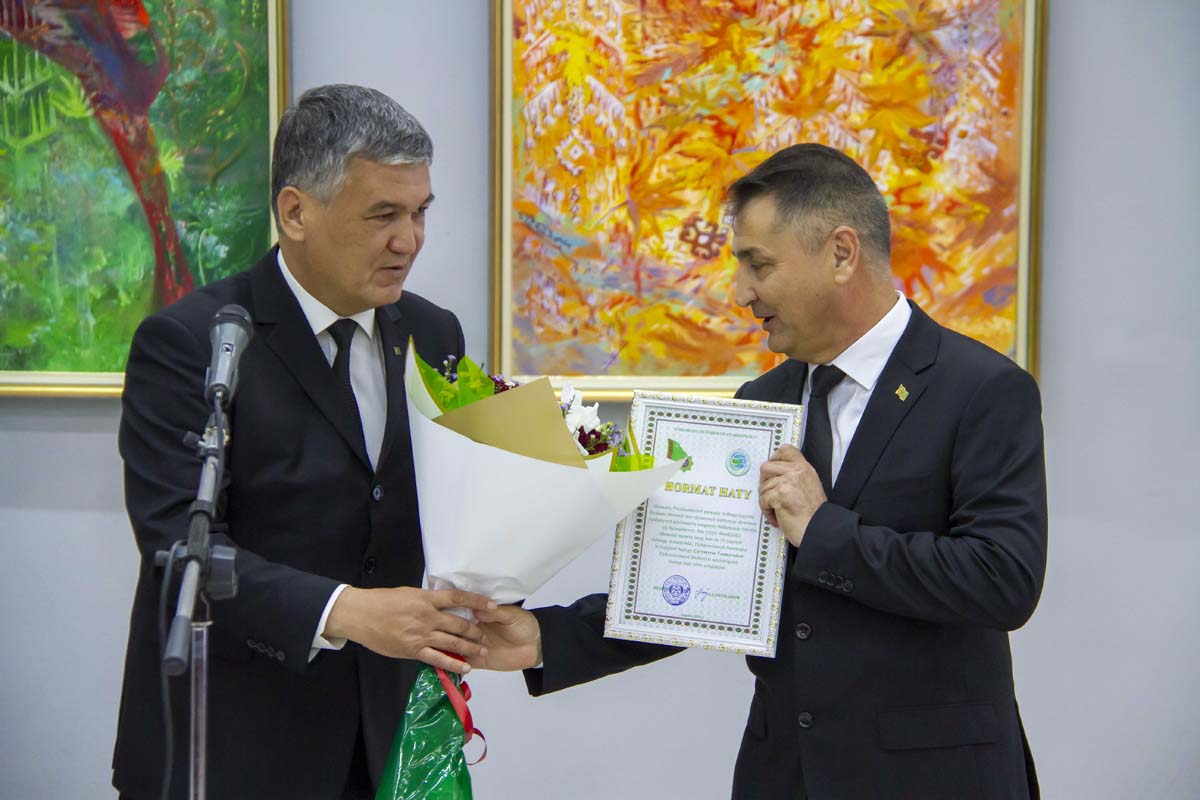
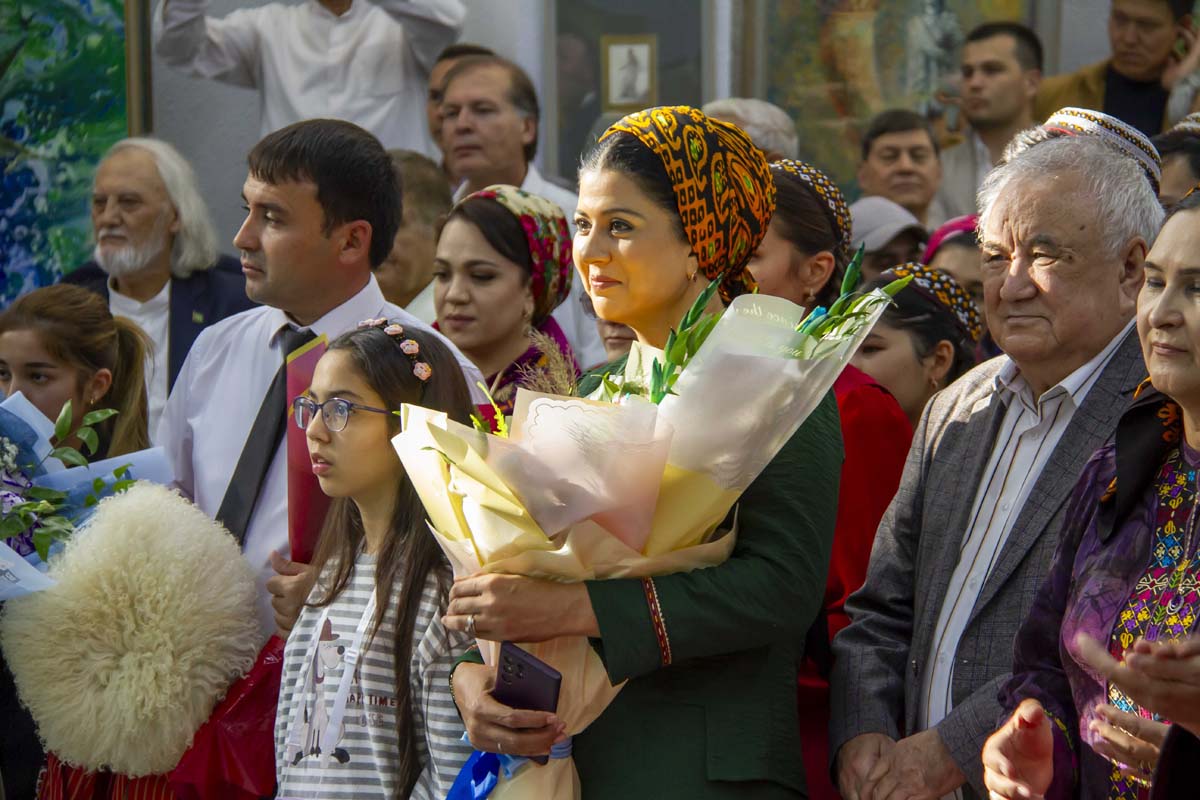
A personal exhibition of artist Charymyrat Yazmyradov, dedicated to his 50th birthday, has opened at the Exhibition Center of Fine Arts of the Ministry of Culture of Turkmenistan. The artist has presented 216 works, including paintings, watercolors, and sketches. The artworks occupy both floors of the exhibition center, introducing viewers to the rich diversity of the artist’s inner world.
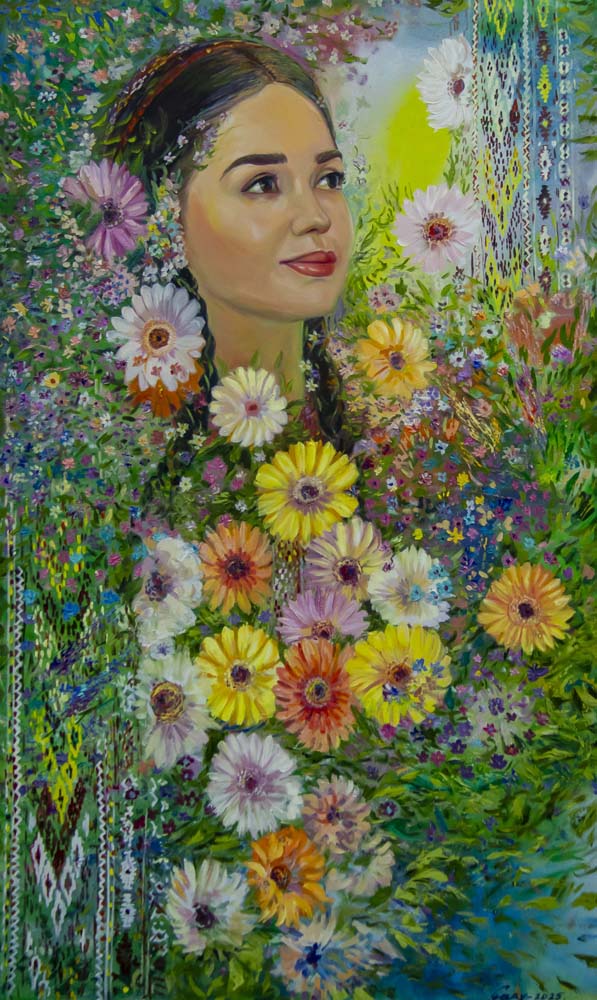
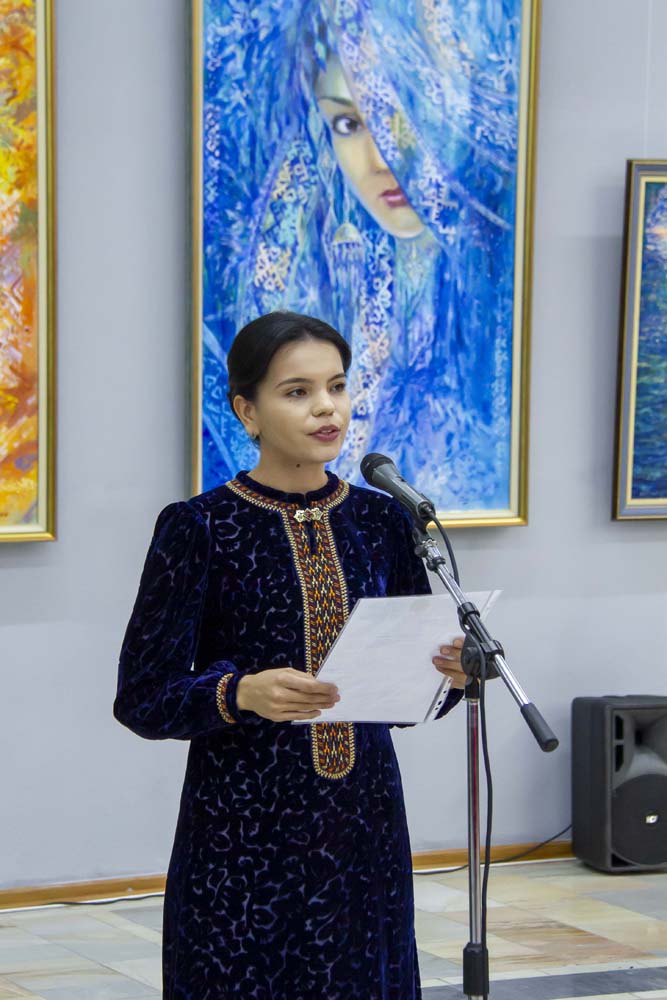
Most of Charymyrat Yazmyradov’s paintings share a distinctive feature: rather than depicting specific objects that caught the artist’s eye, the canvas reflects his thoughts and reflections. Because of this, the interpretation of a piece’s subject often differs between the artist and the viewer. For example, in the painting “Alone”, many viewers see a beautiful female artist embracing her muse depicted on the canvas. This is how the protagonist appears to most. And it’s understandable—when creating an image, the artist falls in love with it. But the author offers a different interpretation: the beautiful female artist is a symbol of art itself—jealous and demanding.
Interestingly, Kazakh designers, with the artist’s permission, used the plot of “Alone” in advertising collages.
The work “Art and Shadows”, painted in a yellow-blue palette, is dedicated to the creative legacy of Gurbannazar Ezizov and Nury Halmamedov. The painting portrays the interaction between an artist and their surroundings, which often do not support but rather hinder creativity. The “shadows” represent the emptiness pressing down on art. Yet the artist affirms: “As long as the planet exists, so will art.” To reinforce this idea, he depicts a phoenix—according to mythology, a bird that dies only to be reborn again.
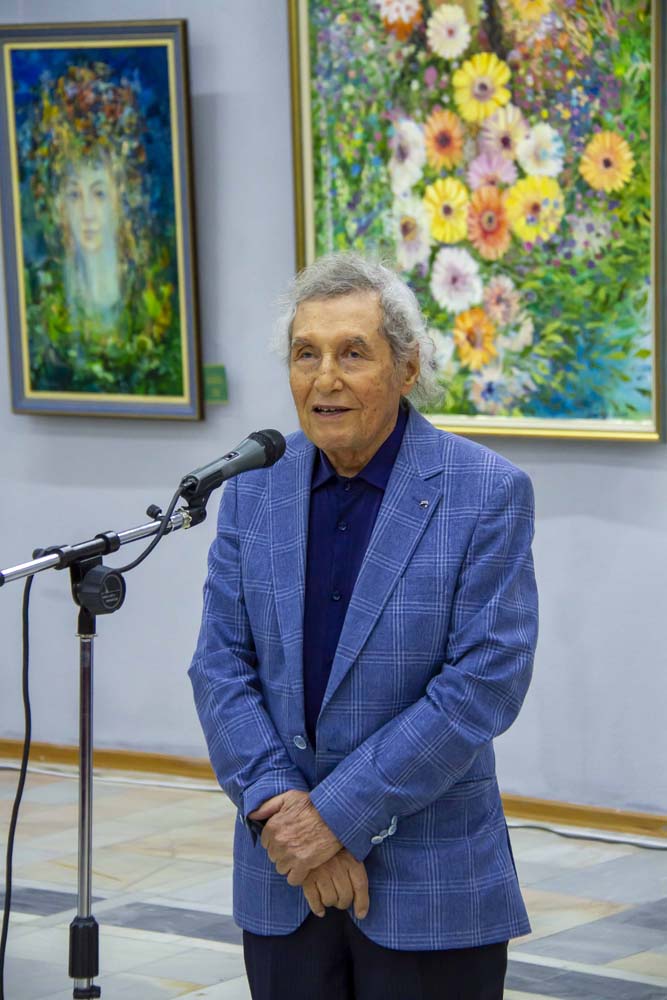
Charymyrat Yazmyradov was born in Yoloten, in a family unrelated to the arts. Instead of playing outside with other children, he preferred solitude with a pencil and paper. It is unclear how his life would have turned out if not for the opening of an art club at school. Teacher Rakhim Atajikov noticed Charymyrat’s talent and informed his parents. His mother and father supported their son, and after completing the 8th grade, he became a student at the Turkmen State Art School, and later, at the State Academy of Arts of Turkmenistan.
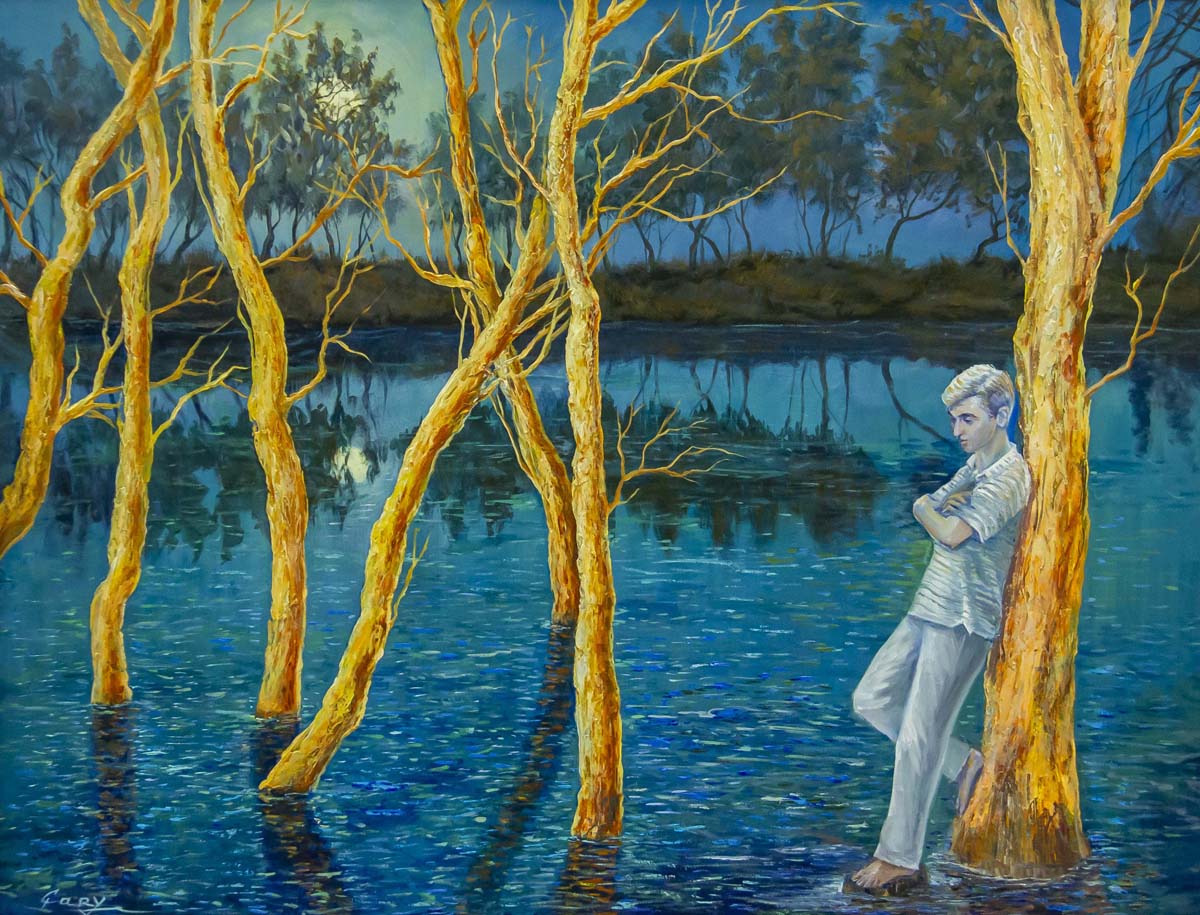
Among the works on display, the painting “Mejnun” draws particular attention. The artist depicts Mejnun as a gentle young man. A gazelle affectionately nestles at his bare foot, while the drooping branches of a weeping willow hang above them. According to one legend, Leyli turned into a willow, which is why people call this tree “Leylisach.”
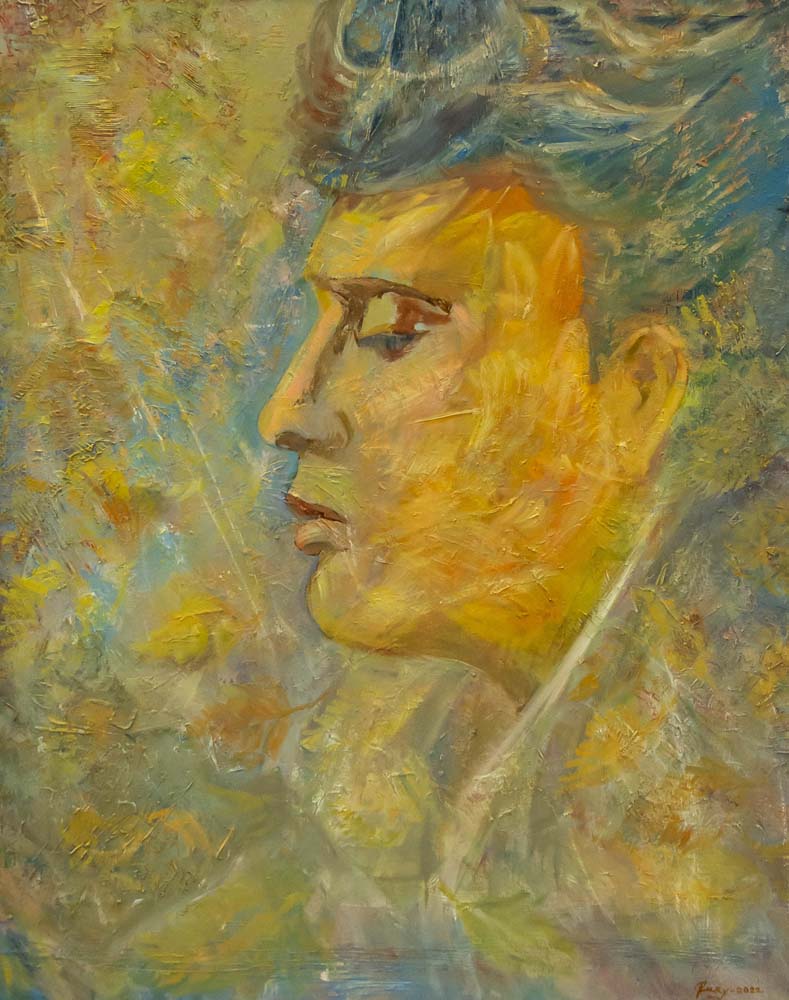
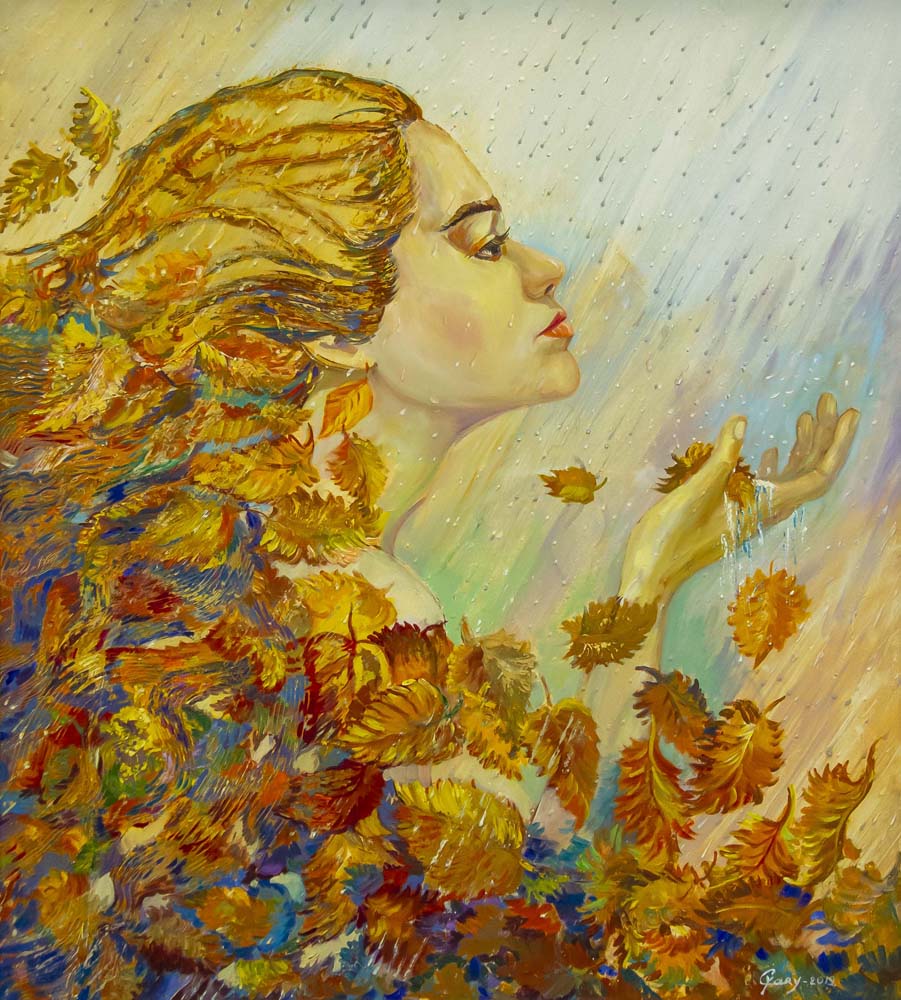
Charymyrat Yazmyradov works in the style of neo-romantic symbolism. He devotes significant attention to the theme of women. For instance, when addressing the theme of the seasons, he portrayed them as four women—each differing in character, mood, and attire.
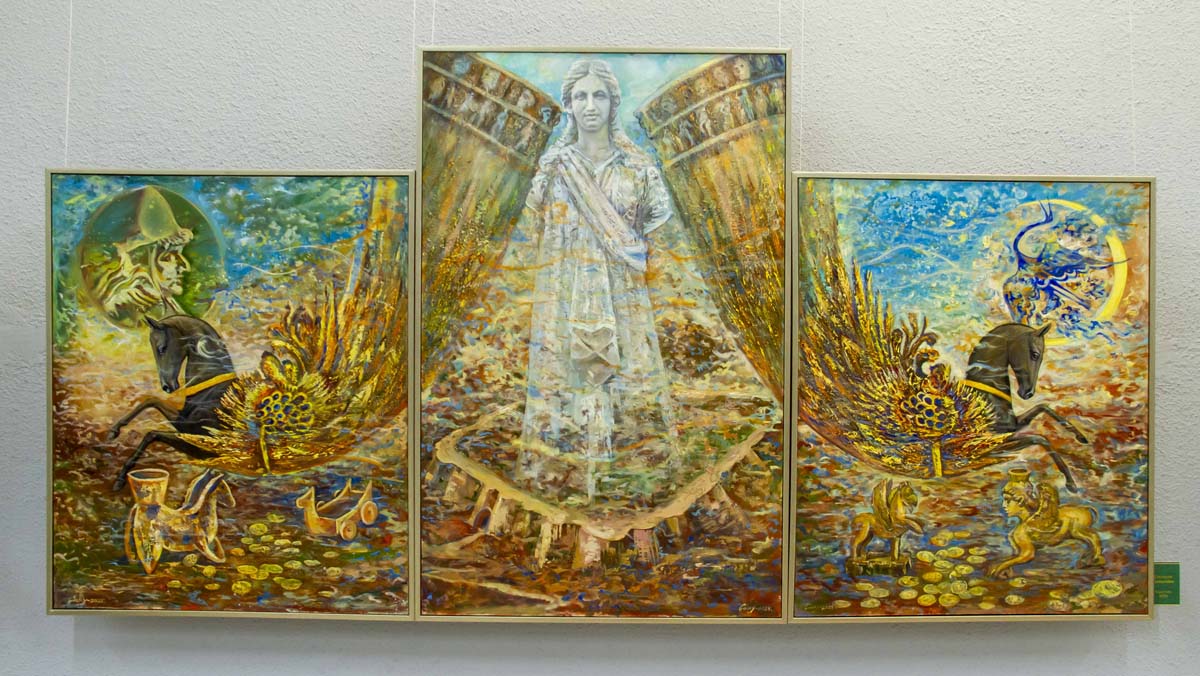
“I do not like walking the beaten path; I always want to glimpse into mysterious worlds,” says the artist about his series of paintings titled “In the Depth of Secrets”. Hidden beneath the water are countless treasures from ships wrecked by the forces of nature. Some visitors, when looking at the gold buried underwater, find it hard to turn their eyes away. “But it is all an illusion,” asserts the artist. “True wealth is the fact that we live.”
The exhibition also includes many small-format sketches and studies. Mostly, they depict the landscapes of his native land, as well as of Turkiye and China, which the artist has visited. Some of these works surprise viewers with their composition and color choices. “I specifically selected these pieces for the exhibition,” comments the artist, “to emphasize that in art, there are no big or small works. There are successful ones—and less successful ones.”