


The latest issue of the quarterly popular scientific “Miras” magazine, published by the Magtymguly Institute of Language, Literature, and National Manuscripts of the Academy of Sciences of Turkmenistan, has been released. Addressed to a wide readership, this publication continues a series of publications on new discoveries and research findings into the historical, cultural, and spiritual heritage of the Turkmen people.
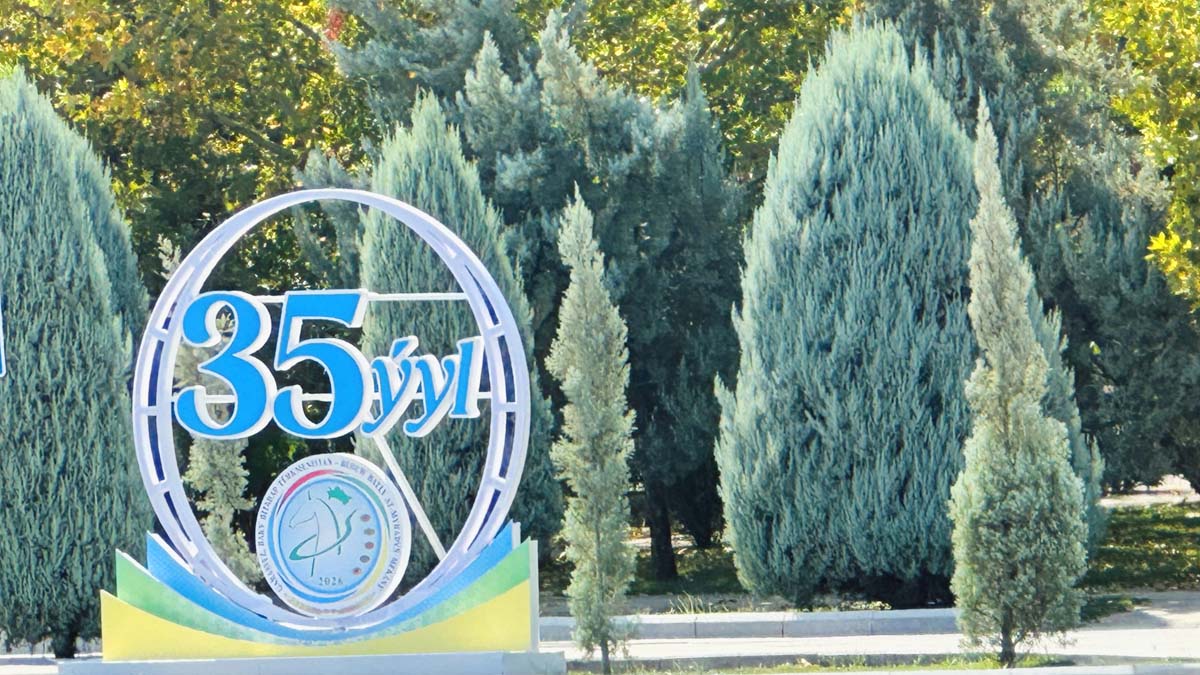
The cover of this issue features the legendary Ahalteke horses, swift and graceful, serving as the central image of the visual embodiment of the 2026 motto, “Independent Neutral Turkmenistan – the Homeland of Purposeful Winged Steeds”.
This artistic design is deeply symbolic: the image of the “heavenly” horses embodies not only the nation’s priceless cultural heritage but also the dynamic development of the modern state.
The first pages of the magazine are devoted to congratulatory addresses from the President of Turkmenistan Serdar Berdimuhamedov, on the occasion of International Women’s Day and the national spring holiday, International Novruz Day.
The traditional “New Scientific Discoveries” section opens with the article “The Horse – a Symbol of the Turkmen State and its Peaceful Foreign Policy”. The author emphasizes that the nation’s deep affection for “heavenly” horses is confirmed not only in classical literature but also in world-class academic research. The article focuses on the results of a scientific expedition led by V.I. Sarianidi, which discovered artifacts from an ancient civilization, among which the image of the Ahalteke horse already occupied a sacred place in the lives of our ancestors.
The publication’s significance is reinforced by references to the classic work by historian L.N. Gumilyov, “History of the Hun People”, as well as to the insightful works of the National Leader of the Turkmen People, Chairman of the Halk Maslahaty of Turkmenistan, Gurbanguly Berdimuhamedov, revealing the role of “heavenly” horses in the historical interactions between the civilizations of the East and the vast area of Turkic-speaking states. These authoritative sources confirm that the “heavenly” horse has served as a living embodiment of the continuity of eras for millennia, linking the glorious past with the country’s contemporary course toward strengthening global peace and trust.
The author of the article “A Turkmen Will Remain with His Horse in the Memory of Centuries”, notes that popular beliefs and folklore preserve the wisdom of generations. The image of the Turkmen horse occupies a central place in folklore and the works of modern writers. Particular attention is given to the art of horse riding – a unique method of raising and training horses, built over centuries on deep mutual trust, sensitive understanding, and respect for their faithful companions.
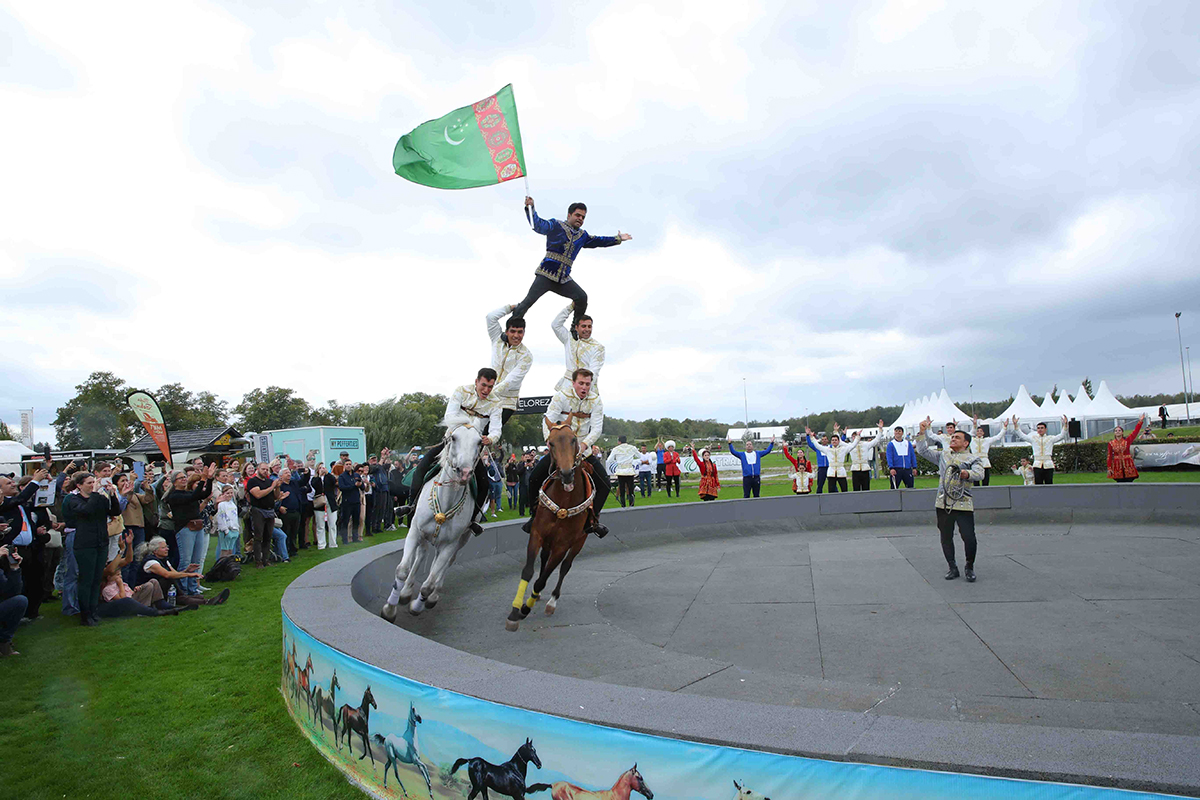
The Ahalteke horse is a treasure not only of our people but also of humanity, occupying a significant place in the treasury of world heritage. A case in point is the success of the Galkynyş National Equestrian Games Group, whose virtuoso performances have captivated prestigious international venues, including the International Circus Festival in Monte Carlo. The rapid development of equestrian sports and the triumphs of Turkmen riders on the international stage clearly demonstrate that ancient traditions are being refined in line with the realities of the times, enhancing the country’s prestige in the world.
This section also features the publication “The Yada Stone, Handed Down from the Depths of Centuries”, which explores beliefs and rituals aimed at interacting with the forces of nature. To confirm that they constitute a significant layer of ancient national culture, the author refers to the book by Hero-Arkadag “Turkmen Culture”, which describes an ancient ritual of making rain.
A special place in the publication is given to the analysis of Mahmud Kashgarly’s scholarly legacy. Quoting the National Leader of the Turkmen People, Chairman of the Halk Maslahaty, Gurbanguly Berdimuhamedov, the author emphasizes that Mahmud Kashgarly’s monumental work, ‘Dictionary of Turkic Dialects”, is recognized as a treasure trove of global significance. This work is viewed as a unique chronicle, embodying the historical path, spiritual experience, and ethnic origins of the Turkic-speaking peoples, allowing for a deeper understanding of the continuity of cultural traditions.
The “Interaction of Cultures and Civilizations” section places an article, “The Concept of ‘Peace’ in the Works of Magtymguly Pyragy”, which analyzes his aesthetic, moral, and philosophical views, basing on the poet’s original texts.
As one of the publication’s co-authors, Jiaxin Cui, a graduate student at Magtymguly Turkmen State University, emphasizes, modern Chinese scholarship is focusing close attention on the life and creative legacy of the great classic. In the era of globalization, Magtymguly Pyragy’s humanistic ideas about peace reveal a profound inner connection with traditional Chinese ethical categories, including the concepts of the “Unity of Heaven and Man”, “Moral Self-Improvement”, and the infinity of the spirit.
This conceptual consonance serves as an important resource for intensifying cultural dialogue between Turkmenistan and China, especially in the context of humanitarian cooperation within the framework of the “One Belt, One Road” initiative. This international approach to understanding Magtymguly Pyragy’s poetry imbues his works with new theoretical dimensions and lays a solid foundation for a long-term literary rapprochement between the two nations.
Readers are also presented with the articles “The Influence of Mahmud Shabesteri’s Works on the Works of Magtymguly Pyragy”, “Turkmen Poetry of the Late 19th and Early 20th Centuries”, and “The Path of Mentorship – An Ancient Tradition of Continuity”, whose authors carry out an in-depth analysis of literary sources on the topic.
The “Chronicle of Scientific and Cultural Life” section provides an overview of social, scientific, and cultural events in the country from January to March of the current year “Independent Neutral Turkmenistan – the Homeland of Purposeful Winged Steeds”. Here, the progressive peacekeeping policy, pursued by President of Turkmenistan Serdar Berdimuhamedov and striking evidence of large-scale, socially oriented reforms, aimed at strengthening the economic strength and further prosperity of the Fatherland, the well-being and happiness of the Turkmen people and international cooperation in the humanitarian sphere are reflected in chronological order.
The publication concludes with a list of topics for publication in the popular scientific “Miras” magazine for 2025.
Numerous photographic illustrations, including those of museum and archival artifacts, serve as a wonderful complement to the articles by the magazine’s authors, published in Turkmen, English, and Russian, making it accessible to a wide readership.