


The giant panda is a national treasure of China and a well-known symbol of the World Wide Fund for Nature (WWF), reminding people of the importance of treating the environment with care. The historical homeland of this animal, the Celestial Empire, surrounds the species with comprehensive care, creating ideal conditions for its life in the wild.
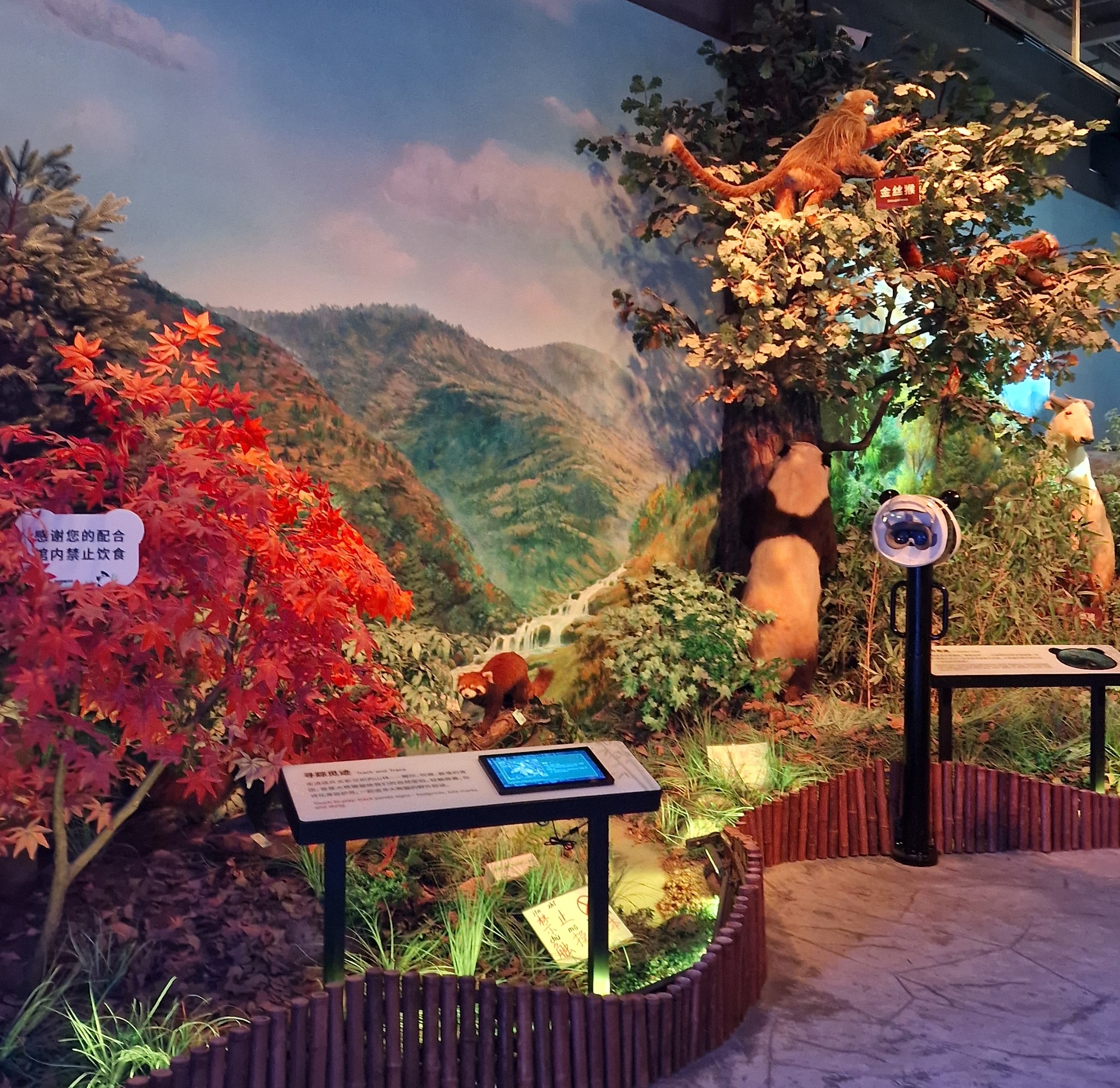
The Fuzhou Panda World Research Center helps protect this rare species. Taking into account the natural terrain of Mount Damingshan, a unique three-dimensional space has been created here, combining an aerial layer, a ground level, and the space beneath the forest canopy. The immersive nature park harmoniously combines animal keeping, popular science educational programs, cultural tourism, and recreation.
Ten specialized zones operate on its territory: a giant panda pavilion, a red panda pavilion, a zone for other bears, a museum, a cinema, an art gallery, Mengshan Butterfly Ecological Park, the National Treasure Guardians Park, a children’s park, and mountain residence of the Guling panda. As a professional scientific research and educational institution, the park is engaged not only in the adaptation and scientifically based care of animals, but also in studying the reproductive physiology of giant pandas, as well as strengthening cultural ties between the two sides of the Taiwan Strait.
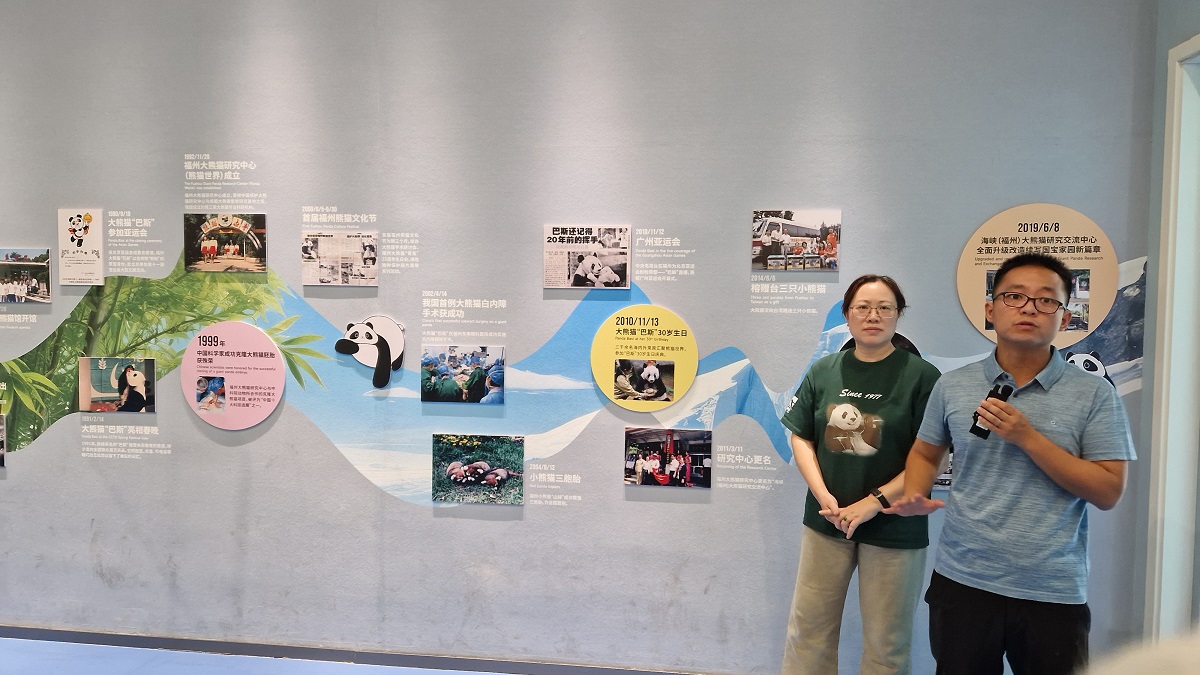
Over the years, eight giant pandas have been kept here, including the famous Ba Si, who attracted worldwide attention after a touring exhibition in the United States in 1987 and served as the prototype for the mascot of the Asian Games in Beijing. The uniqueness of these animals attracts widespread attention. In Chinese culture, the panda symbolizes peace, friendship, kindness, sincerity, and tranquility. In the local language, it is called “xiongmao,” which translates as “bear-cat.” The black-and-white fur of pandas resembles the symbol of Yin and Yang, representing harmony and balance.
For a long time, scientists tried to determine the purpose of this unique coloration, which is not found in any other species. As a result, researchers concluded that this coloration helps the animals camouflage themselves in the conditions of two mountainous regions of Central China. Unlike most of their relatives, pandas are herbivores and feed mainly on bamboo. Since such a diet has limitations and does not allow them to accumulate sufficient fat reserves for the barren winter months, pandas have to remain active throughout the year instead of hibernating and search for food under the snow every day.
The most famous example of “animal diplomacy” in the world has become China’s “panda diplomacy.” All giant pandas in foreign zoos are on long-term lease: the animals are transferred under special intergovernmental agreements, while all cubs born outside China are the property of the People’s Republic of China and are subject to return to their historical homeland.
The visit to the Fuzhou Panda World Research Center took place as part of efforts to strengthen the partnership between Turkmenistan and the PRC in the media sphere. Representatives of the national media made an educational and familiarization trip to the city of Fuzhou, located in the eastern part of Fujian Province, in the lower reaches of the Minjiang River. It is the administrative center of the province and a city of national historical and cultural significance. The history of Fuzhou as a city spans more than 2,200 years. The distinctive Mindu culture was formed here, represented by the Tanshishan archaeological culture, the Sanfang Qixiang historical quarter, and the tradition of the Fujian shipbuilding school.
Fuzhou is experiencing active development in eight key sectors of the economy: electronic information, textile and chemical fiber production, light and food industries, machinery manufacturing, metallurgy and construction materials, new chemical materials, biomedicine, electric power, and the energy sector as a whole. Six industrial clusters and four industrial parks have been established, each characterized by an output exceeding 100 billion yuan. The digital and maritime economies are growing rapidly. Eleven companies from Fuzhou are included in the prestigious list of China’s 500 largest private enterprises.
The delegation also visited the Sanfang Qixiang historical quarter, whose name translates as “Three Lanes and Seven Alleys.” This living monument to the traditional system of lanes and alleys reflects the history of modern-era enlightenment and maritime civilization. Outstanding figures who influenced the course of Chinese history grew up here, including Lin Zexu, Yan Fu, Lin Juemin, Bing Xin, and Sa Zhenbing. As a result, the quarter is known as a place where “one part of Fuzhou preserves half of modern Chinese history.” It is therefore no surprise that in 2023, this unique location was included among the “Ten Culinary Tourist Streets of China” and added to the list of national model pedestrian streets.
The trip to Fuzhou allowed representatives of the Turkmen media to immerse themselves deeply in the atmosphere of Chinese culture and appreciate the harmonious combination of ancient traditions and modern environmental initiatives.