


The 26th issue of the historical-documentary and scientific-methodological journal «Türkmen arhiwi» has been released; it is published by the Main archive department under the Cabinet of Ministers of Turkmenistan and issued by the Turkmen state publishing service in both the Turkmen and Russian languages.
The publication opens with a selection of official documents adopted in 2025. These include decrees and resolutions of the President of Turkmenistan, resolutions of Mejlis of the country, as well as speeches by the head of state and the National Leader of the Turkmen people, Chairman of the Halk Maslahaty, Hero-Arkadag Gurbanguly Berdimuhamedov. The magazine features a section that provides a brief, chronological overview of the most significant socio-political events of the past year. These include large-scale forums, international conferences, high-level consultative meetings, and grand opening ceremonies for significant industrial and social facilities.
In the era of revival of the new epoch of the powerful state of Turkmenistan, under the wise leadership of President Serdar Berdimuhamedov, who duly continues the noble initiatives of Hero‑Arkadag, successfully implements a foreign policy based on the legal status of permanent neutrality, the principles of peacefulness, good‑neighbourliness, mutual trust, and equal cooperation. By demonstrating a responsible approach to developing regional and international partnerships, our country makes a significant contribution to consolidating international efforts aimed at addressing the pressing issues of today. At the same time, particular importance is attached to expanding multilateral relations with the UN. A historically significant event during the International Year of Peace and Trust was the adoption of the Resolution «Permanent neutrality of Turkmenistan» at the 61st plenary session of the 79th session of the United Nations General Assembly, held on the 21st of March, 2025. The resolution was published in this issue of the journal.
An independent, neutral homeland successfully pursues a peace-loving foreign policy and promotes initiatives of importance to humanity within international organisations, aimed at ensuring global peace and sustainable development. In this regard, it is symbolic that the 30th anniversary of attainment of permanent neutral status of Turkmenistan and another milestone − the 80th anniversary of the founding of the United Nations coincided, both being commemorated last year. The fundamental principles of neutrality are incorporated into the Concept of activities and priorities of Turkmenistan within the framework of the International Year of Peace and Trust.
Initiatives put forward by the Turkmen state in the course of its consistently developing strategic engagement with the United Nations are garnering broad support from the international community. A clear testament to this is the holding of the Third UN Conference on Landlocked Developing Countries (LLDCs) in Avaza in August 2025. It is precisely this event that is the focus of a series of articles in the publication «Türkmen arhiwi», covering conferences, forums, roundtables, side events, receptions, and meetings. Also published here is the Avaza Declaration, presented by the Chair of the Third United Nations Conference on Small Arms and Light Weapons.
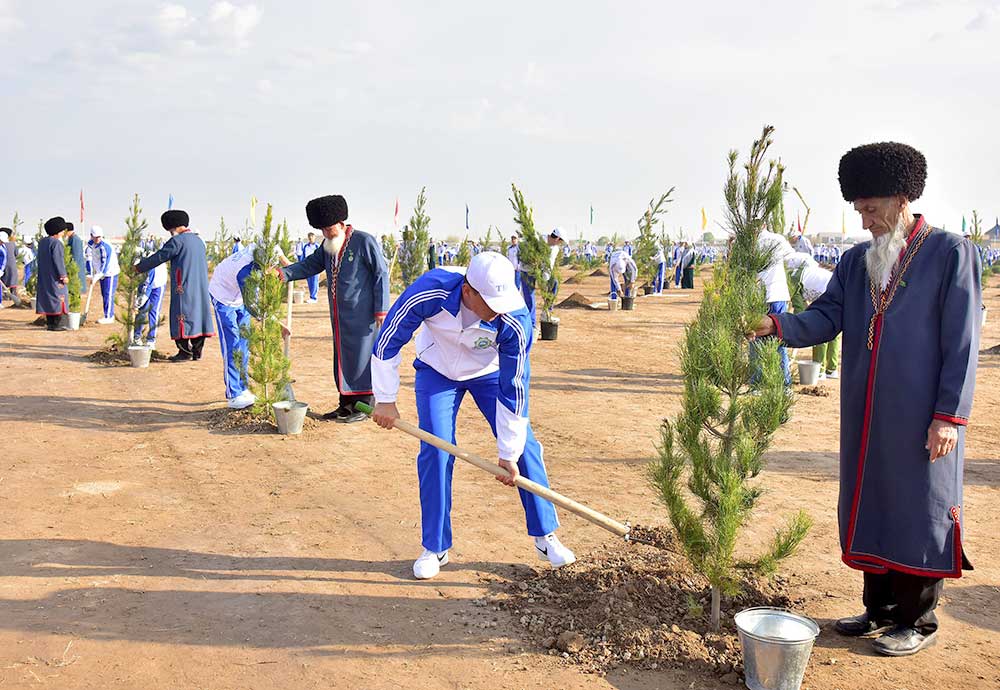
The magazine goes on to provide an overview of the grand opening ceremonies that took place over the past year, attended by President Serdar Berdimuhamedov and the National Leader of the Turkmen people, Chairman of the Halk Maslahaty of Turkmenistan Gurbanguly Berdimuhamedov. Among these are the International University of Industrialists and Entrepreneurs in Ashgabat; a glass-manufacturing facility within an industrial complex in the northern part of the capital; the modern village of Dovletli mekan in the gengeshlik of Ongaldy, Ak Bugday etrap, Ahal velayat; new village of Bitaraplyk in the gengeshlik of Taze yol, Koneurgench etrap, Dashoguz velayat; a new complex of buildings for the «Sarahs» border detachment of the State border service; a water treatment plant with a capacity of 20 thousand cubic metres per day in the Esenguly etrap; a road bridge across the Garabogazgol kol in the Balkan velayat; and a new livestock complex belonging to the state-owned enterprise «Altyn Halka» in Ashgabat.
The publication also presents materials from an international forum held on the 12th of December, 2025 an event marking the International Year of Peace and Trust, the International Day of Neutrality, and the 30th anniversary of permanent neutrality of Turkmenistan which was attended by high-level delegations from various states, as well as international and regional organisations.
The legal status of permanent neutrality, recognised three times by resolutions of the United Nations General Assembly, forms the basis of foreign policy doctrine of the nation. This legal status, supported by the international community, has strengthened position of our country as a peace-making state. The holding of this international forum serves as clear evidence of firm commitment of Turkmenistan to the principles of peace, good-neighbourliness, and mutually beneficial cooperation. The Ashgabat Declaration was adopted as a result.
As is well known, the preservation, study, and global promotion of the material and spiritual heritage of the Turkmen people rank among the key priorities of state policy of the country. Consequently, a vital role in carrying out this important work belongs to the archives of Turkmenistan, which house valuable documentary sources part of the NAFT that constitute a component of historical and cultural heritage of the nation. Using archival documents including personal archives when writing scholarly articles makes it possible to uncover unique, reliable facts and imbue the material with profound historical value.
So, the publication about the Merv vase is very interesting. This famous painted ceramic «Merv vase» from the 6th century AD, discovered during excavations of a Buddhist monastery at the Gyaur-gala archaeological site, is recognised as a masterpiece of ancient art. The vessel has a wide neck and two handles. Hidden inside it was an ancient Buddhist scroll (a manuscript in Sanskrit). The decoration on the surface of the vase is divided into four sequential narrative scenes that recount the life of a nobleman: 1) a feast or celebration, 2) a hunt, 3) an illness, and 4) mourning and a funeral—marking the end of his earthly journey. Currently, this highly valuable exhibit is on display at the State museum of the State cultural centre of Turkmenistan.
This article examines the establishment of the international Red Cross organisation and national societies in various countries during the XIX century. New organisations addressed the task of eliminating the sanitary consequences of the war and providing aid to the population that had suffered as a result of military operations. Currently, the National Red Crescent Society of Turkmenistan (NRCST), established in 1926, represents our state within the International Red Cross and Red Crescent Movement. As one of the oldest humanitarian public organisations of the country, the NRCST plays an active role in the socio-economic transformations taking place in the nation. Its work encompasses areas such as ensuring social protection for citizens, safeguarding public health, strengthening the institution of the family, and raising the younger generation in the spirit of the finest traditions of the Turkmen people—namely, kindness, empathy, and compassion for others.
The latest issue also includes material on the legendary Ashgabat-Moscow horse trek. 32 Turkmen riders, mounted on Ahal-teke and Yomut horses, covered a distance of 4,300 kilometres in 84 days (from the 30th of May to 22nd of August, 1935), demonstrating the great endurance of these horses. In addition, information is provided regarding the construction of the Trans-Caspian Railway, which began in 1880, with the first rails being laid approximately 190 kilometres southeast of the Krasnovodsk fortress.
Thus, the articles published in this issue are of great interest not only to historians, educators, researchers, university students in relevant fields, and professionals working in records management and archival services, but also to a broader readership.
The latest issue of the magazine features an extensive collection of photographs from the National archival fund of Turkmenistan.