


The territory of the Turkmen Agricultural University is buried in verdure and looks like the mirror reflection of the Botanical Gardens located nearby. There are a lot of old trees in the University like in the Botanical Garden – long-lived pines and a variety of deciduous and coniferous trees planted along the alleys of the building complex of the University and hundreds of shrubs of sweet-smelling roses. Pumpkins and banana trail from the ceiling of the greenhouses... All this beauty was created by many generations of students of the Department of Agronomy. The head of the subdivision of silkworm breeding and plant protection, Professor, Doctor of Biology Oraz Soyunov tells about the new directions of the activities carried out at the oldest institution of higher education in the country:
“This year students of the Agricultural University have started to study the new disciplines, including horse breeding at the Faculty of Zootechny and Veterinary Medicine, selection and seed production at the Department of Agriculture and agricultural information systems at the Department of Economics. These disciplines reflect the recent trends in agricultural science and the demand in highly qualified specialists in these spheres in the country.
In accordance with the Law of Turkmenistan “On Seeds” adopted last year the agricultural policy for growing agricultural crops in soil and climatic conditions of different regions of the country is successfully implemented. For example, the soil and climatic conditions in Balkan Velayat are good for growing melons, vegetables and grains, the land in the northern region of the country Dashoguz Velayat is good for grain crops, Turkmen cotton are mainly grown in the southern regions Lebap, Mary and Ahal. The breeding activities will yield fruitful results in cultivating plants and crops in the natural conditions.
The main task assigned to future stock breeders and seed growers is to breed new high-yielding varieties of grain, melons, watermelons, gourds, fruits, vegetables and cotton resistant to drought, pests and diseases and most importantly fast-ripening varieties so that tenant farmers will have an opportunity to grow intermediate crops on the same areas in the regions with different soil and climatic conditions.
The Department of Silkworm Breeding and Plant Protection conducts the research activity to develop biological disease and pest control methods. Two laboratories are opened at the Department. One of them aims the activity at reproduction of entomophages used against cotton worms in the fields of cotton, tomatoes and other fruit and vegetables. Entomophages are successfully aused at the experimental farms of the Turkmen Agricultural University, where students have the practical training. Entomophages protect plants on students’ experimental fields: no chemical substances have been used there in recent years, only environmentally friendly agents. Over 35-40 quintals of cotton per hectare are picked up each year on the 200-hectare cotton fields of the University.
The developments of the University specialists aimed at reproducing and effectively using entomophages are tested in the biological laboratories of the agricultural research institutes in the velayats. The Department develops practical recommendations for agricultural specialists in this sphere.
The other laboratory works to breed red Californian worms that produce bio humus. Students and graduate students conduct the experiments on effective application of bio humus to grow cucumbers and tomatoes in the greenhouses and open ground and saplings of local and ornamental trees which are planted at the foothills of the Kopetdag Mountains during the planting campaigns in springs and autumns. Students and teachers of the University have been cultivating woodland park for many years.
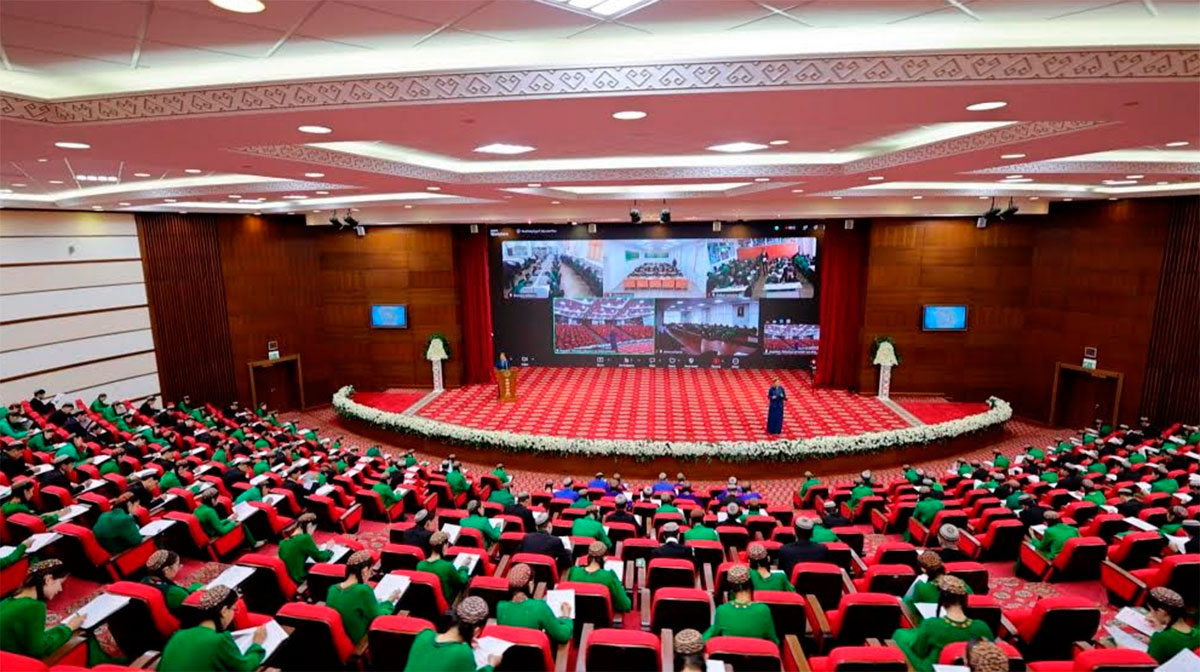
This academic year the Turkmen Agricultural University has started to offer distance learning: the lessons are delivered in the format of video conference to students of the Agricultural University and the Agricultural Institute in Dashoguz simultaneously.
“This year students of the Agricultural University have started to study the new disciplines, including horse breeding at the Faculty of Zootechny and Veterinary Medicine, selection and seed production at the Department of Agriculture and agricultural information systems at the Department of Economics. These disciplines reflect the recent trends in agricultural science and the demand in highly qualified specialists in these spheres in the country.
In accordance with the Law of Turkmenistan “On Seeds” adopted last year the agricultural policy for growing agricultural crops in soil and climatic conditions of different regions of the country is successfully implemented. For example, the soil and climatic conditions in Balkan Velayat are good for growing melons, vegetables and grains, the land in the northern region of the country Dashoguz Velayat is good for grain crops, Turkmen cotton are mainly grown in the southern regions Lebap, Mary and Ahal. The breeding activities will yield fruitful results in cultivating plants and crops in the natural conditions.
The main task assigned to future stock breeders and seed growers is to breed new high-yielding varieties of grain, melons, watermelons, gourds, fruits, vegetables and cotton resistant to drought, pests and diseases and most importantly fast-ripening varieties so that tenant farmers will have an opportunity to grow intermediate crops on the same areas in the regions with different soil and climatic conditions.
The Department of Silkworm Breeding and Plant Protection conducts the research activity to develop biological disease and pest control methods. Two laboratories are opened at the Department. One of them aims the activity at reproduction of entomophages used against cotton worms in the fields of cotton, tomatoes and other fruit and vegetables. Entomophages are successfully aused at the experimental farms of the Turkmen Agricultural University, where students have the practical training. Entomophages protect plants on students’ experimental fields: no chemical substances have been used there in recent years, only environmentally friendly agents. Over 35-40 quintals of cotton per hectare are picked up each year on the 200-hectare cotton fields of the University.
The developments of the University specialists aimed at reproducing and effectively using entomophages are tested in the biological laboratories of the agricultural research institutes in the velayats. The Department develops practical recommendations for agricultural specialists in this sphere.
The other laboratory works to breed red Californian worms that produce bio humus. Students and graduate students conduct the experiments on effective application of bio humus to grow cucumbers and tomatoes in the greenhouses and open ground and saplings of local and ornamental trees which are planted at the foothills of the Kopetdag Mountains during the planting campaigns in springs and autumns. Students and teachers of the University have been cultivating woodland park for many years.
This academic year the Turkmen Agricultural University has started to offer distance learning: the lessons are delivered in the format of video conference to students of the Agricultural University and the Agricultural Institute in Dashoguz simultaneously.