


In recent years, the global media industry has undergone significant transformation under the influence of artificial intelligence technologies. At the same time, the risks associated with the spread of destructive content have increased. Therefore, media literacy is becoming critically important for all segments of society, especially for professionals working in the mass media sector.
In this regard, on May 12–13, a training course was held at the OSCE Centre in Ashgabat aimed at developing skills in critical information analysis, protection against disinformation, and responsible content creation in the digital environment. The training was attended by employees of print media outlets from the velayats of the country, as well as representatives of online portals and television.
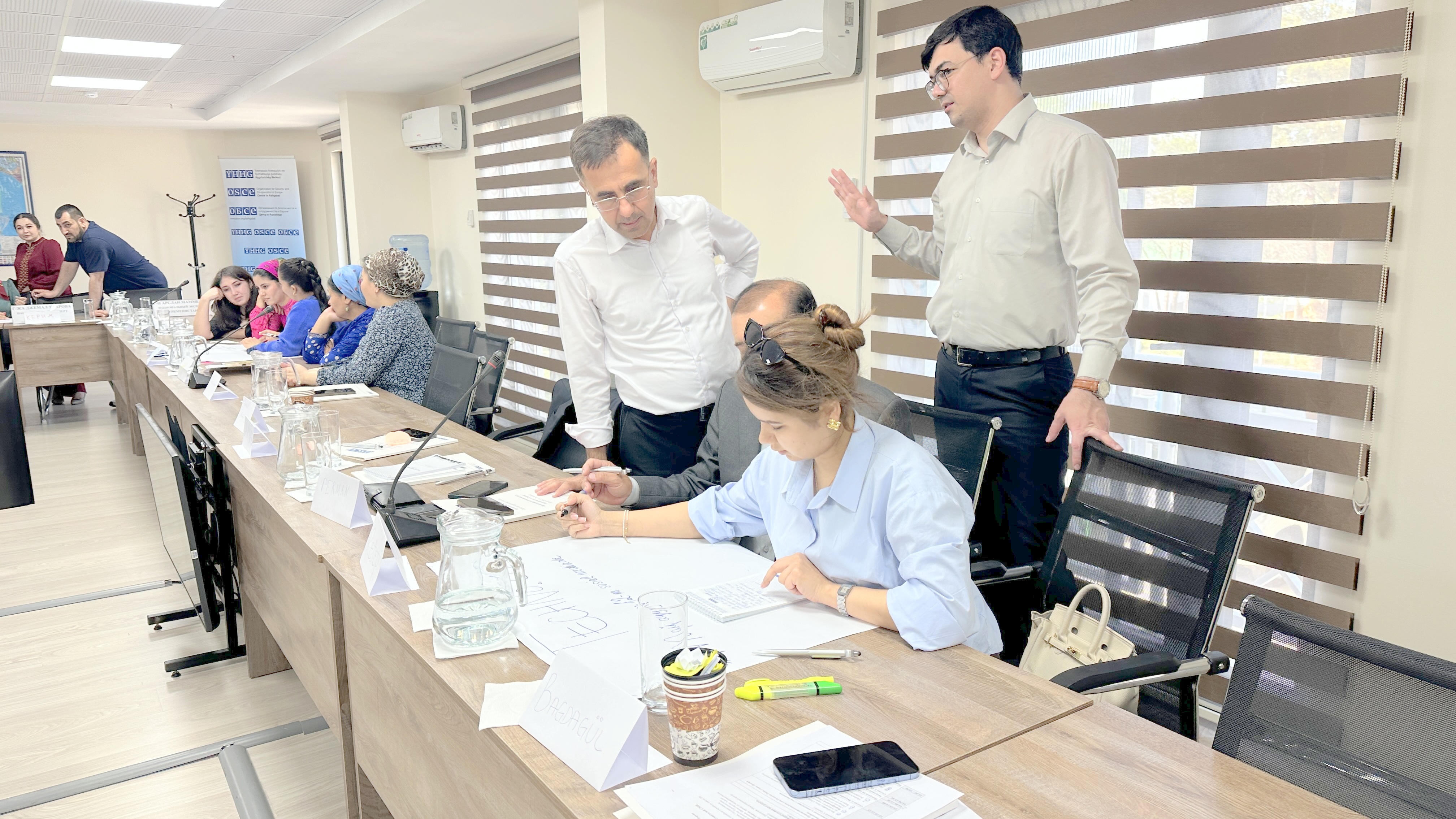
The level of public trust and the audience’s ability to distinguish facts from manipulation largely depend on the quality and reliability of the information being disseminated. Emphasizing the importance of professional ethics, William Leaf, Head of the OSCE Centre in Ashgabat, stated in his welcoming remarks:
“Being a journalist in today’s world is a great responsibility. We highly value your exceptional potential in promoting such important issues as media literacy.”
The training program was delivered by national trainers with facilitation support from international expert Adil Jalilov (MediaNet International Center for Journalism, Kazakhstan.) Together, they developed an effective curriculum covering fact-checking, the functioning of modern media, the creation of creative content using neural networks, digital security, and UNESCO ethical principles.
The OSCE Centre in Ashgabat systematically supports the implementation of the provisions of Turkmenistan’s National Human Rights Action Plan related to media freedom and media literacy. To date, a pool of 20 national trainers has been prepared and entrusted with the mission of educating various audiences. The recent event continued a series of training sessions conducted by these specialists. Previously organized courses have already reached more than one hundred participants, including journalists, civil servants, bloggers, and students.
The further development of such programs is of strategic importance for the professional growth of aspiring journalists. It will enable young specialists, from the very beginning of their careers, to master tools for protecting the information space and modern methods of countering global threats.